When choosing a reflective patch, ink printing offers stronger instant reflectivity, while silicone provides superior elasticity and durability. For high-stretch garments such as cycling or sportswear, silicone reflective patches often deliver a more reliable, lower-risk solution over time.
What Is the Difference Between Ink Reflective Patches and Silicone Reflective Patches?
When brands develop reflective patches for functional apparel, the decision usually comes down to visual performance vs. material compatibility.
Both solutions are widely used—but they behave very differently in real production and end use.
Why Does Reflective Ink Look Brighter Than Silicone?
Ink Reflective Patches (Printing Ink)
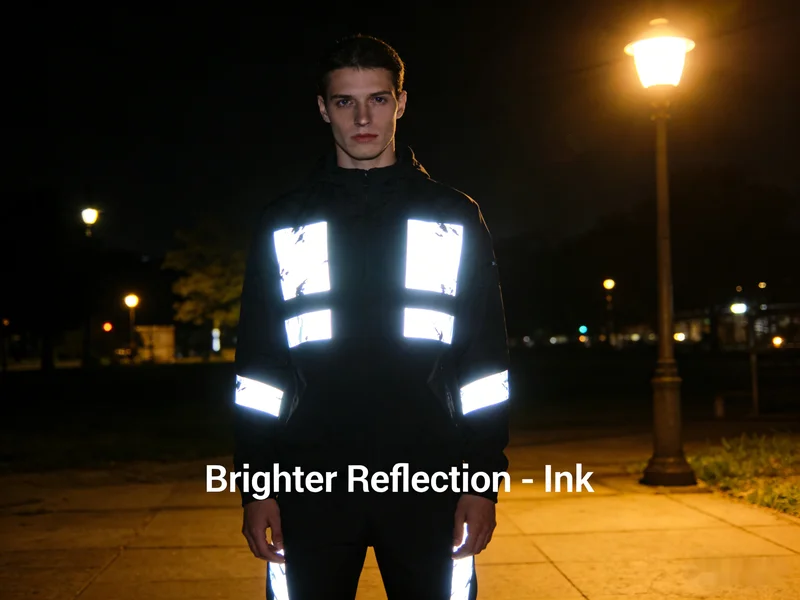
Reflective ink typically uses glass beads or micro-prismatic particles, which return light very efficiently.
Advantages:
- Stronger instant reflectivity
- Sharper visual contrast at night
- Lower material thickness
Limitations:
- Limited stretchability
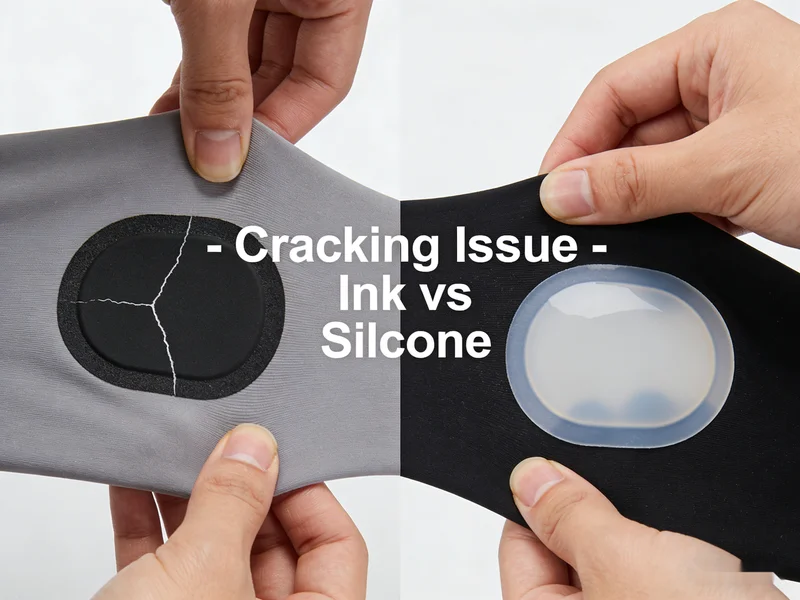
- Higher risk of cracking on elastic fabrics
- Reduced durability under repeated tension
👉 From a purely visual standpoint, ink wins.
Why Is Silicone More Suitable for Stretch Fabrics?
Silicone Reflective Patches
Silicone is naturally elastic and bonds better with stretchable textiles.
Advantages:
- Excellent elasticity and recovery
- Better resistance to cracking
- Strong wash durability
- Softer hand feel for performance apparel
Limitations:
- Reflectivity may appear slightly softer than ink
- Higher material cost in some cases
👉 From a performance and risk-control perspective, silicone wins.
The Core Conflict: Reflectivity vs. Elasticity
This is where most brands struggle.
- Brighter reflection → reflective ink
- Higher stretch compatibility → silicone
But in real-world garments—especially cycling, running, and compression wear—elasticity is not optional.
Case Study: Reflective Patch Development for Cycling Apparel
Customer Background
- Apparel type: Cycling wear
- Fabric: High-stretch knitted and compression materials
- Key requirement: Strong night reflectivity for rider safety
The brand clearly preferred ink reflective patches due to their intense brightness.
What Problem Did We Identify Early?
On high-elastic fabrics commonly used in cycling apparel:
- Ink reflective patches are prone to micro-cracks
- Cracking becomes visible after repeated stretching
- Aesthetic degradation directly affects perceived brand quality
For performance apparel, this risk is significant.

How Did We Solve the Reflective Patch Dilemma?
Instead of pushing a single solution, we proposed both options for testing:
- Ink reflective patch – maximum reflectivity
- Silicone reflective patch – better elasticity and durability
The brand tested both under:
- Stretch conditions
- Wear simulation
- Wash testing
This allowed a direct comparison based on real use, not assumptions.
Why Was Silicone Chosen for Mass Production?
The final decision favored silicone reflective patches, not because they were the brightest—but because they were:
- More stable on elastic fabrics
- Less prone to cracking
- More durable for long-term wear
- Lower risk in mass production
For cycling apparel, consistency and reliability outweighed peak reflectivity.

Is Silicone Always the Better Choice for Reflective Patches?
Not always.
Ink reflective patches remain an excellent option for:
- Non-stretch fabrics
- Jackets, backpacks, and accessories
- Decorative reflective elements
But for functional sportswear, silicone often provides a better balance.
How Should Brands Choose the Right Reflective Patch?
Ask these questions:
- Is the fabric highly elastic?
- Will the garment experience repeated stretching?
- Is long-term durability more important than peak brightness?
- Has real stretch and wash testing been done?
The best solution is rarely the “brightest”—it’s the one with controlled risk and consistent performance.
Key Takeaway: Balance Matters More Than Extremes
In functional apparel development, a mature solution is not about pushing visual effects to the limit.
It’s about:
- Managing material behavior
- Reducing failure risk
- Protecting brand reputation
- Delivering a stable consumer experience
That balance is what separates experimental designs from production-ready solutions.
Our Development Philosophy
At Qinghan Label, we help brands evaluate reflective patch solutions based on fabric behavior, usage scenarios, and production risks—not just appearance—so that every choice works not only in samples, but also in real-world wear.
About Author
——————————————————————————————————————————————

Jason
Sales Manager
With extensive industry knowledge and a responsible work ethic, I deliver professional guidance and reliable support for every client collaboration.
——————————————————————————————————————————————