What Is the Best Embroidery Method for Exquisitely Embroidered Animal Patches?
For exquisitely embroidered animal patches, especially in larger sizes, relying on a single embroidery method often leads to compromised results. A hybrid approach combining towel embroidery and flat embroidery frequently delivers better texture control, visual depth, and long-term quality than towel or flat embroidery alone.
Why Large Animal Patches Are More Complex Than They Appear
When animal-themed patches increase in size, brands often face a difficult choice between:
- Flat embroidery (fine details, cleaner surface)
- Towel embroidery (strong texture, plush appearance)
Both methods have advantages—but in large formats, the differences become far more pronounced, and so do the risks and costs.
In animal designs especially, fur texture, facial details, and surface consistency can look dramatically different depending on the embroidery structure chosen.
The Client’s Initial Request: Directly Copy a Towel-Embroidered Reference
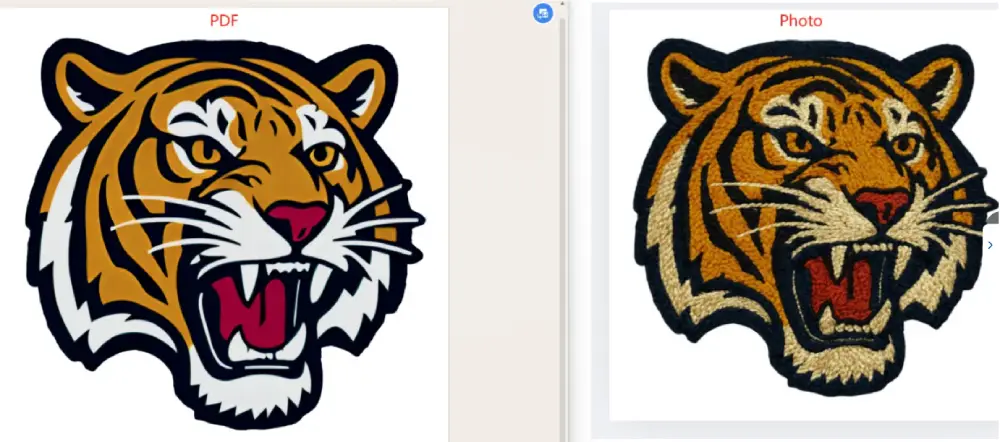
In this case, the client provided a reference image of an animal patch made with thick cotton yarn towel embroidery and requested a direct replication.
Initial expectation:
“Can we just copy this effect exactly?”
At a technical level, replication was possible—but not without concerns.
Why Direct Replication Was Risky
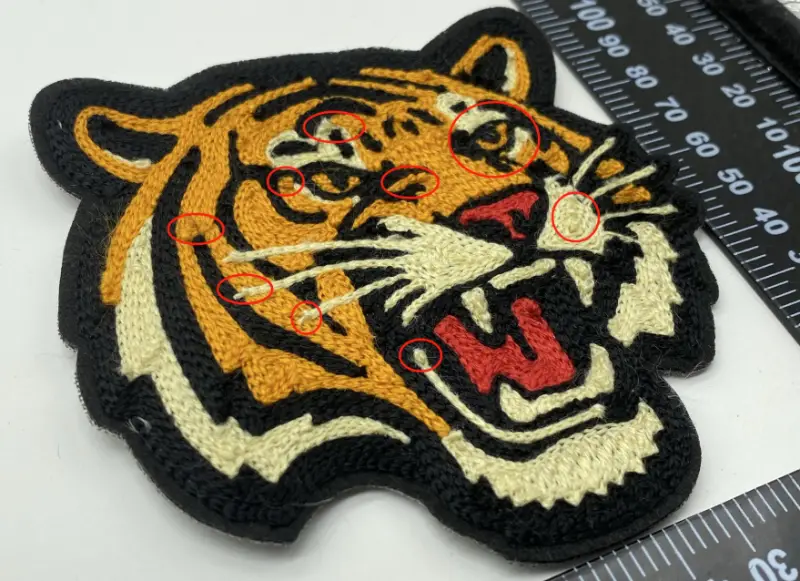
After reviewing the artwork and yarn structure, two major limitations became clear:
- Yarn thickness and stitch behavior
- The reference used very coarse cotton yarn
- With the client’s artwork, this risked uneven loops and surface inconsistency
- Design constraints
- The original artwork was not optimized for towel stitch density
- A 1:1 copy could result in an uncontrolled texture rather than a refined animal surface
Simply copying the reference might technically “work,” but the final result could fall short of a premium standard.
Proposed Strategy: Develop Multiple Comparable Solutions
Instead of locking into a single method, we suggested producing multiple versions to let the client visually compare outcomes.
Why Multiple Samples Matter
- Animal patches are highly visual products
- Texture perception cannot be judged accurately on screen
- Comparing real samples prevents costly mistakes in bulk production
With the client’s agreement, we moved forward with two initial directions.
First Development Phase: Two Core Embroidery Options
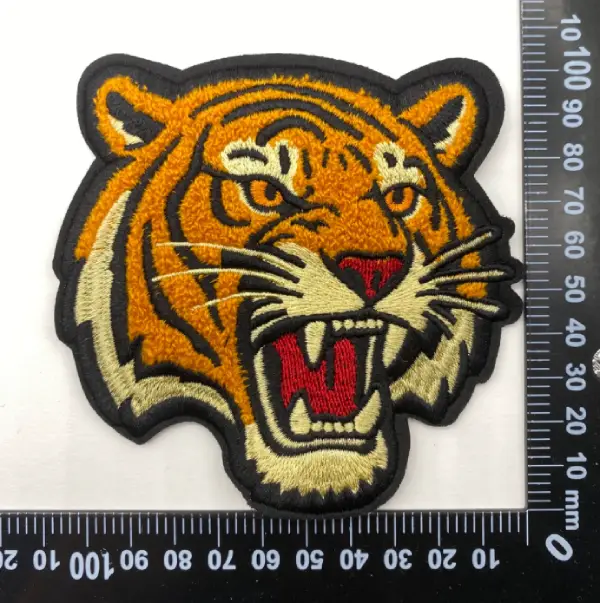
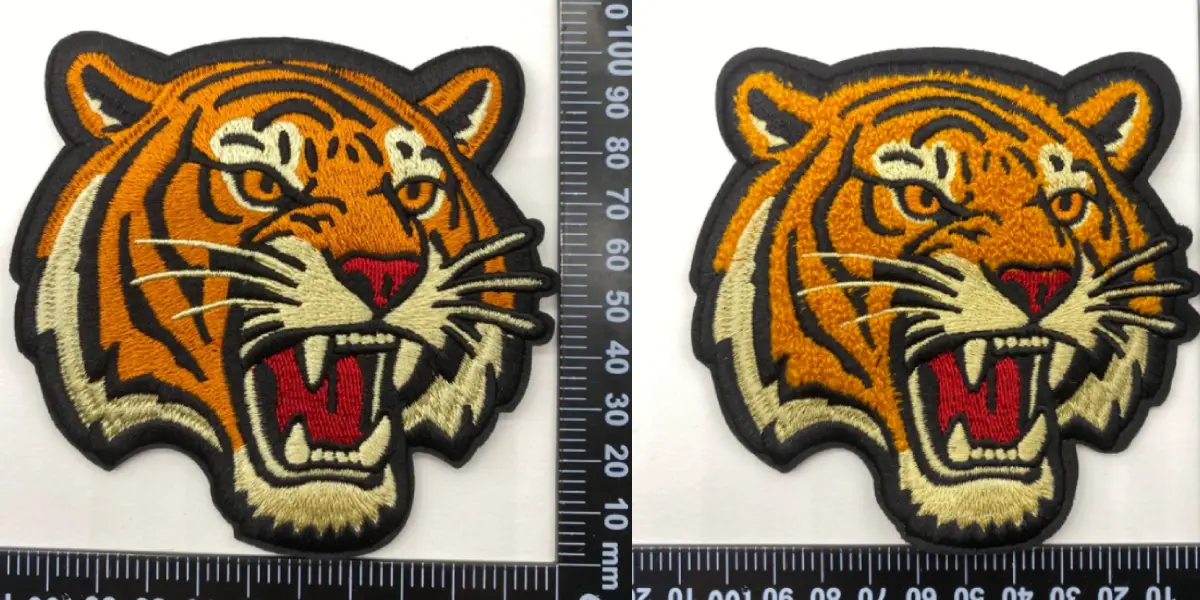
Option 1: Full Towel Embroidery
- Strong plush texture
- Bold, dimensional appearance
- Closely matched the reference style
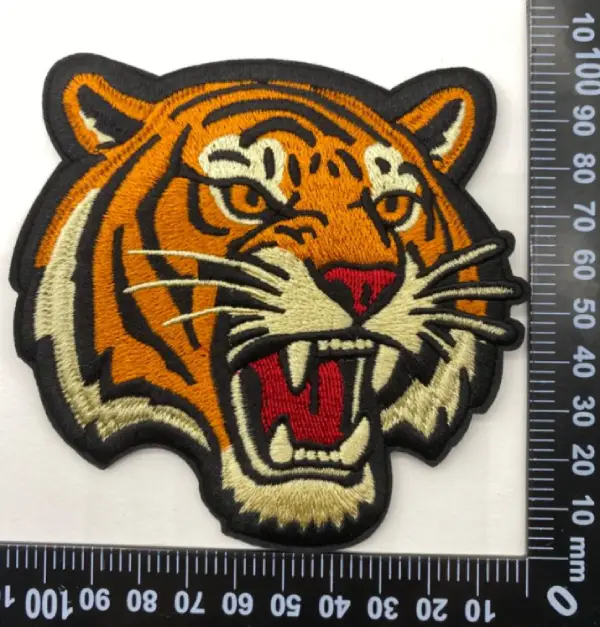
Option 2: Full Flat Embroidery
- Cleaner surface
- Better control of facial details
- Lower risk of yarn irregularities
However, during internal evaluation and trial production, a new issue emerged.
Unexpected Risk Identified During Towel Embroidery Testing
As development progressed, we identified a potential yarn reaction risk specific to this design:
- Certain areas showed instability in towel loops
- Surface consistency could degrade over time
- High risk of visual defects on larger patch areas
For exquisitely embroidered animal patches, surface consistency is critical—especially when representing fur or facial features.
At this point, continuing with full towel embroidery would introduce unnecessary risk.
Strategic Adjustment: Hybrid Towel + Flat Embroidery
Rather than abandoning texture entirely, we proposed a third solution:
Option 3: Hybrid Embroidery (Towel + Flat Stitching)
- Towel embroidery used selectively to create fur texture and volume
- Flat embroidery applied to areas requiring precision (eyes, outlines, facial features)
- Improved surface stability
- More refined visual hierarchy
This approach preserved the plush animal feel while eliminating the yarn instability risk.
Final Submission: Three Samples for Direct Comparison
Ultimately, we presented three finished samples to the client:
- Full towel embroidery
- Full flat embroidery
- Hybrid towel + flat embroidery
This allowed the client to evaluate:
- Texture realism
- Detail clarity
- Overall premium appearance
Side-by-side comparison made the decision clear.
Client Feedback: More Than Just Product Development
The client’s response went beyond technical approval.
They recognized that the process was not simply about producing a patch—but about actively optimizing the product:
- Offering alternatives beyond the reference
- Identifying risks early
- Adjusting direction before issues occurred
- Prioritizing the final brand outcome over blind replication
By not being limited by the original reference, the project opened up better design possibilities for both the client and their brand.
Key Takeaways for Exquisitely Embroidered Animal Patches
1. Bigger Size = Bigger Risk
Large animal patches magnify stitch imperfections and yarn behavior.
2. References Are Starting Points, Not Final Answers
Blind replication can limit design potential and quality.
3. Hybrid Techniques Often Deliver the Best Results
Combining embroidery methods allows better control of texture and detail.
4. Sample Comparison Saves Time and Cost
Multiple samples prevent wrong decisions in mass production.
FAQ: Animal Embroidery Patch Development
Q: Is towel embroidery always better for animal patches?
A: Not necessarily. It provides texture but can introduce stability risks on large designs.
Q: Why combine towel and flat embroidery?
A: To balance plush texture with fine detail and surface consistency.
Q: Does making multiple samples increase development time?
A: Slightly—but it significantly reduces risk and rework in bulk production.
Conclusion
Creating exquisitely embroidered animal patches is not about choosing the most popular embroidery method—it’s about choosing the right combination.
By evaluating risks, offering multiple solutions, and optimizing beyond the reference design, this project achieved a result that exceeded the client’s original expectation and expanded their creative options.
About Author
——————————————————————————————————————————————

Jason
Sales Manager
With extensive industry knowledge and a responsible work ethic, I deliver professional guidance and reliable support for every client collaboration.
——————————————————————————————————————————————