A high-quality velvet patch with fine details cannot rely on standard towel or chenille embroidery. When artwork is complex and a true plush feel is required, advanced techniques such as water-soluble hollow embroidery or velvet appliqué embroidery are the most reliable solutions.
Why This Velvet Patch Project Was Different From Typical Orders
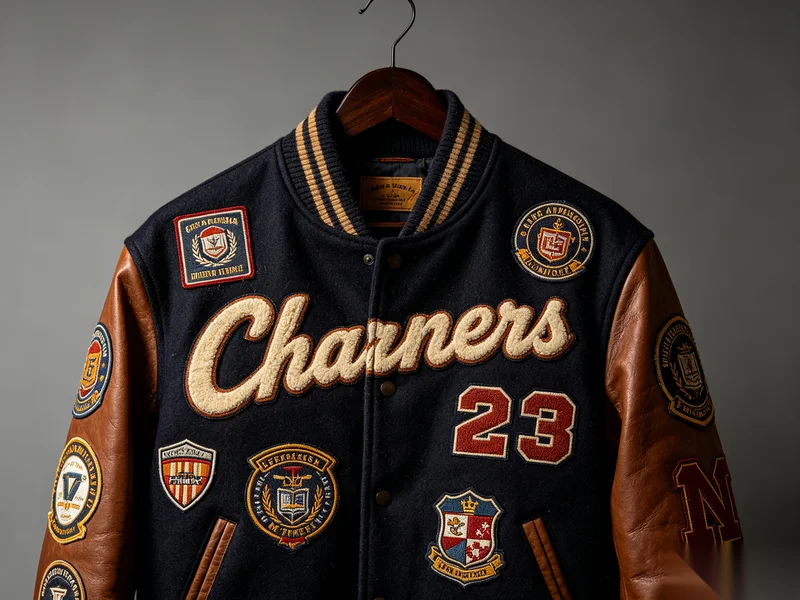
This project came from a newly established fashion brand specializing in jackets, linings, and ski wear. Their design strategy focused heavily on visible branding elements, especially embroidered patches placed on:
- Jacket bodies
- Inner linings
- Back panels of ski jackets
- Sleeves and cuffs
These areas are highly visible and frequently touched, which means the patch needed to deliver both visual refinement and tactile quality.
Before contacting us, the brand had already worked with another supplier. However, the sample quality they received was far below expectations—especially in terms of texture and detail definition. That failure became the turning point.
What Was the Client’s Core Requirement for the Velvet Patch?
At first glance, the requirement seemed simple:
“We want a patch with a velvet-like, plush surface.”
But after reviewing the artwork, the real challenges became clear.
Key Requirements
- Strong plush / fuzzy texture
- High detail accuracy matching the original artwork
- Premium finish suitable for high-end garments
- Consistency across multiple visible garment areas
Hidden Challenge
The artwork contained many fine details and delicate shapes. This immediately ruled out many commonly used embroidery methods.
Why Standard Towel (Chenille) Embroidery Could Not Work
In many cases, suppliers automatically recommend towel embroidery (chenille) when a client asks for a velvet or plush effect. However, after technical evaluation, it was clear that chenille would fail in this project.
Limitations of Towel Embroidery
- Thick yarns obscure fine details
- Poor edge control on complex shapes
- Texture often appears rough rather than refined
- Difficult to achieve consistency on smaller elements
Using chenille would have meant sacrificing design accuracy—which was unacceptable for a brand positioning itself as quality-driven.
Developing Professional Solutions: Two Viable Velvet Patch Options
After fully understanding the client’s expectations and constraints, we proposed two technically feasible solutions, each with its own cost and performance profile.
Solution 1: Water-Soluble Hollow Embroidery (Premium Solution)
Why This Was Proposed
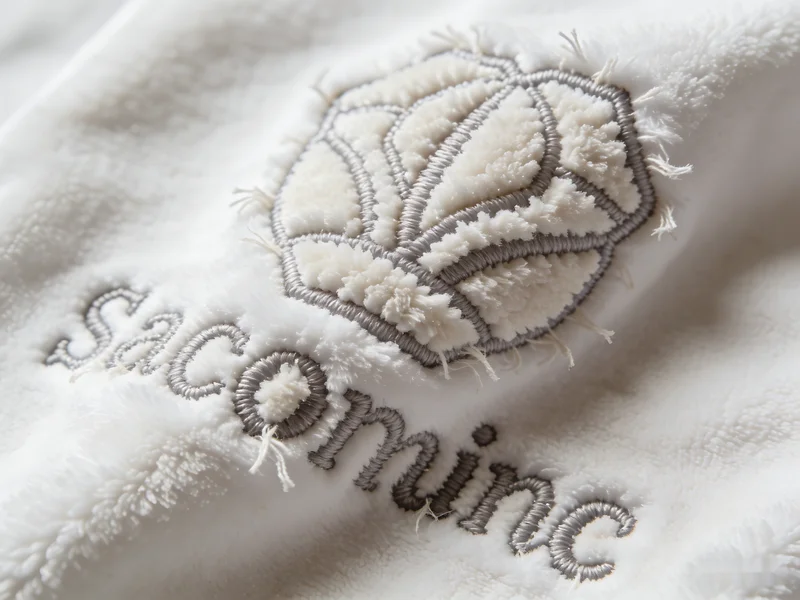
Water-soluble embroidery allows the backing material to dissolve completely after embroidery, leaving only the thread structure. This creates a naturally fluffy, lightweight, and refined surface.
Advantages
- Extremely soft, velvet-like hand feel
- Excellent detail reproduction
- Clean edges and sharp shapes
- Premium visual and tactile quality
Trade-Off
- Higher production cost
- More complex manufacturing process
This solution was ideal for brands prioritizing design integrity and luxury perception.
Solution 2: Velvet / Sherpa Fabric Appliqué Embroidery (Cost-Control Option)
Why This Was Proposed
To offer a more cost-efficient alternative, we also recommended a velvet or sherpa fabric appliqué embroidery method.
Advantages
- Clear plush texture from the fabric itself
- Lower cost than water-soluble embroidery
- Better detail control than chenille
Limitations
- Heavier feel compared to hollow embroidery
- Texture depends heavily on fabric quality
This option balanced cost and appearance while still maintaining a premium look.
How the Client Made the Final Decision
Both solutions were quoted transparently, with clear explanations of the differences in texture, durability, and cost.
Although we openly pointed out that the appliqué solution would be more economical, the client ultimately chose water-soluble hollow embroidery.
Why?
The brand identified itself as:
- Quality-oriented rather than price-driven
- Focused on long-term brand perception
- Willing to invest in craftsmanship
For them, the velvet patch was not just a decoration—it was a brand statement.
Final Result: A Velvet Patch That Met Brand Expectations
The final sample successfully achieved:
- A true velvet-like plush surface
- Clear, refined details matching the original artwork
- Lightweight structure suitable for jackets and ski wear
- A premium feel aligned with the brand’s positioning
After approving the sample, the client proceeded confidently with development, relieved to finally see their design executed as intended.
Key Lessons From This Velvet Patch Development Case
1. “Velvet Effect” Is Not a Single Technique
Different embroidery methods create very different results. Selecting the wrong one can ruin even the best design.
2. Artwork Complexity Determines Technique
The more detailed the design, the more limited standard embroidery methods become.
3. Quality Brands Value Transparency
Clear explanation of costs, risks, and alternatives builds trust and enables better decisions.
4. Premium Results Require Technical Experience
Advanced techniques like water-soluble embroidery are not universally available—and not every supplier can execute them correctly.
FAQ: Velvet Patch Development for Apparel Brands
Q: Can chenille embroidery create a real velvet patch?
A: Chenille can create a plush look, but it struggles with fine details and refined edges.
Q: Is water-soluble embroidery always the best option?
A: It is the best option for premium brands requiring high detail and softness, but it comes at a higher cost.
Q: Are velvet patches suitable for outerwear and ski jackets?
A: Yes, when produced correctly, they perform well in visible, high-wear areas.
Conclusion
This real-world project demonstrates that producing a successful velvet patch is not about using the most common method—but the most appropriate one.
When brands demand plush texture, fine detail, and premium quality, only experienced evaluation and tailored solutions can deliver results that truly match expectations.
About Author
——————————————————————————————————————————————
Heidi
Sales Manager
Hi, I’m Heidi, Sales Manager. Known for professionalism and efficiency, I am often recognized as the top sales performer. I believe expertise and dedication build lasting trust with clients.
——————————————————————————————————————————————