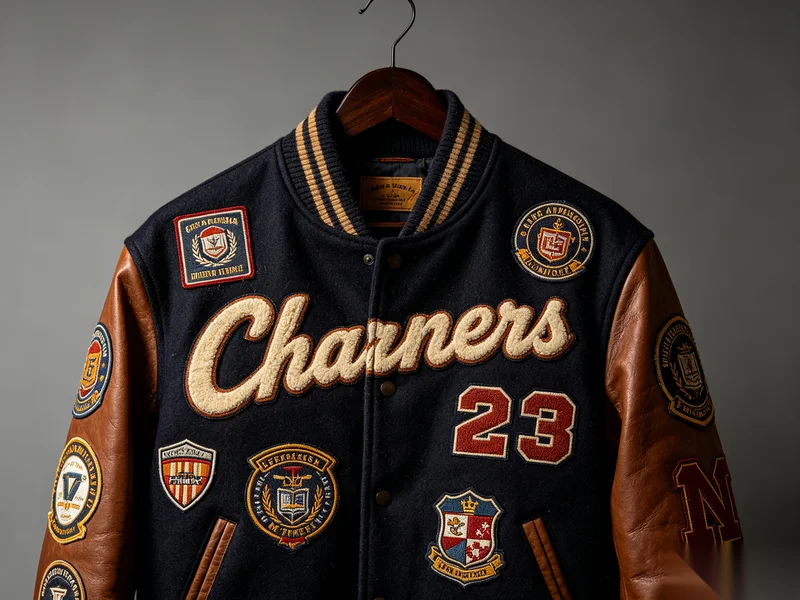
Can Metal Patches Have Dark, Oxidized Engraved Text?
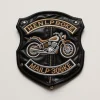
Yes. Custom metal patches can achieve dark, oxidized engraved lettering by combining laser engraving on stainless steel with a post-treatment ink filling process. This method allows precise color control and works even for small orders, such as 100 pieces.
Why This Metal Patch Project Was Technically Challenging
This project began with a request that many manufacturers would quietly decline.
The client worked in a design office and needed a custom engraved metal patch for a design-related application. The total quantity was only 100 pieces, which already placed the project outside standard mass-production workflows.
But the real challenge lay in the visual requirement.
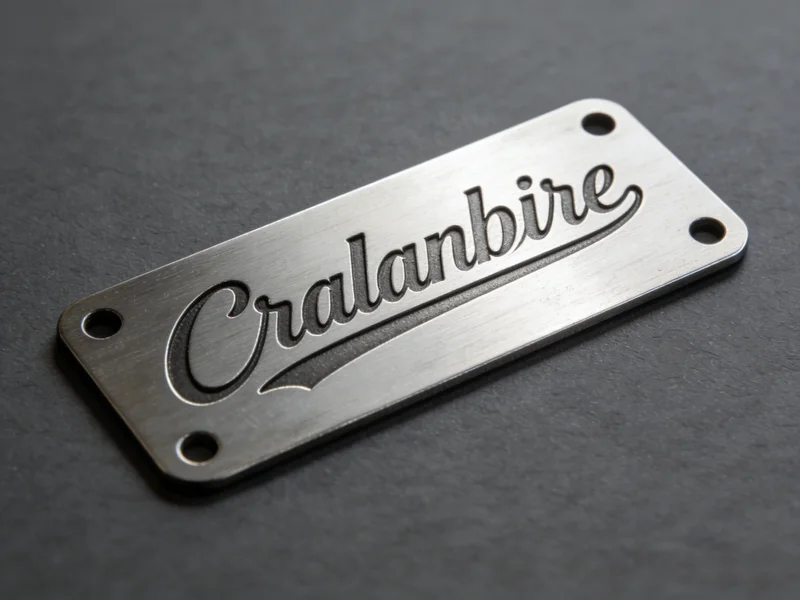
Client’s Key Requirements
- Custom metal patch with engraved lettering
- Text color must be dark with an oxidized appearance
- High visual precision suitable for professional design use
- Small batch quantity (100 pcs)
At first glance, this seemed like a simple engraved metal plate. In reality, it was not.
Why Standard Metal Engraving Could Not Meet the Requirement
The most common method for producing engraved metal patches is laser engraving.

What Laser Engraving Normally Delivers
- Clean, precise engraved lines
- High consistency
- Permanent marking
However, there is a critical limitation:
Laser engraving does not naturally produce color.
Laser engraving on metal typically results in:
- Bare metal exposure
- Light gray or silver engraving
- No deep, oxidized color tone
This meant that standard laser engraving alone could not meet the client’s expectation.
Initial Problem: Color Without Compromising Precision
The client specifically wanted:
- Dark lettering
- A subtle oxidized, aged effect
- Not painted-on or glossy
- Still clean and professional
At this stage, the project reached a common dead end:
- Traditional engraving = no color
- Painting = poor durability & messy edges
- Chemical oxidation = unstable in small batches
Walking away would have been the easy choice. Instead, we explored alternatives internally.
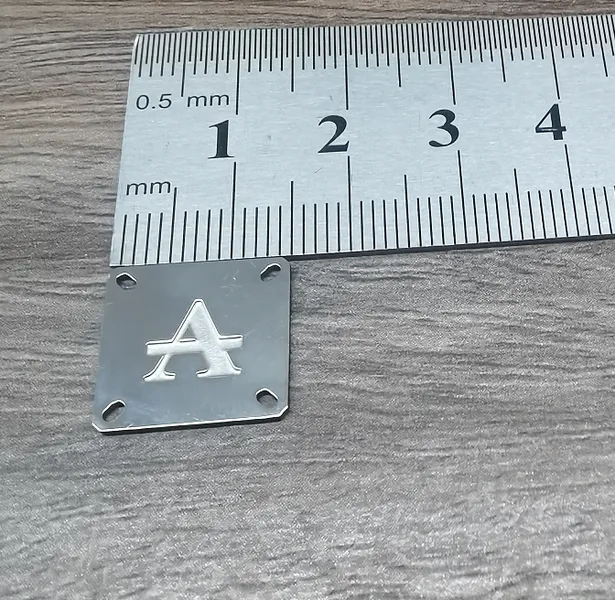
Internal Discussion: Finding a Viable Solution for Metal Patches
After discussing the issue with colleagues and technicians, we focused on two core questions:
- How do we keep the precision of laser engraving?
- How do we introduce controlled color only into the engraved areas?
The breakthrough came from combining processes rather than relying on a single technique.
The Final Technical Solution Explained Step by Step
Step 1: Material Selection – Stainless Steel
We selected stainless steel as the base material because:
- It reacts well to laser engraving
- It offers excellent durability
- It supports post-processing without corrosion issues
This ensured the base of the metal patch remained premium and stable.
Step 2: Laser Engraving for Maximum Precision
The lettering was laser engraved into the stainless steel surface.
This provided:
- Sharp edges
- Consistent depth
- Clean engraving channels suitable for filling
At this stage, the metal patch still had no color, only engraved grooves.
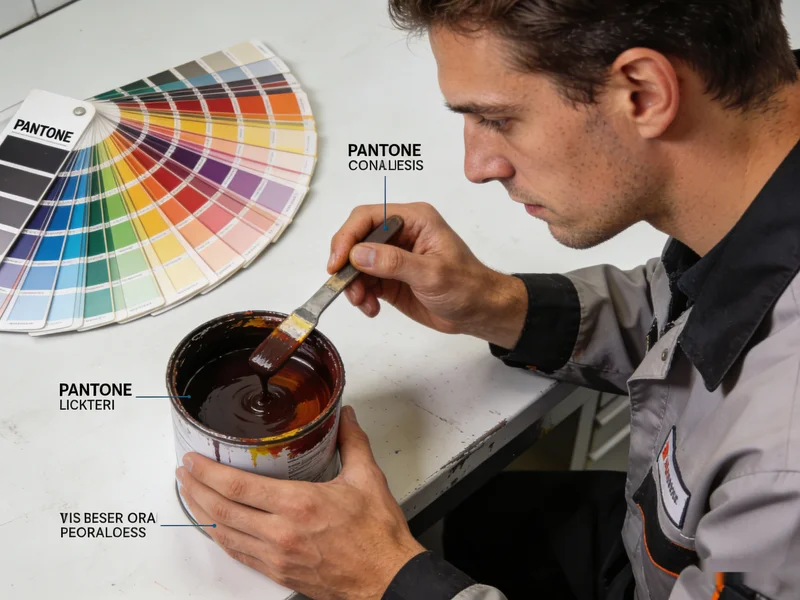
Step 3: Custom Ink Color Matching
Before proceeding further, we confirmed the Pantone color with the client.
This was critical because:
- “Dark oxidized” can vary significantly in tone
- Visual expectations must be aligned precisely
- Once applied, correction would be difficult
Only after final color confirmation did we move forward.
Step 4: Manual Ink Rubbing Into Engraved Areas
The key technique was a controlled ink rubbing process:
- Custom-mixed ink matching the Pantone color
- Ink applied only into the engraved lettering
- Excess ink carefully removed from the surface
- Ink remains only inside engraved grooves
This created:
- A dark, oxidized visual effect
- Clean contrast against stainless steel
- No surface contamination or uneven edges
Final Result: Client Approval Achieved
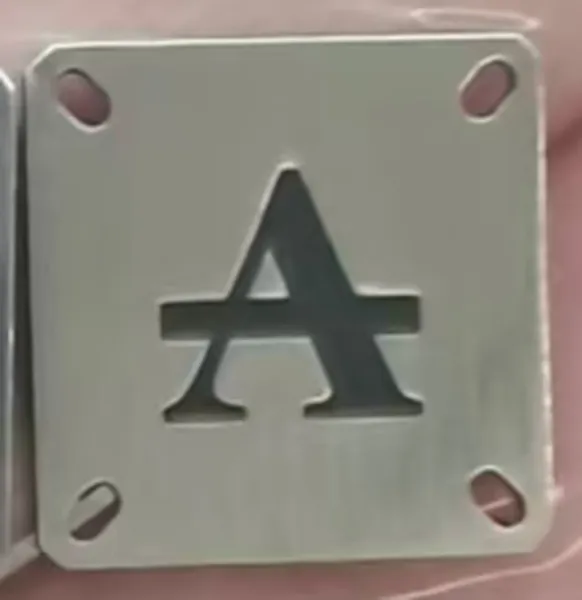
The finished metal patch successfully delivered:
- Deep, dark engraved lettering
- Subtle oxidized appearance
- Clean, professional finish
- High detail despite small quantity
After reviewing the sample, the client confirmed that the result fully matched their original expectation.
What initially seemed “not possible” using standard methods was achieved through process integration and technical adjustment.
Why This Approach Works Especially Well for Small Orders
Many factories rely on rigid production lines designed for large volumes. This case shows why flexibility matters.
Advantages of This Method
- Suitable for small batches (100 pcs)
- No need for expensive chemical treatments
- Color can be customized precisely
- Durable and professional finish
This makes it ideal for:
- Design studios
- Limited-edition products
- Prototype development
- Premium branding elements
FAQ: Custom Metal Patches With Engraved Color
Q: Can metal patches have colored engraved text?
A: Yes, by combining laser engraving with post-treatment ink filling.
Q: Is this process durable?
A: Yes. The ink sits inside engraved grooves, protected from surface wear.
Q: Can this be done in small quantities?
A: Absolutely. This method is well-suited for small batch production.
Q: Does this look like painted metal?
A: No. The surface remains metallic, while only the engraved areas carry color.
Key Takeaways From This Metal Patch Case
- Small quantity does not mean limited solutions
- Laser engraving can be enhanced, not replaced
- Color expectations must be clearly defined (Pantone-based)
- Problem-solving often requires combining techniques
Conclusion
This real client case demonstrates that producing custom metal patches is not only about equipment—but about process understanding and creative problem-solving.
When standard methods fall short, thoughtful adjustments and internal collaboration can turn technical limitations into successful outcomes—especially for clients with high aesthetic standards and unique requirements.
About Author
——————————————————————————————————————————————

Laurie
Sales Manager
Hi, I’m Laurie, Sales Manager. I am detail-oriented and highly responsible, focusing on understanding clients’ real needs and delivering reliable solutions while building long-term, trusted partnerships.
——————————————————————————————————————————————