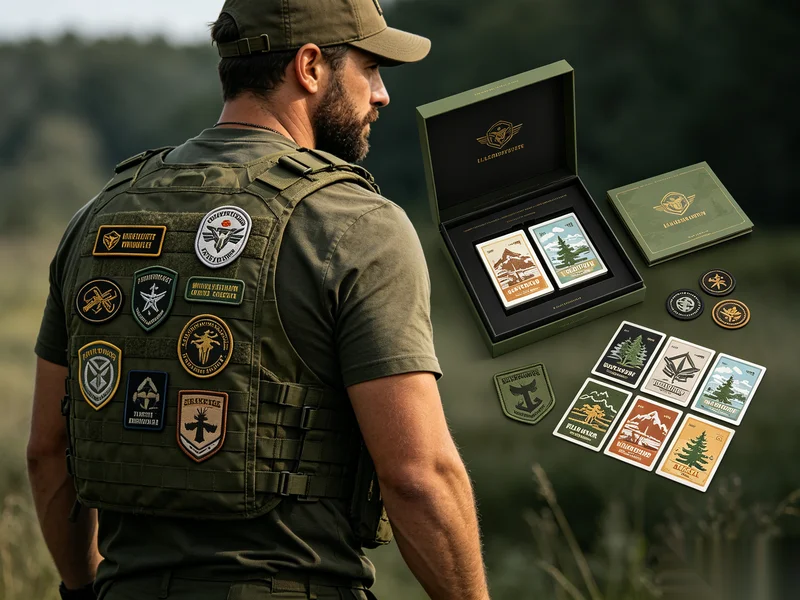
In woven label design selection, choosing between with background and without background depends on your priorities. Labels with background offer lower cost and stable production, while labels without background deliver stronger 3D effect and premium brand appearance—but require higher precision and cost.
What Is the Difference Between Woven Labels With and Without Background?
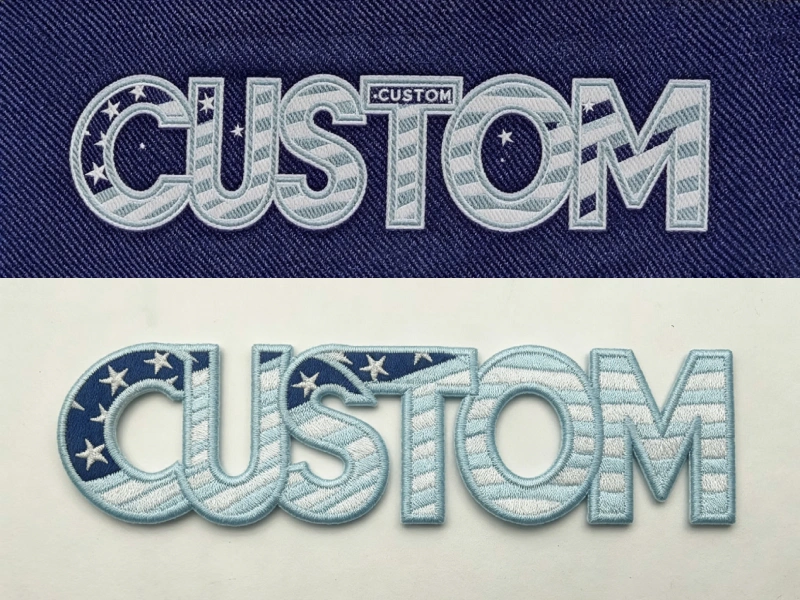
With background = logo woven onto a base fabric;
Without background = only the logo shape remains, removing excess base.
Quick Comparison Table
| Feature | With Background | Without Background |
|---|---|---|
| Structure | Full base fabric | Cut-out logo shape |
| Cost | Lower | Higher |
| Detail Stability | High | Medium (depends on design) |
| Visual Effect | Flat | 3D / premium |
| Production Risk | Low | Higher |
What Problem Are Brands Trying to Solve?
A client wanted a more premium and refined logo presentation for an external garment label.
Initial Approach
- Standard woven label with background
- Goal: control cost and ensure production stability
Challenge
- Visual result felt too flat
- Brand identity was not strong enough
- Lacked the “premium” and “refined” appearance expected
👉 This created a common conflict:
cost efficiency vs brand perception
Why Doesn’t a Standard Woven Label Always Look Premium?
Short Answer:
Because background fabric reduces depth and visual contrast.
Key Limitation
With background woven labels:
- The logo sits on a flat surface
- Limited layering or depth
- Less visual separation from the base
👉 Result: clean but not impactful
What Makes a Woven Label Without Background More Premium?
Short Answer:
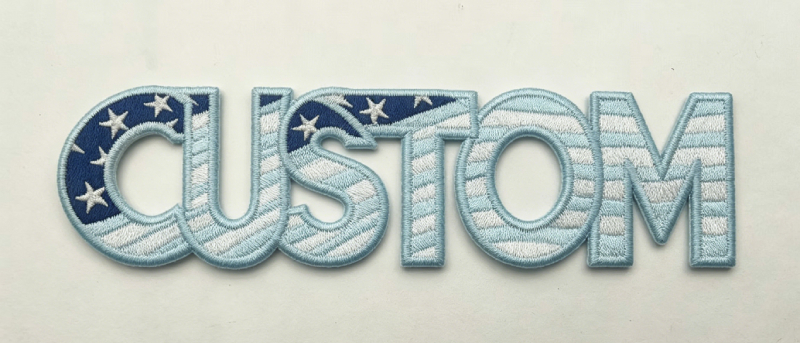
It removes unnecessary base fabric, making the logo stand out with a stronger 3D effect.
Key Advantages
- Logo appears more independent and dimensional
- Visual effect closer to embroidered patches
- Stronger brand recognition
- Cleaner and more modern appearance
👉 Especially effective for external branding positions
What Are the Risks of Choosing a Background-Free Woven Label?
Short Answer:
Higher cost and stricter design/production requirements.

Key Considerations
- Higher production cost
- Fine text or thin lines may not reproduce perfectly
- Requires higher weaving precision
- Increased sampling and development time
👉 Not all designs are suitable for this structure
How to Decide in Woven Label Design Selection?
Short Answer:
Choose based on product positioning, design complexity, and production scale.
Practical B2B Guide
Choose With Background If:
- You prioritize cost control
- Large-scale production is required
- Design includes small text or complex details
- Stability and consistency are critical
Choose Without Background If:
- Brand image and premium feel are top priorities
- Logo is bold and structurally simple
- Product is positioned as high-end
- The label is highly visible (external use)
Is One Option Better Than the Other?
Short Answer:
No—it depends on your brand strategy.
Professional Insight
This is not about “better” or “worse,” but about:
👉 Matching structure with brand expression
- With background = functional, stable, cost-efficient
- Without background = expressive, premium, brand-focused
Why This Decision Matters More Than Expected?
Short Answer:
Because woven labels are a direct extension of your brand identity.
Industry Perspective
In apparel manufacturing:
- The label is often the first physical touchpoint of the brand
- Small differences in structure can significantly affect perception
👉 A flat label can weaken a premium brand
👉 A well-executed label can elevate the entire product
Conclusion
In woven label design selection, choosing between with or without background is a strategic decision—not just a technical one.
- With background → best for cost efficiency and stability
- Without background → best for premium branding and visual impact
👉 The right choice is the one that aligns with your product positioning, design intent, and market expectations.
If you’re unsure which option fits your project, working with an experienced manufacturer can help you balance design, cost, and manufacturability for the best possible outcome.
About Author
——————————————————————————————————————————————

Mary
Sales Manager
Hi, I’m Mary. Passionate about exploring new industry trends, I stay ahead of the curve and offer clients forward-thinking solutions tailored to their needs.
——————————————————————————————————————————————