Angel patches are popular decorative and symbolic elements in various industries. For designers, creating attractive and practical angel patches requires combining creative concepts with technical feasibility. Below is a concise summary of core design ideas and key precautions to help you develop high-quality angel patch designs.
- Core Design Ideas for Angel Patches: Religious Symbol Integration, Minimalist Silhouette Design, Color Psychology Application, Scene-Oriented Customization
- Key Precautions: Material Compatibility Matching, Detail Proportion Control, Production Process Adaptation, Brand Connotation Consistency

1. What Are Angel Patches and Why Are They Popular in Design?
Angel patches are embroidered, woven, or printed patches with angel-themed elements, widely used in clothing, accessories, religious supplies, and corporate promotional products. They are popular because angels symbolize purity, protection, and hope, which can convey positive emotions and brand values, making them highly favored by B-end clients such as clothing brands, religious institutions, and public welfare organizations.
For designers, understanding the core value of angel patches is the first step in creating excellent designs. Unlike ordinary decorative patches, angel patches carry cultural and emotional connotations, so their design needs to balance aesthetics and symbolic meaning. Whether it is for a religious group that emphasizes tradition or a fashion brand that pursues innovation, the design of angel patches must align with the client’s positioning and target audience’s psychological needs.
In addition, the practicality of angel patches cannot be ignored. B-end clients usually have large-volume customization needs, and the design must be compatible with mass production processes. Therefore, designers need to consider both creative expression and production feasibility to ensure that the final product can maintain the integrity of the design while meeting the client’s quality and cost requirements.
2. What Are the Creative Design Ideas for Angel Patches for Designers?
Creating unique angel patch designs requires integrating multiple elements such as culture, style, and user needs. The following are four practical design ideas that can help designers open up their thinking and meet the diverse needs of B-end clients.
2.1 Integrate Religious Symbols to Highlight Traditional Connotations
Angels have profound religious connotations in Christianity and other religions. For B-end clients such as religious churches, faith-based organizations, or religious cultural and creative brands, integrating classic religious symbols into angel patch designs can effectively enhance the sense of identity and authority of the product.
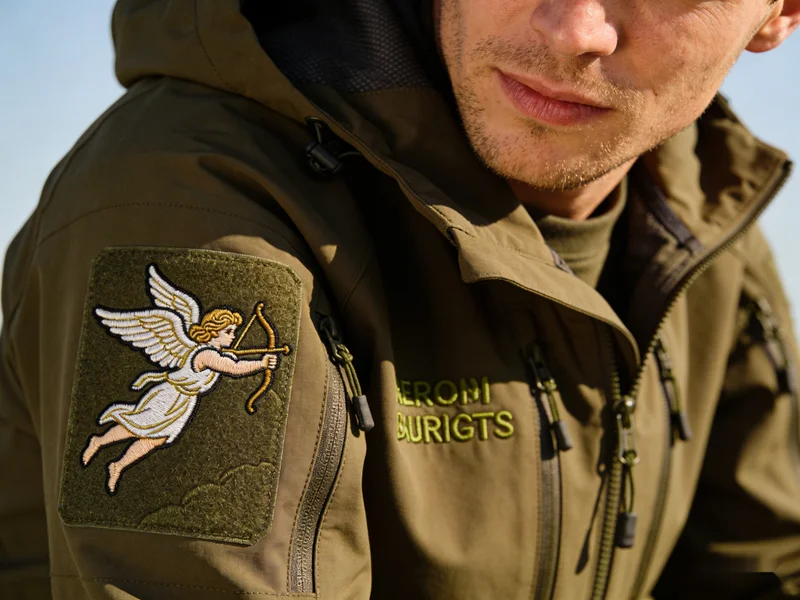
For example, you can combine angel figures with crosses, halos, doves, or holy light elements. The angel’s posture can be designed as praying, blessing, or flying, and the lines should be soft and solemn to convey a sense of peace and reverence. In terms of color, choose classic religious colors such as white, gold, and blue. White represents purity and holiness, gold symbolizes divinity and nobility, and blue conveys tranquility and faith. This combination of elements can make the angel patch highly consistent with the client’s religious theme and meet the emotional needs of their target audience.
When applying this idea, it is necessary to pay attention to the accuracy of religious symbols to avoid incorrect use that may cause controversy. It is recommended that designers conduct in-depth communication with clients to understand their religious beliefs and symbolic preferences, and conduct relevant research to ensure the authenticity and respectfulness of the design.

2.2 Adopt Minimalist Silhouette Design to Adapt to Modern Aesthetics
With the popularity of minimalist aesthetics, more and more B-end clients (such as fashion clothing brands, casual accessory brands, and lifestyle brands) prefer simple and elegant angel patch designs. Minimalist silhouette design focuses on simplifying the details of angel figures and highlighting the overall shape, which can make the patch more versatile and suitable for matching with various products.
Designers can use simple lines to outline the basic silhouette of an angel, such as the outline of wings, the curve of the body, or the shape of the head. They can appropriately omit redundant details and use geometric shapes to simplify the design, such as using circles to represent halos and triangles to outline wings. In terms of color, choose a single color or a two-color matching scheme, such as black and white, gray and white, or dark blue and light blue. This design style is not only in line with modern people’s aesthetic needs but also reduces the difficulty of production and lowers the client’s customization cost.
When creating minimalist angel patches, it is important to grasp the balance between simplicity and recognition. Although the details are simplified, the core characteristics of the angel must be retained to ensure that the audience can quickly recognize the theme of the patch. At the same time, the thickness and spacing of the lines should be reasonably controlled to ensure that the patch has good visual effects during the production process.

2.3 Apply Color Psychology to Enhance Emotional Resonance
Color is an important element in patch design, and different colors can trigger different emotional reactions. For angel patches, which carry emotional connotations, rational application of color psychology can make the design more in line with the client’s brand positioning and the psychological needs of the target audience, thereby enhancing the emotional resonance of the product.
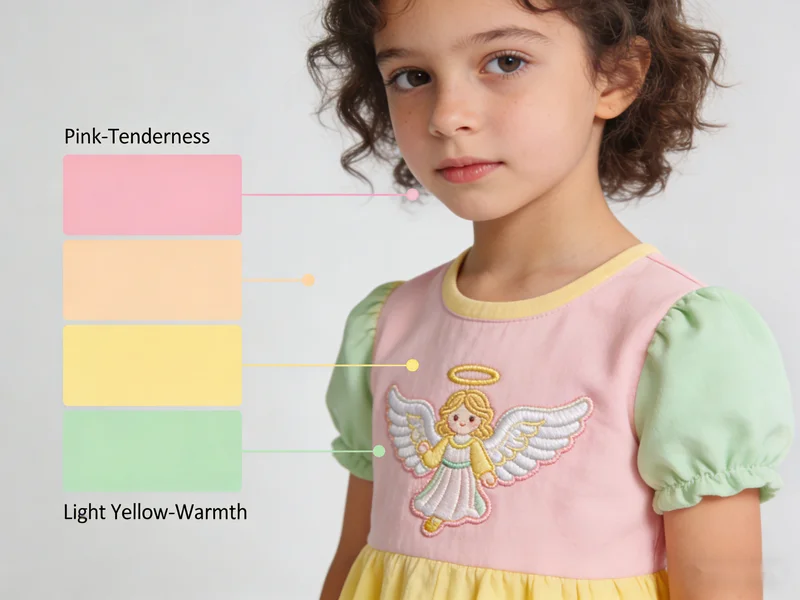
For example, if the client is a children’s clothing brand that focuses on warmth and care, you can choose soft and bright colors such as pink, light yellow, and light green for the angel patch. Pink conveys tenderness and love, light yellow represents warmth and joy, and light green symbolizes growth and hope. These colors can make the patch more in line with the characteristics of children’s products and attract the attention of parents and children. If the client is a public welfare organization that conveys hope and encouragement, you can use warm orange and white. Orange represents enthusiasm and positive energy, and white symbolizes purity and hope, which can effectively convey the organization’s public welfare concept.
When choosing colors, it is also necessary to consider the color matching of the product that the patch will be attached to. The color of the patch should be coordinated with the product’s color to avoid conflicting and affecting the overall visual effect. In addition, it is necessary to pay attention to the color fastness of the patch. B-end clients usually have high requirements for the durability of the product, so the selected colors should have good color fastness to ensure that they do not fade easily after washing or use.
2.4 Conduct Scene-Oriented Customization to Meet Specific Needs
Different B-end clients use angel patches in different scenarios, so designers need to carry out scene-oriented customization according to the client’s specific use scenarios and needs to ensure that the design of the patch is highly compatible with the use scenario.
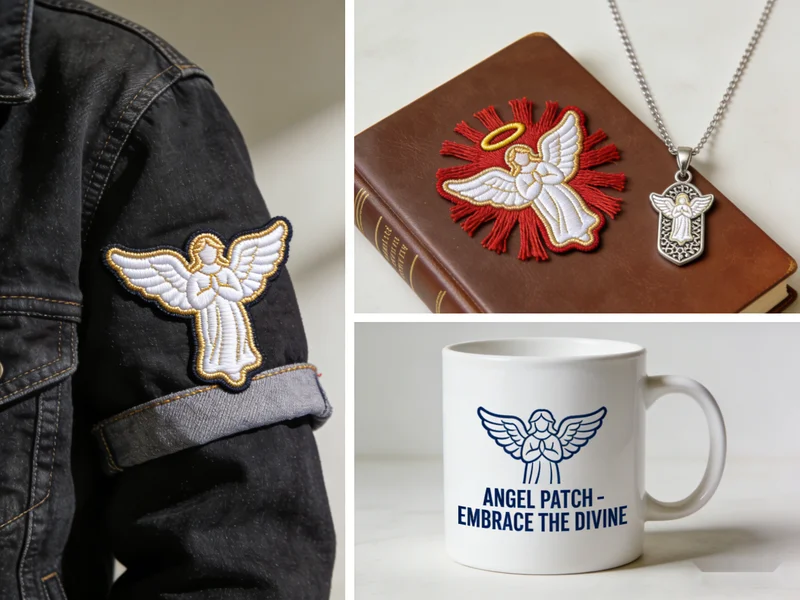
For example, if the client is a clothing brand that specializes in outdoor sports clothing, the angel patch can be designed with a dynamic flying posture, and the material can choose wear-resistant and waterproof embroidery thread. This design not only conforms to the outdoor sports theme but also meets the practical needs of outdoor use. If the client is a souvenir brand that customizes souvenirs for tourist attractions, the angel patch can be combined with the characteristic elements of the tourist attraction, such as the landmark buildings, natural scenery, or cultural symbols of the attraction. This design can make the patch have unique regional characteristics and commemorative value.
When conducting scene-oriented customization, designers need to conduct in-depth communication with clients to understand the specific use scenarios, target audience, and core needs of the patch. They can also put forward professional suggestions according to their own experience, such as recommending suitable materials and production processes according to the use environment, to help clients improve the practicality and competitiveness of the product.
3. What Precautions Should Designers Pay Attention to When Creating Angel Patches?
In addition to good creative ideas, designers also need to pay attention to a series of precautions during the design process of angel patches to avoid problems such as unqualified products or failure to meet client needs due to design reasons. The following are four key precautions that designers must grasp.
3.1 Match Material Compatibility to Ensure Production Feasibility
The material of the patch directly affects the effect of the design and the quality of the product. Different production processes and materials have different requirements for the design. Therefore, designers must understand the characteristics of common patch materials and production processes and match the design with the appropriate materials to ensure production feasibility.
Common patch materials include embroidery thread, woven cloth, PVC, and leather. Embroidery patches have a three-dimensional effect and rich texture, which are suitable for designs with complex details and strong three-dimensional sense; woven patches have a smooth surface and clear patterns, which are suitable for designs with fine lines and rich colors; PVC patches are waterproof, wear-resistant, and easy to clean, which are suitable for outdoor and wet environment scenarios; leather patches have a high-end texture and are suitable for high-end brand products.
When designing, designers need to recommend appropriate materials to clients according to the use scenario and design style of the patch. For example, if the design has many fine lines and color gradients, woven patches or printed patches are more suitable; if the design requires a strong three-dimensional effect, embroidery patches are the best choice. At the same time, it is necessary to consider the compatibility between the design and the material. For example, the line thickness of the design should be compatible with the thickness of the embroidery thread, and the color of the design should be within the color range that the material can present.
3.2 Control Detail Proportion to Ensure Visual Harmony
The proportion of details in the angel patch design directly affects the visual effect of the patch. If the proportion of details is improper, it may lead to the patch being too cumbersome or too simple, affecting the overall aesthetic feeling. Therefore, designers need to reasonably control the proportion of details to ensure the visual harmony of the patch.
First of all, it is necessary to determine the appropriate size of the patch according to the client’s use needs. The size of the patch will affect the arrangement of details. For small-sized patches (such as 3cm×3cm), it is necessary to simplify the details and focus on highlighting the core elements to avoid the pattern being too crowded; for large-sized patches (such as 10cm×10cm), you can appropriately increase the details to make the design more rich and layered.
Secondly, pay attention to the proportion of each element in the angel patch. For example, the proportion of the angel’s head, body, and wings should be coordinated to avoid the problem of distorted image. At the same time, the spacing between details should be reasonably controlled to ensure that the patch has a clear hierarchy and good visual permeability during the production process.
3.3 Adapt to Production Processes to Avoid Design Risks
Different production processes have different limitations on the design. If the design does not conform to the requirements of the production process, it may lead to problems such as difficulty in production, increased production cost, or failure to achieve the expected effect. Therefore, designers must be familiar with common patch production processes and adapt the design to the production processes to avoid design risks.
For example, the embroidery process has certain requirements on the line density and line direction. The design should avoid too dense line arrangement, otherwise, it may lead to overlapping embroidery threads and affect the clarity of the pattern; the woven process has requirements on the number of colors, and the number of colors in the design should not be too many, otherwise, it may increase the difficulty of weaving and affect the production efficiency. In addition, for processes such as edge wrapping and hot stamping, the design should reserve appropriate margins and avoid designing important elements at the edge of the patch to prevent damage to the pattern during the edge wrapping process.
It is recommended that designers communicate with the production department in a timely manner during the design process to understand the technical parameters and limitations of the production process. For designs with high difficulty, you can make a sample first to verify the feasibility of the design, so as to avoid large losses caused by mass production problems.
3.4 Maintain Consistency with Brand Connotation to Enhance Brand Recognition
Most B-end clients customize angel patches to enhance brand image and brand recognition. Therefore, the design of the patch must be consistent with the client’s brand connotation, brand color, and brand style to ensure that the patch can effectively convey the brand’s core values and form a unified brand image.
For example, if the client is a high-end luxury brand, the angel patch should be designed with a noble and elegant style, using high-end materials such as gold embroidery thread and leather, and the pattern should be exquisite and delicate; if the client is a young and trendy brand, the angel patch can be designed with a fashionable and personalized style, using bright colors and popular elements to attract the attention of young people. At the same time, the patch can appropriately integrate the client’s brand logo, brand font, or brand characteristic patterns to enhance brand recognition.
When designing, designers need to conduct in-depth research on the client’s brand, including the brand’s positioning, target audience, brand story, and brand visual system. On the basis of understanding the brand connotation, combine the angel theme to create a design that is highly consistent with the brand, so as to help the client achieve the goal of brand promotion and image enhancement.
4. Can Angel Patch Designs Be Combined with Other Popular Elements?
Yes, combining angel patch designs with other popular elements can make the design more innovative and attractive, and better meet the diverse needs of B-end clients. However, it should be noted that the combination of elements must be reasonable and not contradictory to the core connotation of the angel theme.
For example, in recent years, retro style has been very popular. Designers can combine angel patches with retro elements such as retro patterns, retro colors, and retro fonts. For example, use brown and beige as the main colors, add retro floral patterns around the angel, and use serif fonts to add text elements, which can make the patch have a strong retro atmosphere and be suitable for retro clothing brands or retro cultural and creative products.
In addition, environmental protection is a hot topic in recent years. Designers can combine angel patches with environmental protection elements, such as using environmentally friendly materials, or designing the angel’s posture as holding green plants, protecting animals, etc. This design is suitable for environmental protection organizations, green brand enterprises, and can convey the concept of environmental protection and sustainable development.
When combining popular elements, it is necessary to avoid blind following. Designers should consider whether the popular elements are compatible with the client’s brand positioning and target audience. At the same time, the proportion of popular elements should be reasonably controlled to avoid covering up the core theme of the angel, resulting in unclear design positioning.
Conclusion
Creating excellent angel patch designs requires designers to combine creative ideas with practical needs. By integrating religious symbols, adopting minimalist silhouette design, applying color psychology, and conducting scene-oriented customization, designers can create angel patch designs that meet the diverse needs of B-end clients. At the same time, they must pay attention to material compatibility, detail proportion control, production process adaptation, and brand connotation consistency to ensure the feasibility and effectiveness of the design.
In the process of design, designers should also keep an eye on market trends, boldly try to combine popular elements, and continuously innovate to create angel patch designs with unique charm. Through in-depth communication with clients and in-depth understanding of their needs, designers can provide clients with more professional and high-quality design solutions, helping clients enhance brand image and market competitiveness.
About Author
——————————————————————————————————————————————

Apollo
Senior E-commerce Manager
Apollo is an experienced e-commerce manager specializing in patches, apparel accessories, and digital marketing, helping global textile brands grow with proven online strategies.
——————————————————————————————————————————————