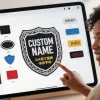
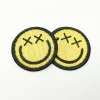
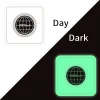
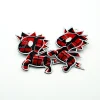
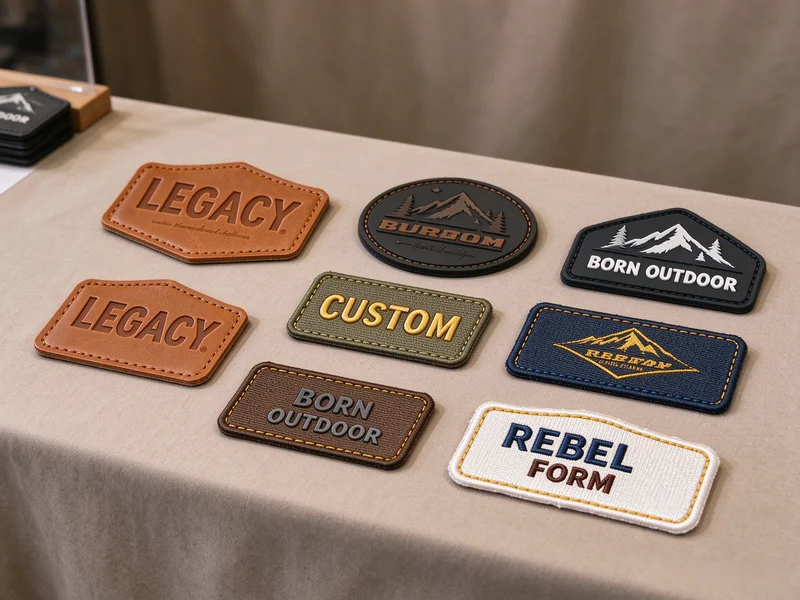
PVC labels are made from soft polyvinyl chloride (PVC) and are highly durable, flexible, and customizable branding accessories. They are widely used on clothing, bags, footwear, and outdoor gear to display logos or brand marks with 2D or 3D effects, bright colors, and long-lasting performance.

PVC Labels Overview (Quick Reference Table)
| Feature | Description |
|---|---|
| Material | Soft PVC (polyvinyl chloride), transparent or opaque |
| Thickness | 0.8 mm – 3.0 mm (standard: 1.0–2.0 mm) |
| Mounting Options | Sewing groove, heat press, double-sided adhesive, rivets |
| Surface Effects | 2D flat, 3D raised, transparent, luminous, matte, glossy |
| Lead Time | Samples 3–7 days, bulk 7–20 days |
| Common Use | Apparel, footwear, bags, outdoor gear, packaging |
| Target Clients | B2B manufacturers, brands, OEM/ODM apparel suppliers |
Q1: What Are PVC Labels?
Short Answer:
PVC labels are durable branding tags made of flexible PVC material, designed to enhance brand recognition and product aesthetics.
In Detail:
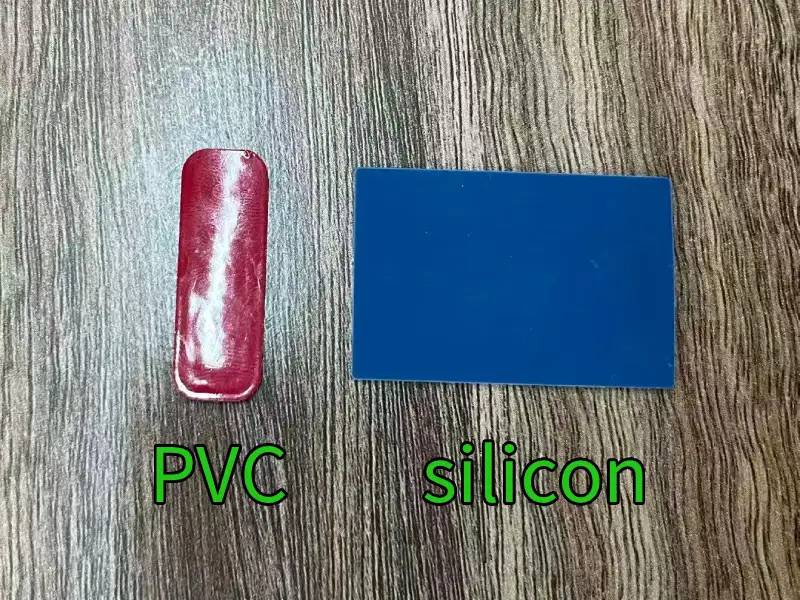
PVC labels are produced by molding or injecting colored PVC into customized metal or silicone molds. Unlike paper or fabric labels, they are waterproof, scratch-resistant, and retain color vibrancy for years. Because of their versatility, PVC labels are ideal for apparel manufacturers, sportswear brands, luggage makers, and promotional product suppliers seeking a balance between durability and design freedom.
Q2: Where Can You Use PVC Labels?
Short Answer:
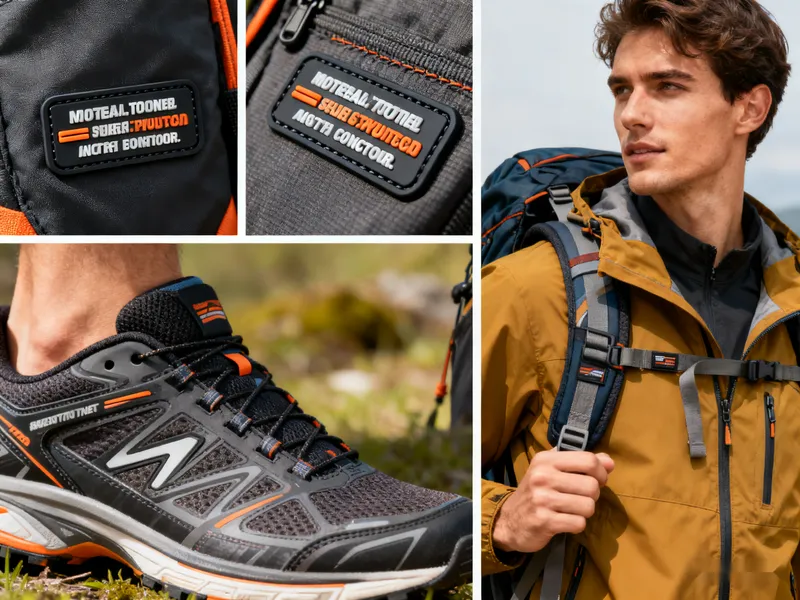
PVC labels are commonly used on jackets, jeans, backpacks, caps, sneakers, and outdoor equipment to showcase brand identity and enhance visual impact.
In Detail:
- Apparel: Sewn on collars, cuffs, sleeves, or hems for outdoor and activewear brands.
- Footwear & Bags: Applied on shoe tongues, bag fronts, and straps for durability and aesthetic appeal.
- Accessories: Used as zipper pulls, hang tags, or decorative patches.
- Packaging & Anti-counterfeiting: Embedded with QR codes or micro-textures for traceability and authenticity verification.
Q3: How Are PVC Labels Manufactured?
Short Answer:
They are produced through mold design, color injection, curing, trimming, and surface finishing to achieve a smooth, detailed, and customizable appearance.
In Detail:
- Design & Mold Creation: A metal or silicone mold is developed based on the client’s logo or artwork.
- Color Injection: Colored PVC is injected in layers for multi-color or 3D effects.
- Curing & Demolding: Labels are baked or air-dried, then removed from molds and checked for quality.
- Post-Processing: Edges are trimmed, sewing grooves are carved, holes or adhesive backings are added.
- Quality Inspection: Dimensional accuracy, color consistency, and bonding strength are verified before shipment.
Q4: Why Choose PVC Labels Over Woven or Metal Labels?
Short Answer:
PVC labels offer superior durability, color richness, flexibility, and cost efficiency—ideal for modern branding applications.
In Detail:
- Durability: Resistant to water, friction, and UV exposure.
- Design Flexibility: Supports 2D and 3D patterns, embossed logos, and bright Pantone-matched colors.
- Cost-effective: Economical in large-scale production compared to metal or leather tags.
- Multi-Purpose: Works as both branding and decorative elements on diverse materials.

Q5: What Are the Limitations of PVC Labels?
Short Answer:
PVC labels are not suitable for high-temperature environments and may not offer the luxury feel of metal or leather labels.
In Detail:
- Heat Sensitivity: Prolonged exposure to high temperatures can deform PVC.
- Regulatory Concerns: Certain regions (e.g., EU, North America) require PVC to meet environmental standards such as RoHS or REACH.
- Tactile Difference: While soft and flexible, PVC doesn’t replicate the metallic or natural texture of premium materials.
Q6: How to Order or Specify PVC Labels?
Short Answer:
Provide logo artwork, color codes (Pantone), dimensions, thickness, attachment method, quantity, and usage scenario when placing an order.
In Detail:
- Design Files: Vector format (AI, EPS, PDF).
- Color Matching: Pantone or physical color sample.
- Size Tolerance: ±0.5 mm standard.
- Attachment Options: Sewing groove, heat-seal backing, double-sided adhesive, or woven base.
- Sample Confirmation: Always request physical samples before mass production.
Q7: What Quality Tests Are Common for PVC Labels?
Short Answer:
Visual inspection, dimensional accuracy, wash resistance, abrasion resistance, and adhesion strength tests.
In Detail:
- Color & Surface Inspection: Check for bubbles, rough edges, or color deviation.
- Functional Testing: Fold, rub, and wash tests to simulate real usage.
- Environmental Compliance: Provide certificates like RoHS/REACH for export markets.
- Sewing Compatibility: Test on garment samples to ensure machine-sewing efficiency.
Q8: B2B Ordering Tips for Apparel & Luggage Brands
Short Answer:
Request prototypes, conduct on-garment sewing tests, and communicate end-use conditions with your supplier before bulk production.
In Detail:
- Sample Validation: Always test label samples on actual garments for fit, color, and durability.
- Process Coordination: Share garment washing and heat-finishing processes with the label supplier.
- Cost Efficiency: Compare options for thickness, attachment, and material blend to optimize cost and production time.
- Regulatory Readiness: Confirm certifications early to meet your export market’s compliance requirements.
Additional FAQs
- Can PVC labels be transparent or glow in the dark?
Yes, both transparent and luminous PVC labels are available using specialized pigment formulations. - Can I make fine gradient colors?
Multi-layer color injection can achieve segmented gradients; micro-printing or silk-screen post-processing is recommended for ultra-fine designs. - What is the MOQ?
MOQ depends on mold complexity and quantity; sample runs are available before mass production.
Final Thoughts for B2B Buyers
When selecting PVC labels for apparel or bags, always consider four key factors: brand identity, garment process, end-use environment, and compliance.
At Qinghan International, we specialize in designing and manufacturing high-quality custom PVC labels with tailored specifications—thickness, backing type, and sewing groove design—optimized for your production workflow.
Our engineering team can provide three custom PVC label proposals (including technical specs and cost range) based on your logo and intended use.
Would you like us to prepare these design recommendations for your next collection?
About Author
——————————————————————————————————————————————

Apollo
Senior E-commerce Manager
Apollo is an experienced e-commerce manager specializing in patches, apparel accessories, and digital marketing, helping global textile brands grow with proven online strategies.
——————————————————————————————————————————————