A public safety patch is an embroidered or badge-style patch used by public safety organizations to identify roles, reinforce authority, and promote trust. Commonly worn by fire, EMS, emergency management, and community safety teams, these patches balance visibility, clarity, and professional design standards.
What Is a Public Safety Patch?
A public safety patch is a visual identifier used by organizations responsible for protecting communities. Unlike decorative patches, public safety patches communicate function, responsibility, and credibility at a glance.
They are typically used by:
- emergency medical services (EMS)
- fire departments
- emergency management agencies
- disaster response teams
- public safety officers and volunteers
Clear identification is critical in high-pressure environments.

Why Public Safety Patches Matter
In emergency situations, seconds matter. A well-designed public safety patch helps the public and other responders quickly recognize who is authorized to help.
Public safety patches support:
- rapid role identification
- public trust and reassurance
- inter-agency coordination
- professional appearance
- organizational accountability
They are functional tools, not just branding elements.
Common Applications for Public Safety Patches
Emergency Response Uniforms
Public safety patches are worn on:
- jackets
- shirts
- vests
- outerwear
Visibility and legibility are top priorities.

Tactical & High-Visibility Gear
Used on:
- reflective vests
- response bags
- helmets or protective equipment
Patches often complement reflective materials.

Volunteer & Community Safety Programs
Patches clearly distinguish trained volunteers from civilians during events or emergencies.

Training & Exercise Apparel
Used during drills, simulations, and joint response exercises.
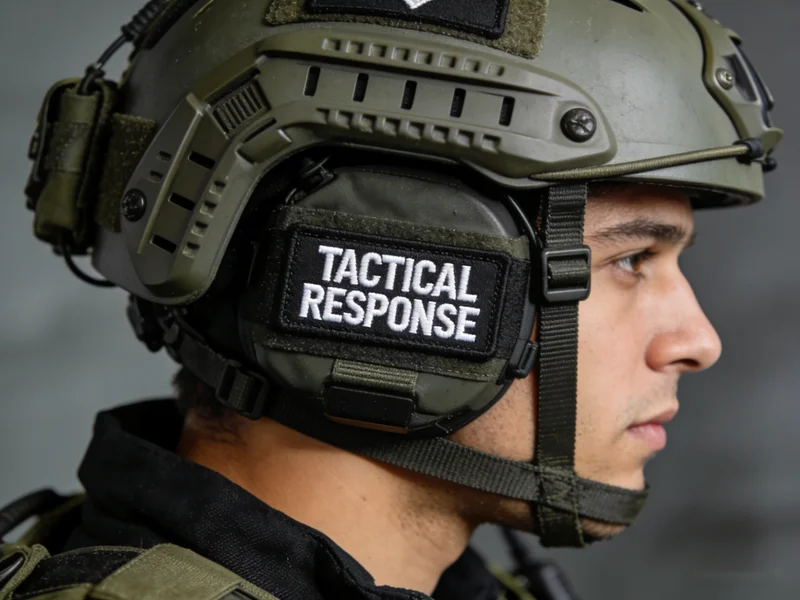
Popular Design Styles for Public Safety Patches
Badge & Shield Designs
Classic shapes that convey authority and trust.
Text-Forward Identification
Clear wording such as “PUBLIC SAFETY,” “EMS,” or “EMERGENCY RESPONSE.”
Department + Role Combinations
Agency name paired with role or unit identifier.
Minimalist, High-Contrast Layouts
Designed for fast recognition from a distance.
Design should always prioritize function over decoration.
Design Guidelines for Effective Public Safety Patches
Prioritize Readability
Text must be legible in motion and low-light conditions.
Use Strong Color Contrast
High contrast improves visibility on uniforms and gear.
Avoid Over-Complex Graphics
Simple symbols work better in emergencies.
Maintain Consistent Design Systems
Consistency across departments improves recognition.
Good design supports calm, controlled response environments.
Placement Considerations for Public Safety Patches
Chest & Upper Back
Ideal for clear front and rear identification.
Sleeves
Used for secondary identifiers or department names.
Vests & Outerwear
Often paired with Velcro for flexibility.
Equipment & Bags
Extends identification beyond uniforms.
Placement should follow organizational guidelines and safety regulations.
Public Safety Patch vs Decorative Patch
| Aspect | Public Safety Patch | Decorative Patch |
|---|---|---|
| Purpose | Identification & trust | Aesthetic expression |
| Design freedom | Controlled | High |
| Visibility requirement | Critical | Optional |
| Usage context | Professional & emergency | Casual or fashion |
Understanding this distinction is essential for proper design.
Design Inspiration for Modern Public Safety Patches
Current trends emphasize:
- simplified badge shapes
- bold typography
- reduced color palettes
- standardized layouts across agencies
These choices improve recognition and interoperability.
Common Mistakes to Avoid
Using Small or Thin Fonts
Hard to read in emergencies.
Low-Contrast Color Choices
Reduce visibility under stress or poor lighting.
Inconsistent Patch Systems
Confuse the public and other responders.
Ignoring Placement Regulations
Can violate uniform or safety standards.
Avoiding these mistakes protects both responders and the public.
Who Uses Public Safety Patches
Public safety patches are ideal for:
- emergency response agencies
- municipal public safety departments
- volunteer safety teams
- event safety coordinators
- disaster relief organizations
They serve both operational and communicative roles.
FAQ: Public Safety Patch
Q: Are public safety patches regulated?
Often yes—many agencies follow internal or regional guidelines.
Q: Can public safety patches be customized?
Yes, within approved design and usage standards.
Q: Should public safety patches include logos?
Logos are acceptable if they do not reduce clarity.
Q: Are patches used only on uniforms?
No, they are also applied to vests, gear, and equipment.
Conclusion
A public safety patch is a critical visual tool that supports identification, trust, and coordination in emergency and community safety environments. Thoughtful design ensures patches are clear, respectful, and immediately recognizable when it matters most.
For designers and B2B buyers, the key is to focus on legibility, consistency, and function-first design. When executed correctly, public safety patches become dependable symbols of service, responsibility, and protection—seen and trusted by the communities they serve.
About Author
——————————————————————————————————————————————

Apollo
Senior E-commerce Manager
Apollo is an experienced e-commerce manager specializing in patches, apparel accessories, and digital marketing, helping global textile brands grow with proven online strategies.
——————————————————————————————————————————————