Custom woven patches size adjustment becomes complex when clients cannot provide exact dimensions or original fonts. In this project, we rebuilt the artwork proportion from scratch and hand-sketched the missing font to meet the client’s high-precision requirements—achieving a final woven patch that perfectly matched the required size and visual expectations.
1. What Was the Client’s Problem With Custom Woven Patches Size Adjustment?
Client Question:
“I need a high-precision woven patch, but the proportions of my artwork don’t match the required production size—and I don’t have the original font file. Can you still make it?”
Short Answer:
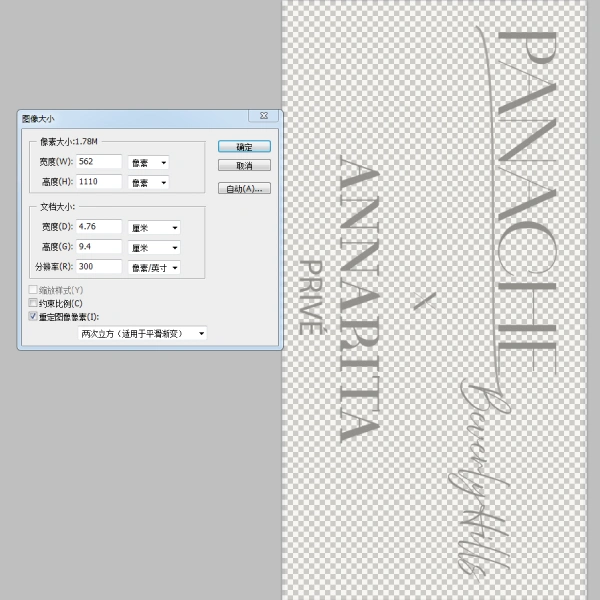
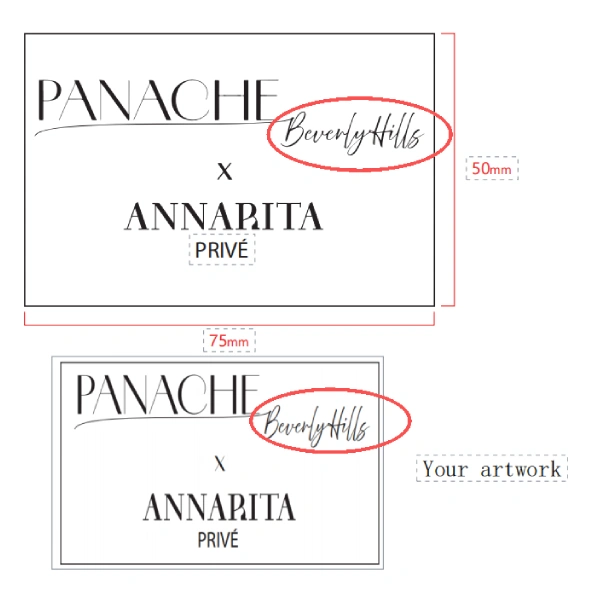
Yes. After analyzing the inconsistent proportions and missing font, we reconstructed the required woven patch design by manually adjusting the artwork ratio and hand-drawing the missing script-style font to preserve the exact visual details.
Detailed Explanation:
This client wanted to produce a woven patch with extremely strict detail standards. However, two major obstacles appeared at the very beginning:
- The artwork size ratio did not match the required production size.
- The file provided had a completely different length-to-width ratio from the actual patch dimensions.
- The original font file could not be provided.
- One of the key fonts resembled a hand-written script.
- Not available in Photoshop or any standard font library.
- The client would not accept any similar or substitute font.
Because the client demanded extremely high accuracy, this became a rare and difficult case—one that several suppliers were unable to solve.
2. Why Was This Custom Woven Patch Case Especially Difficult?
Client Question:
“Why can’t you just stretch the artwork or replace the font?”
Short Answer:
Stretching the artwork would distort fine details, and replacing the missing font would fail to meet the client’s strict requirements. A precise restoration was necessary to maintain clarity in woven production.
Deep Dive Into the Difficulty:
Challenge 1 — Ratio Mismatch
- Woven patches require exact proportions because the loom machine follows a pixel-based weaving grid.
- Any distortion causes:
- broken edges
- uneven strokes
- loss of clarity
- inaccurate visual alignment
The provided artwork simply did not match the patch’s required aspect ratio.
Challenge 2 — Missing High-Detail Script Font
- The client’s artwork included a script-style font not found in any known library.
- No vector file.
- No editable layers.
- Client demanded 100% accuracy—not approximate, not similar, but identical.
This issue alone made the project difficult enough that several suppliers declined it.
3. How We Solved the Custom Woven Patches Size Adjustment Problem
Client Question:
“If the font doesn’t exist, how can you restore it?”
Short Answer:
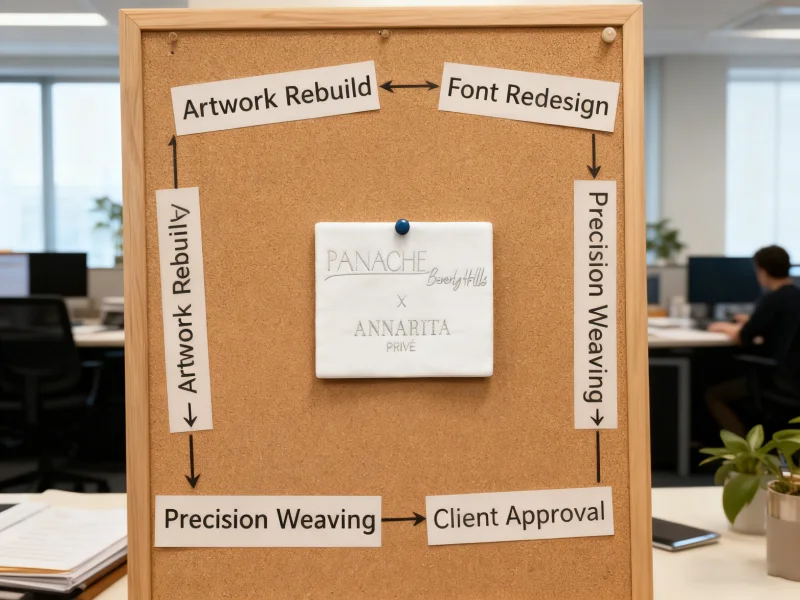
Our design team held an internal technical meeting and decided to manually redraw the missing script font—stroke by stroke—based on the original artwork. Then we reconstructed the entire design to fit the final patch size perfectly.
Step-by-Step Professional Solution
Step 1 — Internal Technical Meeting
Because the client’s expectations were high and the artwork was problematic, we organized a cross-department review:
- senior designers
- weaving technicians
- artwork engineers
The goal:
➡️ Find a method to preserve every fine detail while achieving the correct size ratio.
Step 2 — Manual Font Redrawing (Hand-Sketch Method)
Since the original font didn’t exist, our designers used a hand-drawing technique:
- zooming into the artwork
- reconstructing every curve
- adjusting stroke thickness to match woven limits
- converting hand-drawn outlines into production-ready vector paths
This step alone required high skill and precision, but it was the only way to satisfy the client’s demand for accuracy.
Step 3 — Correcting the Artwork Ratio
We rebuilt the entire layout based on:
- required woven size
- thread density
- border constraints
- spacing between elements
The design was rebuilt from scratch to ensure:
- no distortion
- no stretching artifacts
- perfect alignment with weaving capabilities
This solved the core issue of Custom Woven Patches Size Adjustment.
Step 4 — Client Confirmation and Adjustments
After exporting a woven-compatible mock-up, we:
- clearly explained the reconstruction process
- showed enlarged screenshots of hand-drawn improvements
- provided ratio comparison before vs. after
- reassured that no substitute fonts had been used
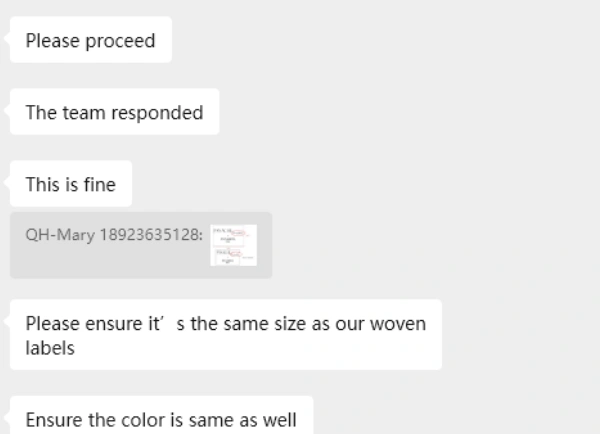
The client reviewed the revised artwork and was extremely satisfied — “This is exactly what I wanted.”
Step 5 — Production and Final Quality Check
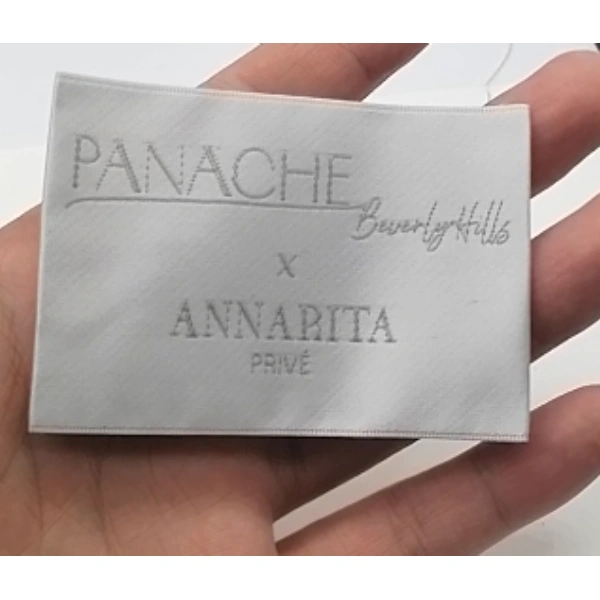
- The woven patch sample was produced according to the adjusted artwork.
- Details remained crisp and clean thanks to accurate ratio correction.
- The hand-drawn script font looked identical to the original.
The client approved the production immediately.
4. What Can Other Buyers Learn From This Case?
Client Question:
“What should I do if my artwork is missing fonts or the size doesn’t match production needs?”
Short Answer:
It’s still solvable. A professional supplier can reconstruct proportions, redraw missing fonts, and optimize the artwork for weaving—ensuring the final patch matches your expected visual result.
Practical Recommendations for Buyers
- If the original font is missing:
- Provide the highest-resolution image available.
- Avoid substituting fonts yourself unless precision is not important.
- A professional team can redraw fonts manually if needed.
- If the artwork ratio is incorrect:
- Do not stretch the artwork.
- Let a technical designer rebuild the shape based on weaving constraints.
- Always communicate detail-level requirements clearly:
- High-precision woven patches require early clarity.
- The earlier we know your expectations, the better the final result.
- Choose suppliers with real design capabilities—not only production capacity.
This project proved that deep technical expertise is the key to solving complex custom patch problems.
5. Conclusion: Custom Woven Patches Size Adjustment Requires Expert-Level Design Support
Custom woven patches size adjustment becomes challenging when:
- artwork proportions are incorrect
- original fonts are missing
- client requires extremely high precision
In this case, the client could not provide usable files, yet still required perfect accuracy. After several suppliers failed, they found us.
Through:
- internal technical discussions
- manual font reconstruction
- proportion rebuilding
- professional woven-ready artwork preparation
we delivered a woven patch that matched the client’s expectations perfectly.
Whether you need:
- size correction
- missing font reconstruction
- high-detail woven patch solutions
- redesign for better weaving clarity
Our 26+ years of expertise allow us to provide multiple professional solutions for any custom patch challenge.
About Author
——————————————————————————————————————————————

Mary
Sales Manager
Hi, I’m Mary. Passionate about exploring new industry trends, I stay ahead of the curve and offer clients forward-thinking solutions tailored to their needs.
——————————————————————————————————————————————