A clear plastic patch requires choosing the right transparent material. Silicone produces a frosted, semi-transparent look, while PVC achieves a fully clear effect. After material evaluation and sample testing, we recommended PVC to help the client reach the precise transparency they wanted.

Why Is It Difficult to Make a Truly Transparent Patch?
Short Answer:
Because not all patch materials can achieve full transparency. Silicone becomes milky or frosted, while PVC can achieve true clear visibility.
Deep Explanation:
The customer wanted a fully transparent patch, something visually clean, modern, and clear enough to reveal details beneath it. Originally, they believed that silicone—commonly used in soft patches—would deliver the transparency they needed.
However, in real manufacturing environments:
- Silicone is naturally milky
- Even “transparent silicone” looks like frosted glass
- It cannot achieve crystal-level clarity
Before working with us, the customer spent a significant amount of time trying to achieve a transparent look with silicone but did not get the expected results. Their goal was a clear plastic patch, not a foggy or semi-transparent one.
Only after consulting us did they fully understand the material limitations and the correct path to produce a truly clear patch.
1. What Is the Transparency Difference Between Silicone and PVC?
Challenge: Silicone Cannot Produce Full Transparency
Short Answer:
Silicone transparency is limited and always appears frosted, making it unsuitable for patches requiring crystal-clear effects.
In Detail:
Many customers assume silicone can be fully transparent. In reality:
Silicone Transparency Characteristics
- Semi-transparent
- Frosted / matte-like
- Light-diffusing
- Ideal for soft texture, but not clarity
Even premium-grade silicone has a milky appearance, similar to frosted glass, as shown below:

This makes silicone unsuitable for applications such as:
- Clear logo windows
- Transparent label zones
- See-through decorative patches
- Branding elements requiring visual clarity
Thus, we recommended switching to a different material.
Solution: PVC Provides True Clear Transparency
Short Answer:
PVC is the best material when the client needs a clear plastic patch with high transparency.
Deep Explanation:
After analyzing the customer’s expectations, including clarity, hardness, durability, and final effect, we recommended PVC, which offers:
PVC Advantages
- High transparency
- Glossy surface
- Clear visibility
- More stable color
- Better consistency across batches
The final sample produced with PVC delivered the clarity the customer originally expected.
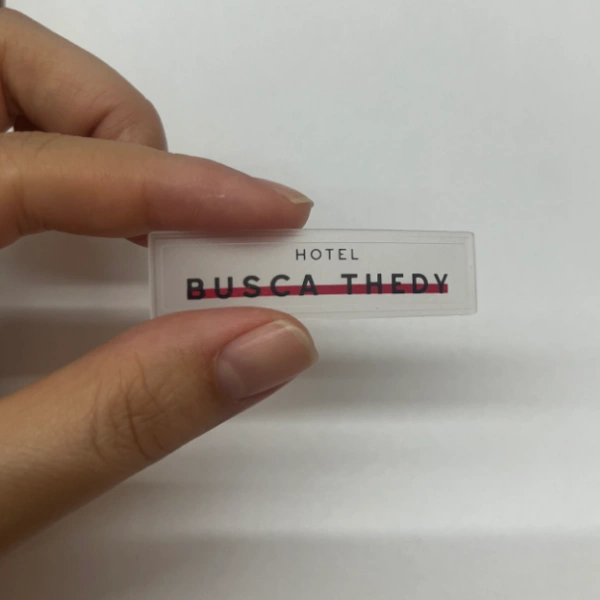
Once the customer saw the PVC effect, they immediately confirmed this material for mass production.
2. How Did Communication Help Achieve the Perfect Clear Plastic Patch?
Short Answer:
Through material explanation, visual demonstrations, and side-by-side sample comparisons, we helped the customer understand what each material can realistically achieve.
Deep Explanation:
The key to success in creating a clear plastic patch is:
- Setting correct expectations
- Understanding material limits
- Testing before production
- Comparing transparency levels
- Choosing the right manufacturing method
We guided the customer through:
✔ Step 1: Material consultation
We explained why silicone could never become fully transparent, despite its popularity.
✔ Step 2: Sample comparison
We showed real samples so the customer could visually compare:
- silicone (frosted effect)
- PVC (crystal clear effect)
✔ Step 3: Choosing the optimal method
After evaluating both options, the customer selected PVC immediately.
This consultative process is what allowed us to achieve the exact clarity the customer wanted—something they could not obtain from silicone.
3. What Should Brands Know When Creating a Clear Plastic Patch?
Featured Snippet–Optimized Summary:
- Silicone creates a frosted, semi-transparent effect—not fully clear
- PVC offers high clarity and is ideal for clear plastic patches
- Transparency requirements must be discussed early in the project
- Patch softness, flexibility, and texture differ between materials
- Material testing is essential before mass production
- Choosing the right supplier ensures you get the expected visual results
4. Why Did the Customer Ultimately Choose Us?
Short Answer:
Because we provided professional guidance, correct material selection, and real-world samples that achieved the exact transparency the customer envisioned.
Detailed Explanation:
The customer had a strong vision: a perfectly transparent patch, not cloudy, not frosted, and not semi-opaque.
Before consulting us:
- They assumed silicone would work
- Their initial tests with other suppliers failed
- They couldn’t understand why it didn’t look clear
With over 20 years of custom patch manufacturing experience, we were able to quickly diagnose the issue and provide a professional solution path.
Our expertise helped the customer:
- Avoid wrong material choices
- Save sampling time
- Understand clear-material differences
- Achieve the final aesthetic they wanted
Once they saw the PVC sample, they immediately approved it—fully satisfied.
Conclusion
Creating a clear plastic patch requires more than simply choosing a “transparent material.” Different materials produce dramatically different transparency levels:
- Silicone → frosted, milky, semi-transparent
- PVC → fully clear, clean, crystal-like transparency
This project demonstrates the importance of:
- Understanding material characteristics
- Working with suppliers who can provide accurate guidance
- Using samples and comparisons to confirm expectations
- Leveraging experience to select the right solution
With 20+ years in custom patch manufacturing, we help clients achieve the exact effect they want—even when initial attempts from other suppliers fail.
About Author
——————————————————————————————————————————————

Vicky
Sales Manager
Hi, I’m Vicky,.With extensive industry experience and a well-rounded skill set, I excel in both team collaboration and customer service, always maintaining professionalism and efficiency to ensure the best client experience.
——————————————————————————————————————————————