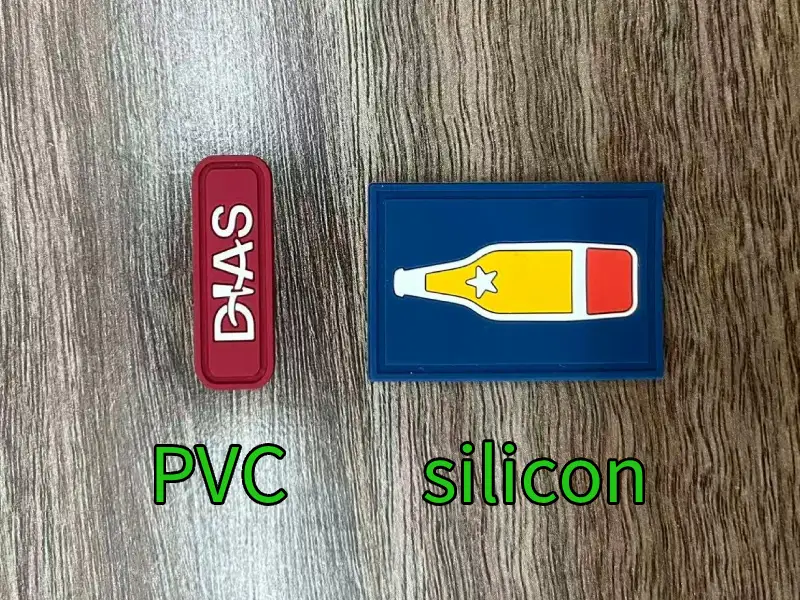
In English-speaking markets, both silicone patches and PVC patches are often broadly referred to as “rubber patches.”
However, from a material and performance perspective, silicone and PVC are very different, and choosing the wrong one can lead to durability issues, application failures, or customer complaints.
So how can you tell the difference—and how should you choose the right one?
How to Tell Silicone Patches from PVC Patches
1. Hand Feel & Aging Behavior
- Silicone patches feel softer and more elastic, even after long-term use
- PVC patches tend to feel firmer, and may become harder over time
This difference becomes more noticeable after repeated washing, bending, or exposure to heat.
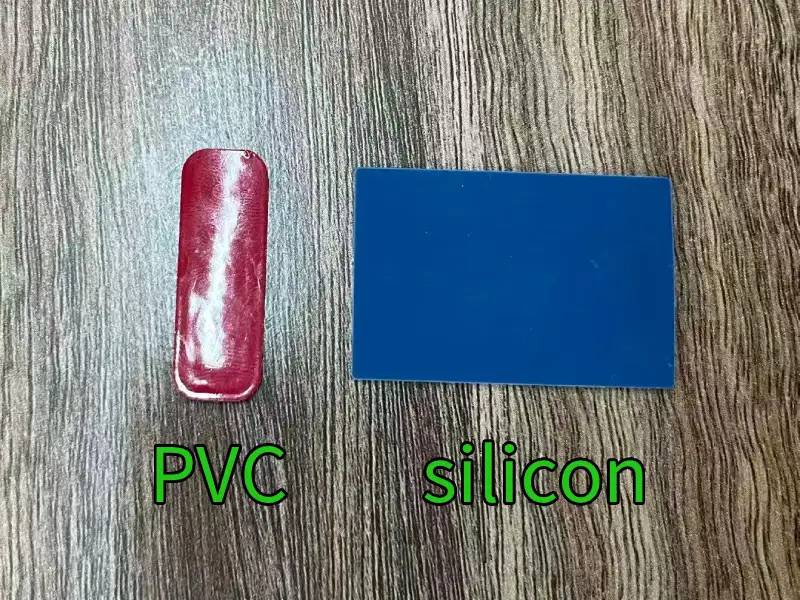
2. Backside Appearance
- PVC patches usually have a glossy (shiny) back surface
- Silicone patches typically have a matte back surface
This is one of the quickest visual ways to distinguish the two.
3. Adhesive & Heat Transfer Compatibility
PVC is generally not recommended for adhesive backing or heat transfer:
- PVC may release plasticizers over time
- Under heat, it can become oily, affecting adhesion
- This often leads to poor bonding and patch detachment
Silicone, by contrast, is far more stable for garments that require heat application or bonding.
How to Choose: The 4 Key Decision Factors
1️⃣ Product Application
- Backpacks / Gear / Hats / Footwear → PVC patches are more suitable
- Garments / Sportswear / Functional apparel → Silicone patches are safer and more garment-friendly
2️⃣ Wearing or Usage Scenario
- Frequent bending / Skin-contact areas → Silicone patches
- Abrasion resistance / Waterproof focus → PVC patches
3️⃣ Brand Style & Positioning
- Workwear / Tactical / Outdoor / Rugged aesthetics → PVC patches
- Minimalist / Tech-inspired / Modern styles → Silicone patches
4️⃣ Budget & Order Quantity
- Large volumes / Cost-sensitive projects → PVC patches
- Mid-to-high-end positioning / Tactile experience matters → Silicone patches

Our Recommendation to Brands
In real-world projects, there is no absolute “better” material.
What truly matters is:
Which material best fits your product use, brand positioning, and customer expectations.
Understanding the differences between silicone and PVC at the development stage helps brands avoid unnecessary risks—and ensures the patch performs as well as the product it represents.
If you’re unsure which option fits your application, material consultation early in the project can save significant time and cost later on.
About Author
——————————————————————————————————————————————

Vicky
Sales Manager
Hi, I’m Vicky,.With extensive industry experience and a well-rounded skill set, I excel in both team collaboration and customer service, always maintaining professionalism and efficiency to ensure the best client experience.
——————————————————————————————————————————————