Custom PVC patches allow outdoor brands to differentiate themselves through texture, 3D structure, transparency, and tactile detail. By using multi-layer PVC, color-separation channels, and sculpted molds, brands can elevate technical apparel design beyond standard industry aesthetics.
Why Premium Outdoor Brands Are Turning to Custom PVC Patches
Short Answer:
Because the outdoor apparel market is becoming increasingly homogeneous, brands now rely on innovative trims—especially custom PVC patches—to create visual differentiation and tactile appeal.
Deep Explanation:
Our client is a technical outerwear manufacturer whose benchmark brand is Arc’teryx.
They shared a concern familiar to most outdoor brands today:
“The jackets look almost identical across the market. We must differentiate through trims.”
They understood that details sell the product, especially to C-end customers who value innovation, tactile experience, and premium finishing touches.
This is where custom PVC patches become powerful branding tools:
- They offer strong 3D visual impact
- Combine transparency + color layers
- Deliver unique tactile interaction
- Highlight technical identity
- Offer endless creative possibilities
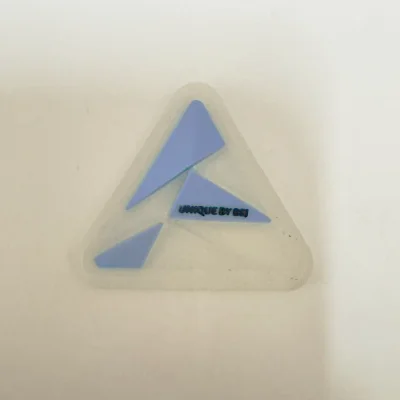
Before beginning the design work, the client asked us for inspiration samples—especially our latest experimental developments. One of our newly developed transparent PVC patches with separated color channels instantly caught the client’s attention. This sample became the source of inspiration for their entire project.
The Client’s First Design Proposal — A Beautiful Challenge
The customer submitted the first design concept, which included:
- 1mm green PVC base
- 4mm transparent raised trapezoid (hexagonal shape)
- A 1mm recessed area under the transparent layer with green lettering
- A second layer of gray letters underneath the base to imitate shadow
We were genuinely excited when we received this concept.
This was not a simple patch — it was a high-difficulty, multi-depth, multi-layer sculpted PVC structure.
It represented exactly the type of challenge our development team loves to tackle.
Problem #1 — The Gray Shadow Letters Were Technically Impossible
When evaluating the artwork, our engineering team realized:
- The gray shadow text under the green base could not be produced using standard PVC molding.
- PVC does not allow “sub-base shadowing” under an opaque color layer.
- Even if forced, the gray would not appear as a natural shadow.
We held multiple internal discussions and then offered two possible solutions:
Solution A – Change Material to Resin
- The transparent part becomes resin, enabling deeper optical layering
- But resin is harder, losing the soft-touch experience the client desired
Solution B – Remove the gray shadow text
- Maintain PVC material
- Keep the patch soft
- Achieve a lightly foggy transparent effect — exactly what the client wanted
The client chose Solution B because they preferred:
- A softer touch
- A slightly hazy transparent look
- The overall tactile experience
This allowed us to move forward.
Second Design Attempt — Hexagonal Structure With Color-Separation Channels
In the second version, we proposed:
- Removing gray shadow text
- Adding hexagonal dividing lines to create color-separation grooves
- Enhancing tactile interactivity (“fidget-like playability”) for C-end users
This version was highly creative, but:
It was rejected by the client’s boss.
This is normal in product development, and we continued to support the process with full patience.
Third Design — Quadrilateral Shape With Complex Multi-Level Structure
The third proposal included:
- Shape changed from hexagon → quadrilateral
- Outer edges higher, center lower
- Transparent layer slanted
- Middle gray zone flat
- All gray areas recessed under the transparent layer
We evaluated it together with our mold engineers and confirmed:
Yes, we can make this.
We then requested detailed measurement specifications for each depth, slope, and recess.
At this point, we were ready to begin sample production.
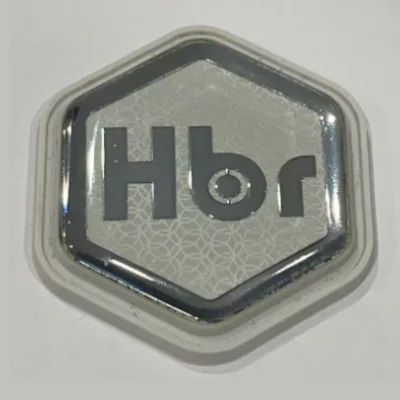

Fourth and Final Design — Increased Difficulty, Still Accepted
Before sampling began, the client returned a fourth version:
- The previously slanted letters were changed to fully parallel letters
- Only the transparent body remained slanted
This significantly increased mold-carving complexity.
Parallel letters inside an angled transparent frame is extremely difficult to sculpt cleanly.
But we accepted the challenge.
We told the client:
“Yes, we can make this sample. We’ll start production.”
The client was surprised and very grateful.
Client Reaction — Trust Built Through Professionalism + Patience
Throughout multiple revisions, the client told us:
- They appreciated our patience
- They valued our professional suggestions
- They noticed we never rushed them
- We always offered technically correct and stable solutions
Finally, the client said:
“Your price is higher than other suppliers, but your service and professional support make every dollar worth it. I’m moving all my projects to your company.”
For us, this was the greatest reward.
As a sales and technical team, recognition like this is what pushes us forward.
What This Case Tells Us About Developing Custom PVC Patches
Featured Snippet Summary (SEO-optimized):
- High-end custom PVC patches require engineering-level design review
- Multi-layer transparency effects must be evaluated for feasibility
- Optical illusion effects (shadows, recesses, slopes) need professional mold planning
- Material selection (PVC vs resin) affects softness & clarity
- Multiple revisions are normal for premium outerwear brands
- Close communication builds trust and ensures final success
This case demonstrates why top outerwear brands rely on professional suppliers for complex PVC development.
Conclusion
This project is a perfect example of how custom PVC patches can elevate the personality of technical outerwear and strengthen brand identity. Through four rounds of revisions—each with increased structural complexity—we worked closely with the client to achieve a high-end, innovative PVC design originally intended to differentiate their product line from competitors.
Technical development requires:
- Material expertise
- Strong engineering understanding
- Professional mold capability
- Patience in communication
- Accurate evaluation of what is and is not possible
And when all these elements come together, the final result not only satisfies the client—it earns their long-term trust.
About Author
——————————————————————————————————————————————

Heidi
Sales Manager
Hi, I’m Heidi, Sales Manager. Known for professionalism and efficiency, I am often recognized as the top sales performer. I believe expertise and dedication build lasting trust with clients.
——————————————————————————————————————————————