The best metallic TPU solution depends on performance priorities. Some metallic TPU materials are scratch-resistant but not washable, others are washable but scratch easily. A few premium solutions—such as metallic inks or specialized metallic TPU films—can achieve both, but involve trade-offs in color range and cost.
Why Metallic TPU Patches Are More Complex Than They Look
Many clients assume that “metallic color” TPU patches are a single material category. In reality, metallic TPU patches fall into several technical types, each with distinct performance characteristics.
This project began when a client requested a TPU patch with a metallic appearance for use on garments—a common request in modern fashion and outdoor apparel.
However, once usage conditions such as washing, friction, and long-term wear are considered, the complexity becomes clear.
Understanding the Three Common Metallic TPU Options
Before making a recommendation, we first clarified the functional differences between available metallic TPU solutions.
Option 1: Scratch-Resistant Metallic TPU (Not Washable)
Characteristics
- Strong resistance to surface scratching
- Stable metallic appearance
- Poor water-wash resistance
Limitations
- Metallic layer degrades after repeated washing
- Not suitable for garments requiring frequent laundering
This option is more suitable for bags, accessories, or decorative items, rather than apparel.
Option 2: Wash-Resistant Metallic TPU (Scratch-Sensitive)
Characteristics
- Maintains metallic color after washing
- Flexible and garment-friendly
Limitations
- Surface scratches easily
- Metallic effect degrades under friction
For garments exposed to abrasion, this creates long-term appearance risks.
Option 3: Screen-Printed Metallic Ink on TPU
Characteristics
- Both wash-resistant and scratch-resistant
- Highly controllable color consistency
Limitations
- Higher production cost
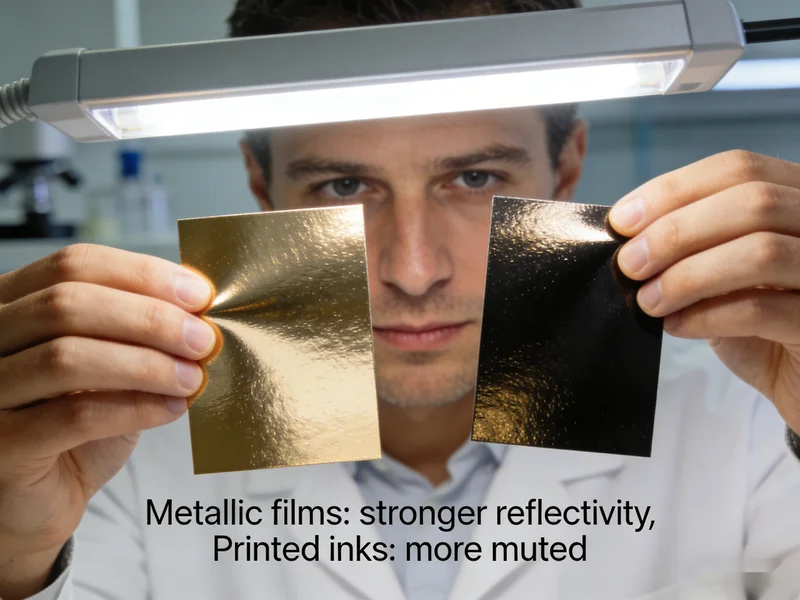
- Metallic effect slightly less vibrant than raw metallic films
This solution is often chosen for high-performance apparel, despite the higher cost.
Our Factory Advantage: A Balanced Metallic TPU Material
Based on internal testing and supplier development, we identified a specialized metallic TPU material that offers:
- Strong scratch resistance
- Reliable wash durability
- Stable bonding performance
This material effectively solves the core functional problem—but introduces a new consideration.
The Trade-Off: Limited Color Range
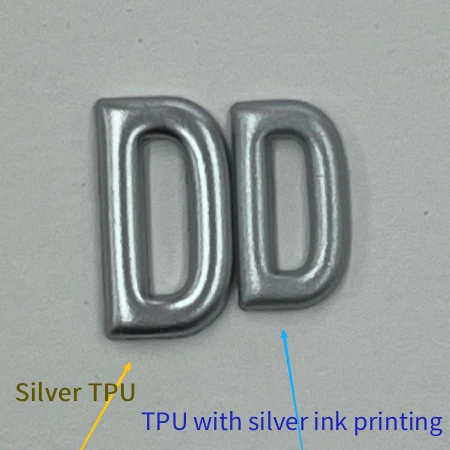
Unlike printed metallic inks, this metallic TPU material is available in limited metallic shades.
If a client can accept:
- Slight color deviation from a specific Pantone
- Matte or semi-matte metallic tones
Then this option delivers excellent performance at a more competitive cost.
How We Advise Clients Based on Color Tolerance
When Color Accuracy Is Flexible
We recommend direct TPU material embossing (heat-pressed TPU) because:
- Metallic effect is more authentic
- Cost is lower than printed metallic inks
- Durability is superior
This is especially effective when clients specify a general metallic tone rather than an exact Pantone.
When Exact Metallic Color Is Required
If the client:
- Must match a specific metallic Pantone
- Cannot accept even slight color deviation
Then we recommend screen printing with metallic ink on TPU.
Although:
- The metallic finish appears slightly darker
- The cost is higher
It guarantees:
- Wash durability
- Scratch resistance
- Color control for apparel use
Material vs. Printing: Visual Differences Explained
It’s important to set correct expectations.
Compared to metallic TPU films:
- Printed metallic inks tend to look more muted
- Matte metallic finishes reduce reflectivity
- Raw metallic TPU delivers a stronger metal-like appearance
For this reason, when clients provide a metallic color reference, we often suggest material-based solutions first, then printing only if color precision is critical.
Why Material Selection Matters More Than Technique
This case demonstrates a key principle in metallic TPU patch development:
The right solution is not defined by one process—but by how material behavior aligns with real garment usage.
By clearly explaining:
- Scratch resistance
- Wash durability
- Cost differences
- Color limitations
Clients can make informed decisions that reduce future quality issues.
FAQ: Metallic TPU for Apparel Patches
Q: Is all metallic TPU washable?
A: No. Some metallic TPU films are scratch-resistant but fail after washing.
Q: Can metallic TPU patches be both scratch- and wash-resistant?
A: Yes, but options are limited to specific materials or printed metallic inks.
Q: Why does printed metallic ink look less shiny?
A: Printed inks sit on the surface and reflect less light than metallic films.
Q: Which option is more cost-effective?
A: Metallic TPU materials are generally cheaper than metallic ink printing.
Key Takeaways From This Metallic TPU Case
- Metallic TPU is not a single material category
- Durability requirements define the right solution
- Color tolerance affects cost and material choice
- Material embossing often outperforms printing visually
Conclusion
Producing reliable metallic TPU patches for garments requires more than selecting a metallic color—it requires understanding how materials behave under washing, friction, and long-term wear.
By evaluating durability, color tolerance, and cost together, brands can achieve metallic effects that look good not only on day one, but throughout the product’s lifecycle.
About Author
——————————————————————————————————————————————

Heidi
Sales Manager
Hi, I’m Heidi, Sales Manager. Known for professionalism and efficiency, I am often recognized as the top sales performer. I believe expertise and dedication build lasting trust with clients.
——————————————————————————————————————————————