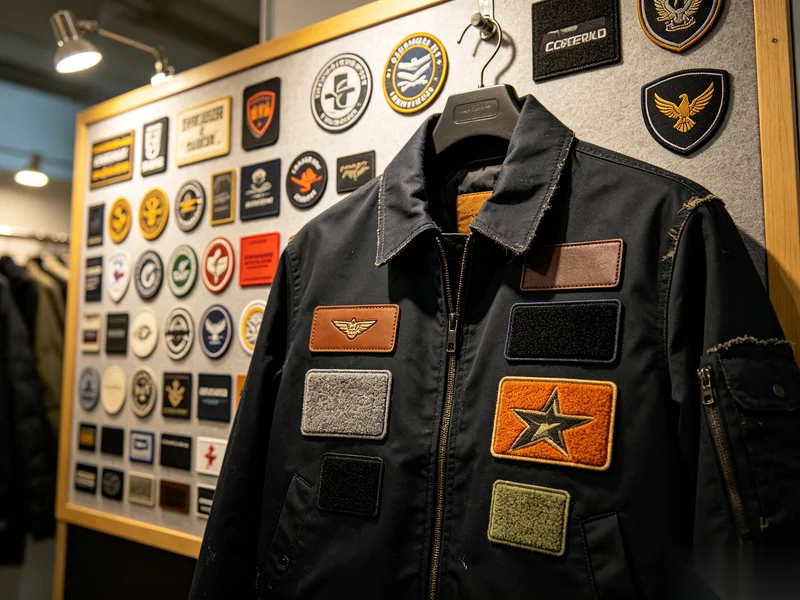
A Double-layer Felt Patch must be engineered to prevent edge lifting and long-term detachment. Beyond appearance, reinforcement methods—such as full-perimeter stitching combined with adhesive bonding—are essential to avoid durability failures that can lead to negative consumer feedback and brand damage.
Why Durability Matters More Than Appearance in Double-Layer Felt Patches
When developing a double-layer felt (felt fabric) patch, one core principle became very clear from the start:
preventing any risk of detachment is more important than visual design alone.
Garments are typically worn for years, sometimes even longer. If a patch begins to lift, peel, or partially detach during normal use, consumers rarely blame the accessory—they blame the brand. Once that perception forms, it can directly lead to negative reviews and long-term brand harm.
From a product development perspective, our responsibility is to ensure that accessories never become the source of negative brand perception.
Figure 1: Initial Concept – Double-Layer Felt Structure

The double-layer felt structure itself was a strong and reasonable design concept. Felt provides softness, warmth, and a premium tactile feel, making it suitable for visible garment areas.
However, the real challenge was how to fix the two layers together and attach the patch securely to the garment.
What Are the Possible Fixation Methods for Double-Layer Felt Patches?
For double-layer felt patches, fixation methods can vary significantly. Common approaches include:
- Glue bonding
- Industrial adhesives
- Stitch reinforcement, either partial or full
Each method offers different trade-offs in terms of cost, appearance, and long-term reliability.
Figure 2: Stitching Only at the Corners
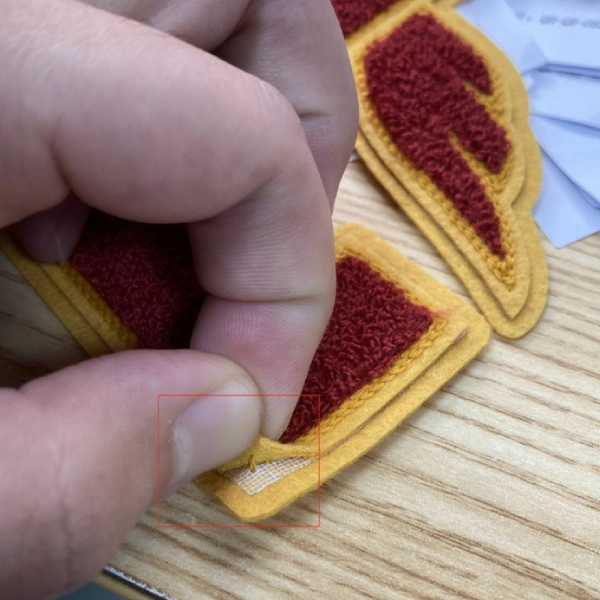
Initially, stitching was added only at the corner points.
Structurally, this method seemed sufficient at first glance—the patch itself would not fall off completely.
However, real-world wear conditions revealed an important issue.
What Problem Appeared During Evaluation?
Despite the patch remaining attached overall, we identified a visual and tactile risk:
- Areas without stitching could lift slightly
- Edges appeared to separate from the base
- Consumers could easily interpret this as “the patch is coming off”
Even if the patch was technically secure, the perception of detachment was enough to create doubt.
Figure 3: Potential Edge Lifting in Unstitched Areas
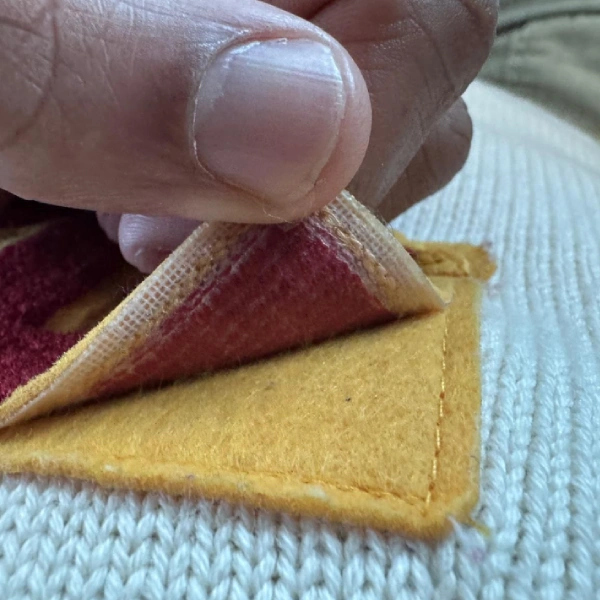
This “almost detached” look is especially dangerous for brands.
Consumers do not differentiate between partial lifting and actual failure—they simply perceive poor quality.
Final Solution: Full-Perimeter Reinforcement
To completely eliminate this risk, we made a decisive adjustment:
- Stitching added around the entire shape perimeter
- Adhesive bonding retained between layers
This dual reinforcement strategy ensures:
- No visual lifting at any edge
- No ambiguity during wear
- Maximum structural stability over time
Figure 4: Stitching Added Around All Edges
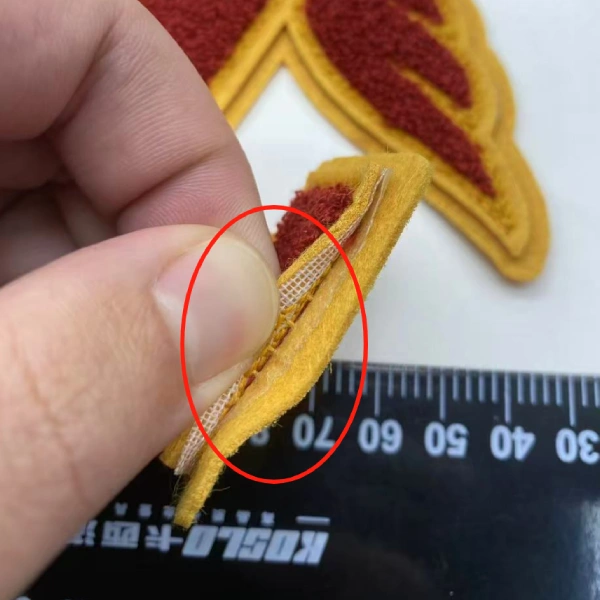
Figure 5: Final Reinforced Version
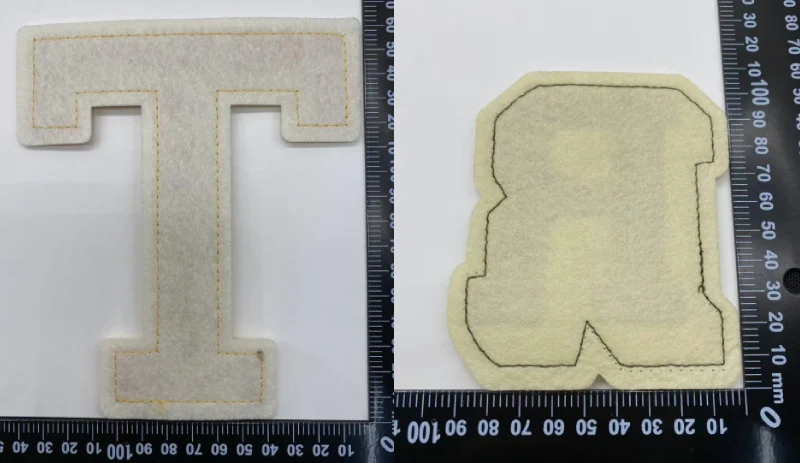
The final structure may involve higher material and labor costs, but it offers the strongest guarantee against detachment-related complaints.
Why This Matters for Brands
From a brand perspective, this decision reflects a clear priority:
- Not optimizing for lowest cost
- Not minimizing production steps
- But maximizing long-term user trust
Even a small accessory can undermine years of brand building if it fails during use.
Key Takeaways for Double-Layer Felt Patch Development
- Double-layer felt patches require more than adhesive bonding
- Partial stitching may cause visual detachment risk
- Full-perimeter stitching significantly improves perceived quality
- Combining stitching with adhesive offers maximum security
- Preventing negative reviews is always more valuable than reducing unit cost
Conclusion: Design for Use, Not Just for Production
In double-layer felt patch development, the real challenge is not how the product looks on day one—but how it performs after years of wear.
By prioritizing durability and user perception over short-term cost savings, brands can ensure that their accessories support brand reputation instead of damaging it.
That is the true value of a well-engineered Double-layer Felt Patch.
About Author
——————————————————————————————————————————————

Jason
Sales Manager
With extensive industry knowledge and a responsible work ethic, I deliver professional guidance and reliable support for every client collaboration.
——————————————————————————————————————————————