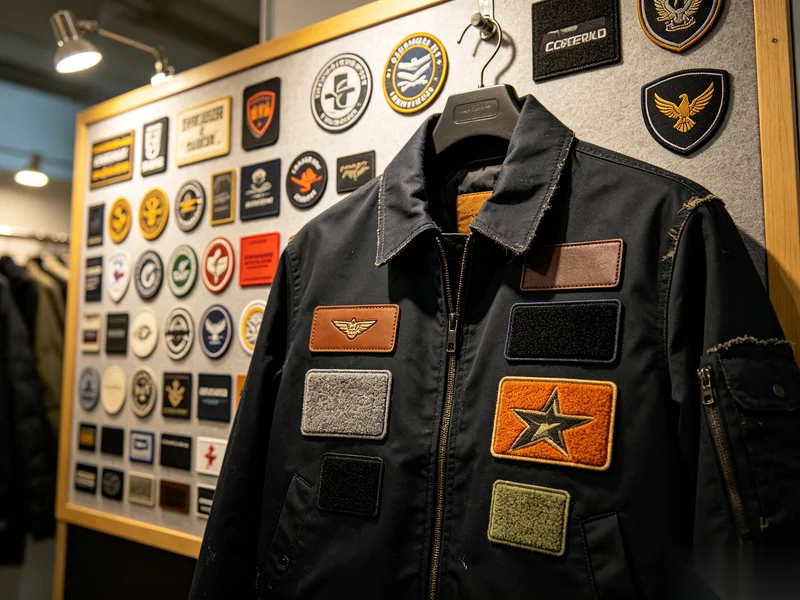
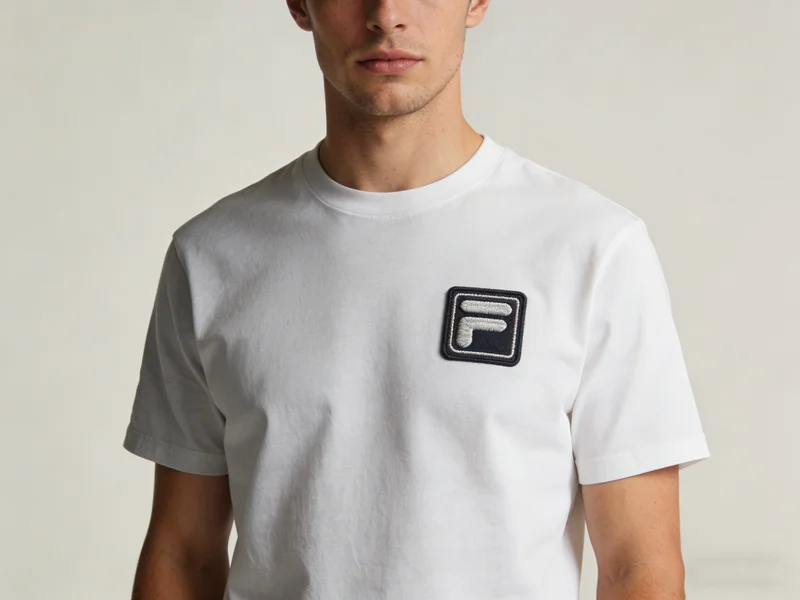
A patch on t-shirt refers to attaching an embroidered, woven, chenille, or printed patch onto a T-shirt for branding or decoration. Designers use patches to add texture, modular branding, and visual hierarchy while maintaining production flexibility and cost control in apparel collections.
What Does “Patch on T-Shirt” Mean in Apparel Design?
Direct Answer:
A patch on t-shirt is a decorative or functional fabric element applied to a T-shirt surface instead of printing or direct embroidery.
For designers and B2B apparel brands, this method is popular because it allows:
- Faster design updates without reprinting garments
- Multi-material visual effects
- Small-batch or limited-edition production
- Brand modularization across product lines
Patches can be pre-produced and later applied, which is highly efficient for OEM and private-label manufacturing.
Why Do Designers Choose Patches Instead of Direct Printing or Embroidery?
Short Answer:
Because patches offer flexibility, texture, and reduced production risk.
Key Advantages for Designers
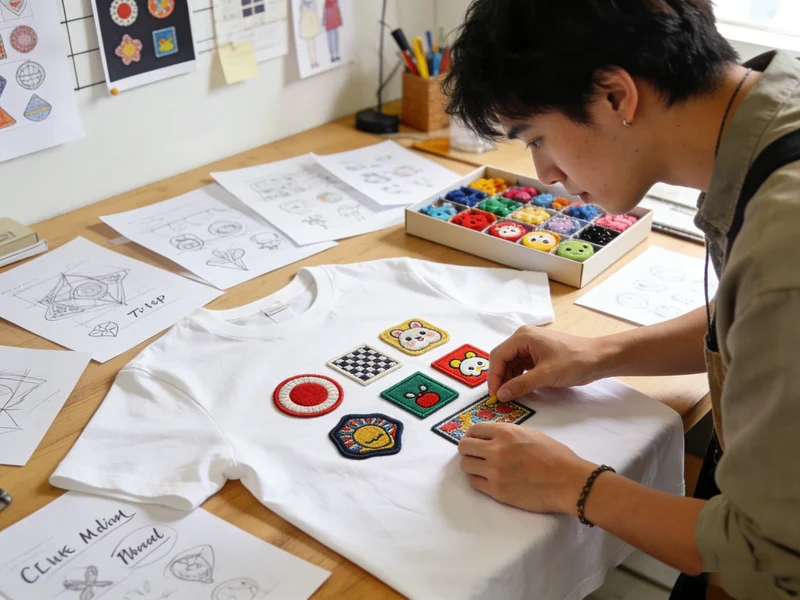
- Design Flexibility
Patches can be changed, replaced, or repositioned without altering the base T-shirt. - Material Contrast
Combining cotton jersey with embroidered or woven patches creates depth that printing cannot achieve. - Inventory Efficiency
Brands can stock blank T-shirts and apply different patches for multiple SKUs. - Consistent Quality
Patches are produced separately under controlled conditions, ensuring repeatable results.
What Patch Styles Work Best on T-Shirts?
Direct Answer:
Lightweight, low-profile patches are most suitable.
Recommended Patch Styles
- Embroidered Patches
Best for logos, badges, and text with moderate detail. - Woven Patches
Ideal for small text or fine-line artwork due to flatter texture. - Chenille Patches (Limited Use)
Effective for bold designs but should be used sparingly due to weight. - Printed Fabric Patches
Good for full-color graphics or gradient designs.
Designers should match patch type to garment weight and intended wear.
How Should Designers Approach Patch Placement on a T-Shirt?
Short Answer:
Placement should enhance balance and wearability.
Common Patch Placement Ideas
- Left chest (classic and commercial)
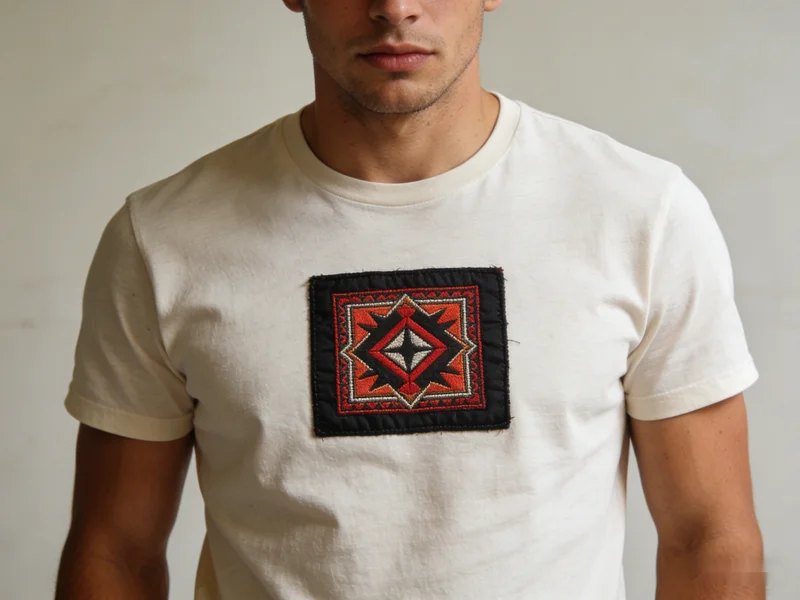
- Center chest (statement design)
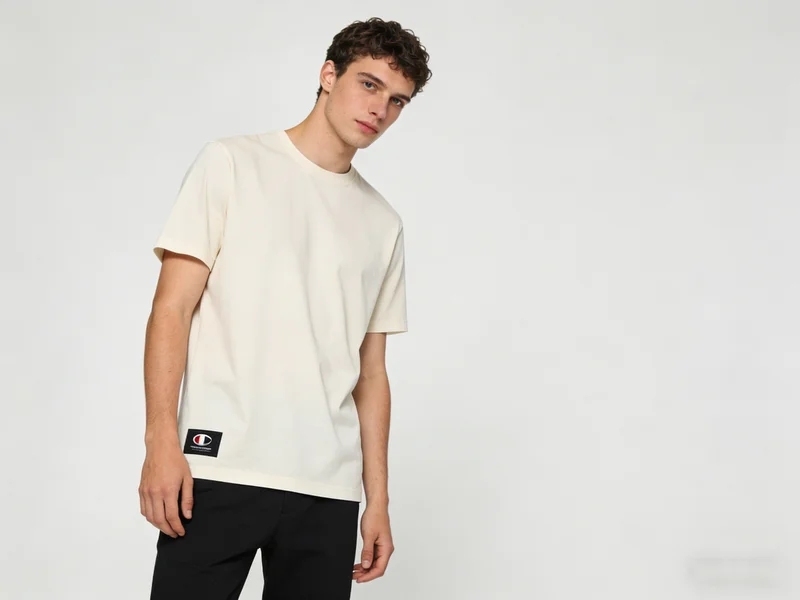
- Lower hem or side seam (minimalist branding)
- Back neck area (branding detail)
- Sleeve or cuff (streetwear style)
Improper placement can distort fabric drape or reduce comfort.
What Are the Key Design Considerations for Patch on T-Shirt?
Direct Answer:
Weight, flexibility, and fabric compatibility are critical.
Important Design Tips
- Patch Size Control
Oversized patches may pull or warp lightweight T-shirt fabric. - Edge Softness
Soft embroidered or woven borders reduce skin irritation. - Color Harmony
Patch colors should complement the T-shirt fabric to avoid visual conflict. - Breathability
Large or dense patches reduce airflow and comfort. - Stretch Compatibility
T-shirts stretch; rigid patches can cause puckering.
What Attachment Methods Are Best for Patches on T-Shirts?
Short Answer:
Sew-on and heat seal are the most common.
Attachment Methods Explained
- Sew-On
Most secure and wash-resistant; recommended for long-term wear. - Heat Seal
Faster for bulk production; must be tested to avoid fabric damage. - Adhesive Only (Not Recommended)
Often fails after washing and should be avoided for commercial products.
For B2B buyers, attachment method selection affects returns and customer satisfaction.
What Design Mistakes Should Be Avoided When Adding a Patch on T-Shirt?
Short Answer:
Ignoring fabric behavior and user comfort.
Common Mistakes
- Using heavy patches on lightweight cotton
- Placing patches on high-stretch zones
- Sharp or stiff edges touching skin
- Poor wash durability testing
- Over-branding with excessive patch use
Good patch design supports the garment rather than overpowering it.
Can Patches on T-Shirts Be Used in Mass Production?
Direct Answer:
Yes, with proper standardization and testing.
B2B Production Scenarios
- OEM T-shirt manufacturing
- Private-label fashion brands
- Promotional apparel suppliers
- Event and campaign merchandise
By standardizing patch size, backing, and placement, brands can scale efficiently without sacrificing design consistency.
How Should Designers Test Patch-on-T-Shirt Concepts?
Short Answer:
Through wear, wash, and stretch testing.
Recommended Testing Process
- Apply patches to final fabric type
- Perform multiple wash cycles
- Test stretch recovery after wear
- Inspect edge lifting or distortion
Testing ensures the patch enhances product value rather than causing defects.
Why Is “Patch on T-Shirt” a High-Intent Keyword for B2B Buyers?
Direct Answer:
It reflects active product development and sourcing intent.
Search queries like “How to design patch on t-shirt” or “Best patch for t-shirt fabric” are typically made by designers, sourcing managers, and apparel brands. Structuring content around design guidance and precautions increases Featured Snippet potential and qualified traffic.
Final Thoughts: When Is a Patch on T-Shirt the Right Design Choice?
A patch on t-shirt is ideal when designers want modular branding, material contrast, and production flexibility. With thoughtful design, correct patch selection, and proper testing, patches can elevate T-shirts from basic garments to distinctive, scalable B2B products.
Successful patch design is not about adding more—it’s about adding smarter.
About Author
——————————————————————————————————————————————

Apollo
Senior E-commerce Manager
Apollo is an experienced e-commerce manager specializing in patches, apparel accessories, and digital marketing, helping global textile brands grow with proven online strategies.
——————————————————————————————————————————————