Technical outdoor apparel is designed to perform in demanding environments. Whether it is used for hiking, trail running, cycling, skiing, workwear, or other outdoor activities, every component of the garment needs to perform reliably—not only the fabric, membrane, and construction, but also the trims.
Labels, patches, transfers, webbing, reflective elements, and other garment accessories may look like small components, but they can have a significant impact on the garment’s durability, functionality, appearance, and overall user experience.
So, what makes a trim suitable for technical outdoor apparel?
The answer goes far beyond appearance.
A suitable technical trim needs to be durable, functional, compatible with the garment, resistant to environmental conditions, and consistent throughout the production process.
Durability: Can the Trim Survive Real Outdoor Use?
Outdoor garments are often exposed to significantly more stress than everyday clothing.
A hiking jacket may rub against a backpack. A pair of cycling shorts may be repeatedly stretched. A workwear garment may experience constant friction. Outdoor clothing may also be washed frequently throughout its service life.
For these applications, trims need to maintain their performance after repeated use.
Important factors include:
Abrasion resistance
Tear resistance
Flexibility
Stretch and recovery
Wash durability
Colorfastness
Dimensional stability
For example, a label may look perfect when it is first applied to a garment, but if the edges begin to lift after repeated washing, or the printing fades after outdoor exposure, the trim is not truly suitable for a technical application.
Performance should be evaluated over the product’s expected lifetime—not only when it is new.
Weather Resistance: How Will the Trim Perform Outdoors?
Outdoor apparel can be exposed to rain, moisture, UV radiation, sweat, heat, cold, and significant temperature changes.
Therefore, environmental resistance is an important consideration when selecting trims.
Water and Moisture Resistance
For waterproof jackets, rainwear, ski apparel, and other weather-protective garments, the trim should be compatible with the garment’s moisture-management requirements.
Depending on the application, manufacturers may need to consider:
Water absorption
Adhesion after exposure to moisture
Edge lifting
Material deformation
Surface changes
UV Resistance
Outdoor garments may spend hours under direct sunlight.
For products such as running apparel, cycling apparel, outdoor workwear, and hiking garments, UV exposure can affect colors, printing, coatings, and other materials.
If long-term outdoor exposure is expected, UV resistance should be considered during material selection and product development.
Temperature Resistance
Temperature is another important factor.
A trim used in winter sports apparel may need to remain flexible at low temperatures, while trims used in hot outdoor environments need to maintain their structure and adhesion under elevated temperatures.
The right trim depends on where—and how—the garment will be used.
Functional Performance: Is the Trim Doing More Than Branding?
One of the biggest differences between conventional apparel and technical outdoor apparel is that trims can have a functional role.
A trim is not always simply a logo or decorative element.
For example, reflective trims can improve visibility in low-light environments. Heat transfer labels can provide branding and care information without adding the bulk of a conventional sewn label. TPU and silicone components can provide distinctive tactile and three-dimensional effects while offering durability and flexibility.
Depending on the garment, functional trims may include:
Reflective logos and transfers
Heat transfer labels
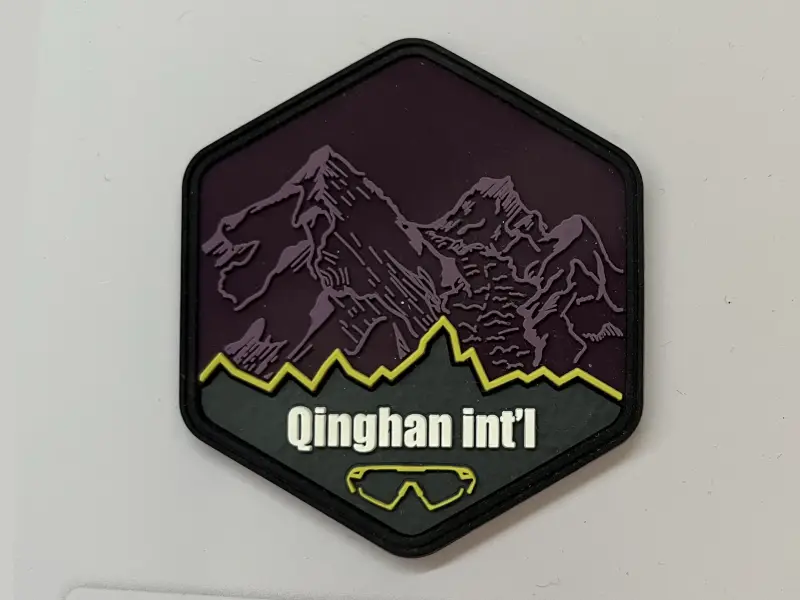
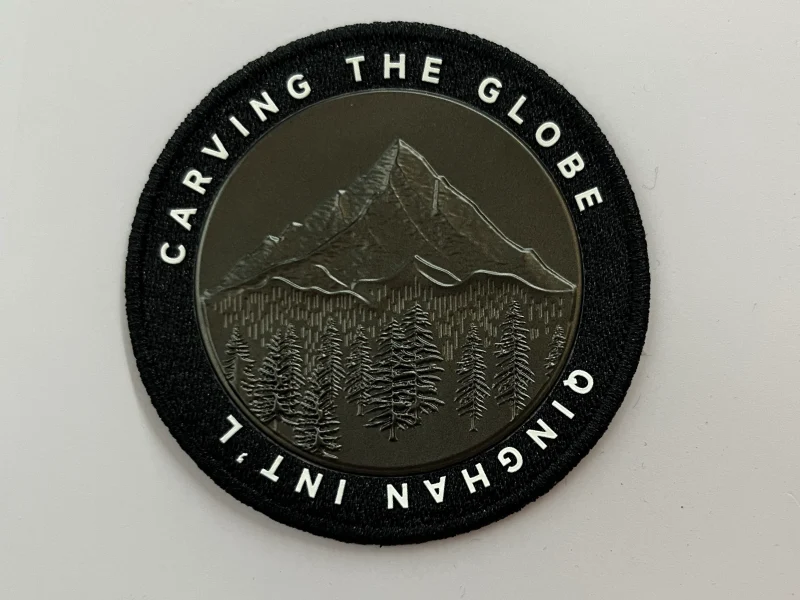
TPU patches
Silicone patches
Functional webbing
Performance labels
High-durability woven or printed labels
This is particularly relevant for:
Running · Cycling · Hiking · Skiing · Outdoor Workwear · Sportswear
The key question is not simply:
“Does the trim look good?”
It is:
“What function does the trim need to perform throughout the life of the garment?”
Fabric Compatibility: The Trim Must Work With the Garment
A trim that performs well on one fabric may not perform the same way on another.
This is especially important for technical apparel because modern outdoor fabrics can have very different constructions and finishes.
Common materials include:
Nylon
Polyester
Cotton
Elastane blends
Recycled fabrics
Stretch fabrics
Coated fabrics
Laminated fabrics
Waterproof materials
For example, a heat transfer applied to a standard polyester fabric may behave differently when applied to a stretch fabric, coated nylon, or waterproof shell material.
This is why trim selection should begin with the garment and fabric—not with the trim alone.
Before development, suppliers should understand:
Fabric composition
Fabric construction
Fabric stretch
Surface treatment
Coatings or laminations
Intended application method
Testing the trim on the actual garment fabric can help identify potential problems before mass production.
Application Performance: Can the Garment Factory Apply It Correctly?
Even a well-designed trim can fail if it is not applied correctly.
This is particularly important for heat transfers, patches, and other applied trims.
The final result can be affected by:
Temperature
Pressure
Application time
Machine type
Fabric surface
Operator technique
For example, insufficient temperature or pressure during heat transfer application may result in poor adhesion. Excessive temperature, on the other hand, may damage sensitive fabrics or affect the appearance of the transfer.
This means a professional trim supplier should not only provide the product, but also understand how the product will be used at the garment factory.
Clear application instructions and testing recommendations can significantly reduce production problems.
Testing: Don’t Judge a Technical Trim by Appearance Alone
A technical trim should not be evaluated only by looking at a finished sample.
Depending on the application, different performance tests may be required.
Performance Requirement Possible Evaluation
Washing durability Repeated washing
Colorfastness Washing, rubbing, light exposure
Adhesion Peel and wash testing
Abrasion resistance Abrasion testing
Reflective performance Reflectivity testing
Dimensional stability Heat and washing tests
UV resistance UV or xenon exposure testing
The exact testing requirements should depend on the garment’s intended use, material construction, market requirements, and brand standards.
For technical apparel, testing during development is usually much more efficient than solving a performance issue after bulk production.
Sustainability Is Becoming Part of Trim Performance
Sustainability is no longer limited to the main fabric.
Brands are increasingly looking at the materials used throughout the garment, including labels, patches, transfers, webbing, and packaging components.
Depending on the project, buyers may consider:
Recycled materials
Recycled polyester
Recycled TPU
Certified materials
Material traceability
Restricted substance requirements
Product certifications
For example, certifications such as GRS, OEKO-TEX, and FSC may be relevant depending on the material and product category.
For brands developing technical outdoor apparel, sustainability requirements should ideally be discussed during the early development stage rather than added after the product has already been finalized.
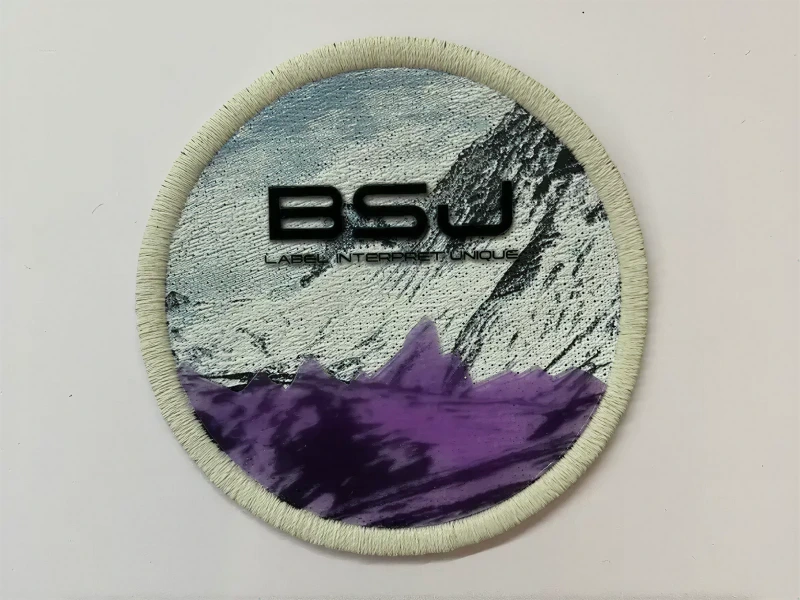
Design and Performance Need to Work Together
Technical apparel does not mean sacrificing aesthetics.
Today’s outdoor and performance brands increasingly expect trims to combine functionality with strong visual identity.
A reflective logo can provide both branding and visibility.
A 3D TPU patch can provide both brand recognition and tactile appeal.
A silicone logo can create a distinctive surface effect while maintaining flexibility and durability.
A well-designed trim should therefore consider:
Performance + Function + Brand Identity + Visual Appeal
The best technical trims are often those where the functional and aesthetic elements are integrated into a single solution.
A Simple Framework for Selecting Technical Apparel Trims
When evaluating a trim for technical outdoor apparel, it can be useful to consider five key questions:
- Compatibility
Does the trim work with the fabric and garment construction?
- Capability
Can it deliver the required functional performance?
- Comfort
Will it maintain the garment’s flexibility, softness, and wearability?
- Consistency
Can the performance and appearance remain stable during production and repeated use?
- Compliance
Does it meet the required testing, safety, and sustainability standards?
These five considerations can help product developers and sourcing teams avoid selecting a trim based purely on appearance or initial sample performance.
Technical Apparel Trim Selection Checklist
Before approving a trim for a technical outdoor garment, consider asking:
What fabric will the trim be applied to?
How much stretching will the garment experience?
How frequently will the garment be washed?
Will the product be exposed to rain or moisture?
Will it be exposed to prolonged UV radiation?
What temperature range will it be used in?
What application equipment will the garment factory use?
What testing standards are required?
Are recycled or certified materials required?
Has the trim been tested on the actual garment fabric?
Can the supplier provide application and production guidance?
These questions can help identify potential issues before bulk production begins.
Final Thoughts
A technical outdoor garment is only as strong as the complete system behind it.
The fabric may provide waterproofing. The construction may provide protection. The membrane may provide breathability. But the trims also need to perform their intended functions without compromising the garment.
That is why choosing a trim for technical outdoor apparel should not be based simply on color, shape, or price.
The right trim is one that is:
Durable enough for real use.
Compatible with the garment.
Functional for the intended application.
Stable through production and washing.
And aligned with the brand’s quality and sustainability requirements.
The right trim is not simply the one that looks good on a sample. It is the one that continues to perform when the garment enters the real world.
At Qinghan, we work with apparel brands and garment manufacturers to develop and produce a wide range of technical garment trims, including woven labels, printed labels, heat transfers, TPU patches, silicone patches, reflective trims, embroidery patches, and webbing.
By understanding the fabric, application process, end-use environment, and performance requirements from the beginning, a trim can become more than a branding element—it can become an integrated part of the garment’s performance system.
About Author
——————————————————————————————————————————————

Vicky
Sales Manager
Hi, I’m Vicky,.With extensive industry experience and a well-rounded skill set, I excel in both team collaboration and customer service, always maintaining professionalism and efficiency to ensure the best client experience.
——————————————————————————————————————————————