Custom printed clothing labels are personalized labels that display brand information, garment details, fabric content, and care instructions through various printing methods. They are widely used by apparel brands because they offer excellent detail, cost-effective production, and flexible customization for a wide range of clothing products.
What Are Custom Printed Clothing Labels?
Custom printed clothing labels are labels produced by printing logos, text, symbols, and product information onto materials such as satin, polyester, cotton, nylon, or specialized label fabrics.
Unlike woven labels, where the design is created through yarn weaving, printed labels reproduce information directly on the label surface. This makes them particularly suitable for displaying detailed content and small text.
Today, printed garment labels are commonly used for:
- Brand identification
- Care instructions
- Size information
- Fabric composition
- Product tracking
- Regulatory compliance
They are found in virtually every segment of the apparel industry, from fashion brands and sportswear manufacturers to children’s clothing and workwear suppliers.
Why Do Apparel Brands Choose Custom Printed Clothing Labels?
Printed labels offer several advantages that make them an essential component of garment manufacturing.
Excellent Detail Reproduction
Printed labels can display:
- Small text
- Complex graphics
- Care symbols
- Multiple languages
- QR codes
- Barcodes
with high clarity.
Cost-Effective Production
Compared to some woven label options, printed labels often provide a more economical solution, especially for information-heavy applications.
Flexible Design Options
Brands can customize:
- Colors
- Fonts
- Logos
- Label sizes
- Material types
to match their branding requirements.
Regulatory Compliance
Printed labels are ideal for displaying legally required information such as fiber content and care instructions.
For apparel brands producing large product ranges, printed labels provide both practicality and efficiency.
What Information Can Be Printed on Clothing Labels?
One of the biggest advantages of custom apparel labels is their ability to accommodate detailed information.
Brand Information
Most labels include:
- Brand name
- Logo
- Trademark
Product Details
Labels may contain:
- Style numbers
- Product codes
- Collection names
Fabric Composition
Common examples include:
- 100% Cotton
- Polyester blends
- Nylon
- Wool
- Spandex
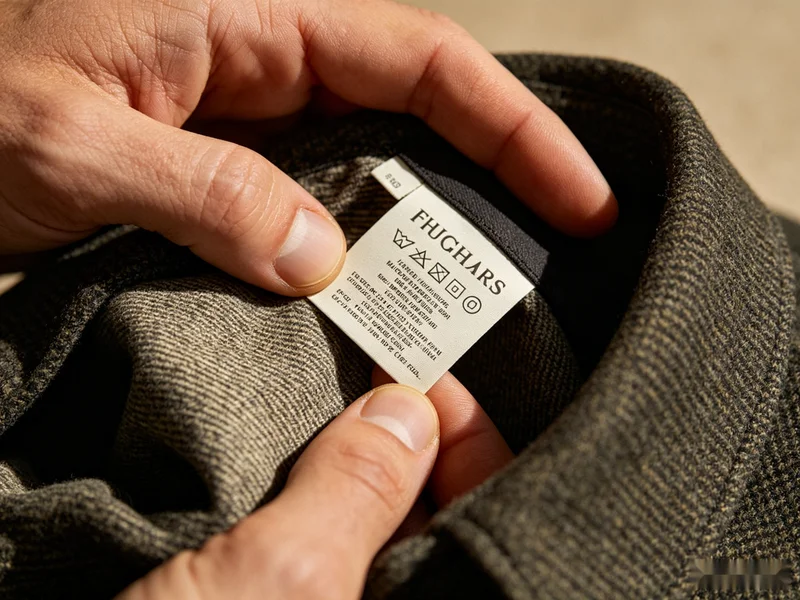
Care Instructions
Care labels help consumers properly maintain garments.
Typical instructions include:
- Washing temperature
- Drying recommendations
- Ironing guidelines
- Dry cleaning instructions
Country of Origin
Many markets require country-of-origin information on textile products.
Providing accurate information helps brands comply with international labeling regulations.
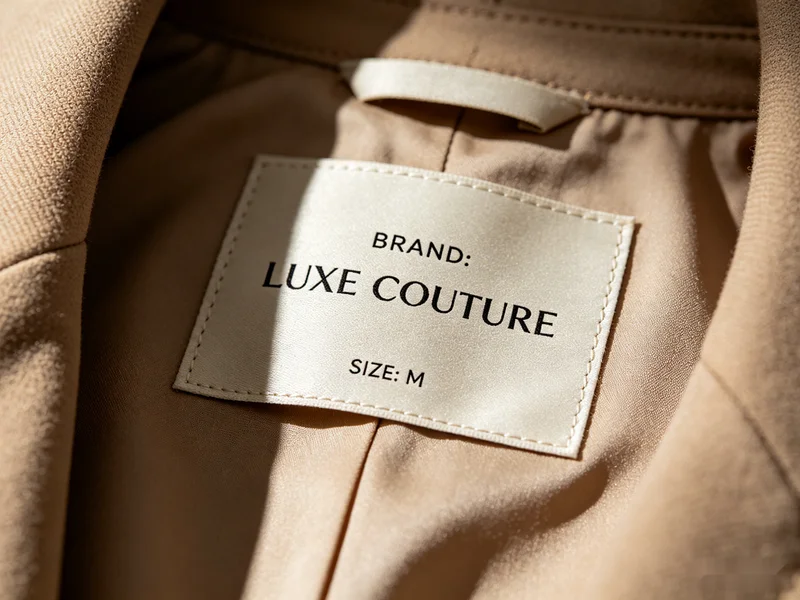
What Types of Custom Printed Clothing Labels Are Available?
Manufacturers can produce various styles of printed garment labels depending on product requirements.
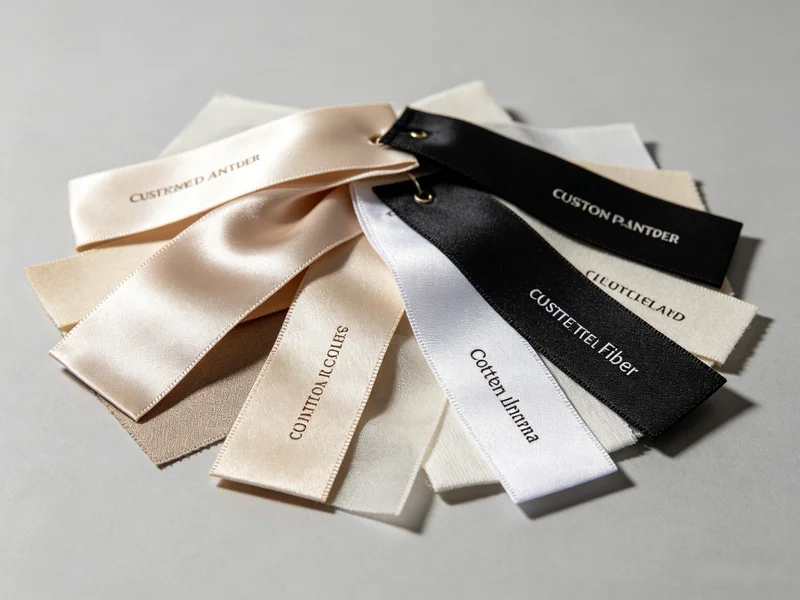
Satin Printed Labels
Satin labels feature a smooth and soft surface that enhances comfort.
Popular applications include:
- Lingerie
- Sleepwear
- Children’s apparel
- Premium garments
Polyester Printed Labels
Polyester labels offer excellent durability and print clarity.
They are commonly used for:
- Sportswear
- Workwear
- Outdoor apparel
Cotton Printed Labels
Cotton labels are favored by eco-conscious and sustainable fashion brands.
Advantages include:
- Natural appearance
- Soft texture
- Eco-friendly image
Nylon Printed Labels
Nylon labels provide excellent durability and resistance to wear.
They are often used for:
- Technical garments
- Outdoor products
- Industrial uniforms
How Are Custom Printed Clothing Labels Manufactured?
The production process varies depending on material selection and printing technology.
Artwork Preparation
The customer submits logos, text, and design specifications.
Material Selection
Manufacturers select suitable label materials based on product requirements.
Common choices include:
- Satin
- Polyester
- Cotton
- Nylon
Printing Process
Several printing technologies may be used.
Screen Printing
Suitable for large production runs and solid-color designs.
Thermal Transfer Printing
Offers sharp text and excellent durability.
Digital Printing
Ideal for complex graphics and full-color designs.
Flexographic Printing
Frequently used for high-volume production.
Cutting and Finishing
Labels are cut into the required dimensions and prepared for garment attachment.
Quality Inspection
Finished labels are checked for:
- Print clarity
- Color accuracy
- Material quality
- Dimension consistency
Custom Printed Clothing Labels vs Woven Labels
Both options have unique advantages depending on branding objectives.
| Feature | Printed Labels | Woven Labels |
|---|---|---|
| Fine Detail | Excellent | Good |
| Small Text Clarity | Excellent | Moderate |
| Cost Efficiency | High | Moderate |
| Premium Branding | Good | Excellent |
| Care Information Display | Excellent | Limited |
| Production Flexibility | High | Moderate |
Many apparel brands use woven labels for brand logos and printed labels for care information.
Which Industries Use Printed Garment Labels?
The demand for custom printed clothing labels spans a wide range of industries.
Fashion Apparel
Fashion brands use printed labels to display branding and product details.
Sportswear
Sportswear manufacturers often prefer printed labels because they can accommodate detailed technical information.
Children’s Clothing
Soft printed labels improve comfort and reduce skin irritation.
Workwear
Industrial and corporate uniforms frequently require durable printed care labels.
Private Label Brands
Private-label businesses rely on printed labels to communicate brand identity and product specifications.
As clothing production continues to expand globally, printed labels remain one of the most widely used apparel branding solutions.
How to Choose the Right Printed Clothing Label for Your Brand
Selecting the right label depends on several factors.
Product Type
Different garments require different label materials and constructions.
Branding Goals
Luxury brands may combine printed labels with woven brand labels.
Information Requirements
Products requiring extensive care instructions benefit from printed labels.
Comfort Considerations
Soft materials such as satin may improve customer experience.
Production Budget
Printed labels offer excellent value for high-volume manufacturing.
Choosing the right combination of material and printing technology can improve both product presentation and functionality.
FAQ
What are custom printed clothing labels?
Custom printed clothing labels are labels that display logos, product information, fabric content, and care instructions through various printing methods.
Why are printed garment labels popular?
They offer excellent detail reproduction, cost-effective production, and flexibility for displaying detailed information.
What materials are commonly used for printed clothing labels?
Popular materials include satin, polyester, cotton, and nylon.
Are printed labels suitable for care instructions?
Yes. Printed labels are one of the most effective ways to display washing instructions, fabric composition, and regulatory information.
Can custom apparel labels include logos and QR codes?
Yes. Modern printing technologies allow logos, barcodes, QR codes, and complex graphics to be incorporated into labels.
What is the difference between printed labels and woven labels?
Printed labels display designs on the surface of the material, while woven labels create designs by weaving colored yarns directly into the label fabric.
Conclusion
Custom printed clothing labels play a vital role in modern apparel manufacturing by combining branding, product identification, and regulatory compliance into a single solution. Whether used as printed garment labels, care labels, or product information labels, they provide flexibility, cost efficiency, and excellent detail reproduction. For fashion brands, sportswear manufacturers, private-label businesses, and garment producers, investing in high-quality custom apparel labels helps improve product presentation, strengthen brand identity, and enhance the overall customer experience.
About Author
——————————————————————————————————————————————

Apollo
Senior E-commerce Manager
Apollo is an experienced e-commerce manager specializing in patches, apparel accessories, and digital marketing, helping global textile brands grow with proven online strategies.
——————————————————————————————————————————————