Molded silicone labels can sometimes achieve more consistent wash-test performance than screen printed silicone labels because their structure is often formed as a more continuous silicone body. However, wash durability depends on more than mold silicone firmness. Material formulation, curing conditions, layer bonding, thickness, and attachment methods all influence the final result.
Why Can Screen Printed Silicone Labels Have Wash Durability Issues?
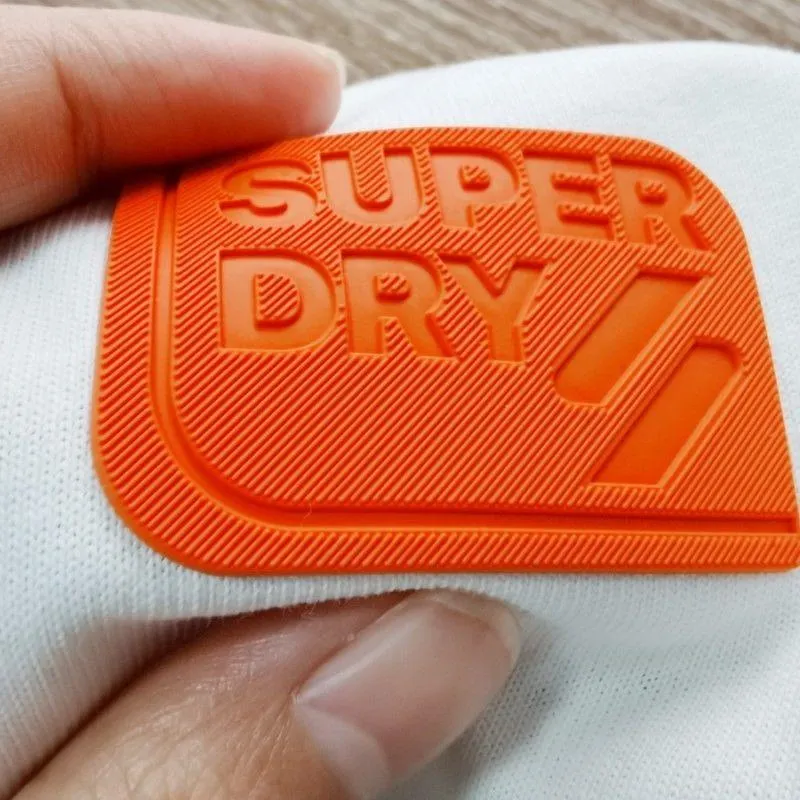
Screen printed silicone labels are generally produced by applying silicone material onto a fabric or transfer carrier through one or multiple printing passes.
This process offers flexibility for producing thin designs, fine graphic details, and multi-color patterns. However, when a design requires multiple printed layers or a relatively thick silicone structure, the production process needs careful control.
Several factors can affect the final wash performance.

1. Insufficient Curing
Silicone materials need to be cured under appropriate conditions to achieve their intended physical properties.
If the curing process is incomplete, the silicone layer may not develop sufficient mechanical stability. This can affect its resistance to repeated washing, rubbing, and deformation.
Curing temperature, time, material formulation, and the thickness of the printed layers all need to be considered.
2. Poor Bonding Between Printed Layers
Some screen printed silicone designs are built up through multiple printing passes.
If the bonding between layers is inadequate, repeated washing and mechanical stress may increase the risk of localized cracking, peeling, or separation.
This is particularly important for designs that require multiple layers to achieve a raised effect.
3. Uneven Printing Thickness
Screen printing relies on controlled material deposition. If the silicone thickness varies significantly across the design, different areas may respond differently to mechanical stress.
Thicker areas may require different curing conditions from thinner areas. Inconsistent material distribution can therefore create additional challenges during production.
These issues are not inevitable. With suitable materials, printing parameters, and curing processes, screen printed silicone labels can also achieve good wash durability.
Why Can Molded Silicone Labels Have an Advantage?
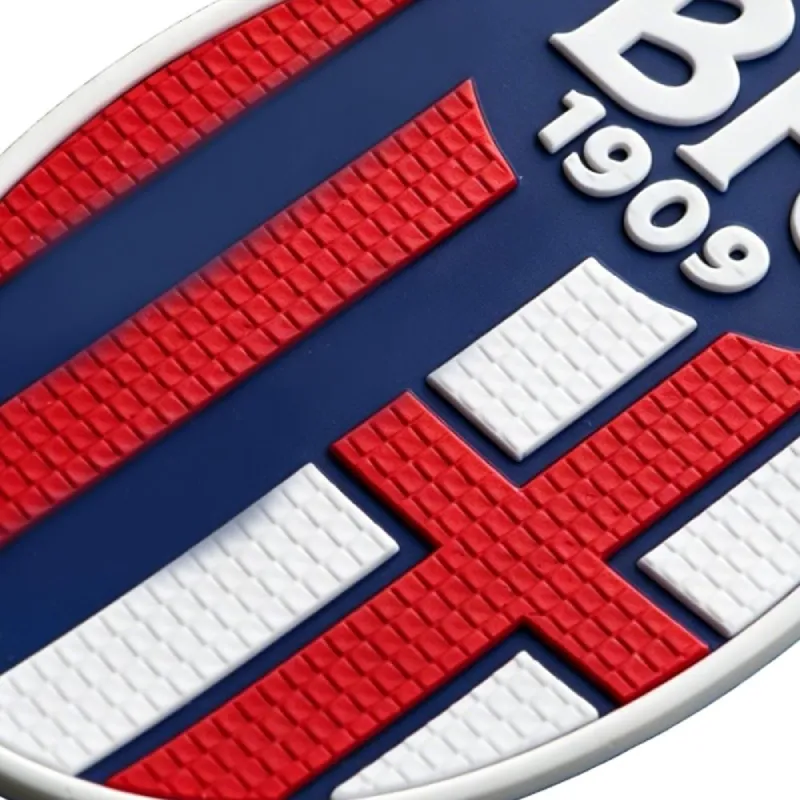
Molded silicone labels are produced by placing or dispensing silicone material into a mold structure, followed by the required curing process.
The mold determines the product’s outline, thickness, raised areas, recessed details, and overall dimensional structure.
Compared with a design built up through multiple printed layers, a molded silicone product can often be produced as a more continuous silicone body.
When the material formulation and curing process are properly controlled, this structure can reduce certain potential risks associated with bonding between separate printed layers.
There are three important advantages to consider.
1. A More Continuous Silicone Structure
One advantage of molded silicone is that the main body can be formed as a relatively integrated structure.
This can reduce dependence on the bonding between multiple separately deposited silicone layers.
For products with raised logos, thicker structures, or dimensional designs, this may provide a more consistent foundation for durability.
However, the final result still depends on the mold design, material formulation, curing conditions, and product construction.
2. More Controlled Thickness and 3D Structure
Mold construction provides a defined structure for controlling the product’s dimensions.
The mold can be designed to determine:
- Overall silicone thickness
- Raised logo height
- Recessed background areas
- Edge shape and product outline
- Different dimensional levels
This makes it easier to develop a repeatable structure when the product requires a specific thickness or 3D appearance.
Stable dimensions can also help manufacturers maintain more consistent production results between samples and bulk orders.
3. A More Consistent Curing Process for the Main Structure
Molded silicone production allows manufacturers to establish curing parameters according to the product’s material, thickness, and mold structure.
When the process is properly developed, the main silicone body can achieve more consistent curing.
This helps reduce the risk of insufficiently cured areas, although curing uniformity still needs to be verified through production control and testing.
The important point is that molding does not automatically guarantee better curing. Incorrect temperature settings, insufficient curing time, or unsuitable material formulations can also cause problems in molded silicone products.
Molded Silicone vs. Screen Printed Silicone: Which Performs Better in Wash Tests?
The two processes have different structural characteristics and design applications.
| Karşılaştırma | Kalıplanmış Silikon | Screen Printed Silicone |
|---|---|---|
| Main construction | Silicone formed through a mold | Silicone applied through printing passes |
| Product structure | Can form a relatively continuous body | May consist of multiple printed layers |
| Thickness control | Defined by mold structure | Controlled through printing and material deposition |
| 3D effect | Suitable for raised and recessed structures | Can create layered or raised printing effects |
| İnce grafik detaylar | Depends on mold design and detail limitations | Flexible for fine printed graphics |
| Potential durability considerations | Material formulation, curing, and product construction | Layer bonding, printing thickness, curing, and attachment |
| Wash-test performance | Can be consistent with suitable production control | Can also achieve good results with proper process control |
There is no universal winner. The best process depends on the artwork, required thickness, intended application, material properties, and quality requirements.
For designs that need a substantial raised structure and consistent thickness, molded silicone is worth evaluating.
For designs that require fine printed details, thin surface effects, or complex graphic layouts, screen printed silicone may be more suitable.
Does Mold Silicone Firmness Affect Wash Durability?
Firmness is an important physical property of silicone, but it should not be confused with overall wash durability.
A silicone label that feels harder is not necessarily more resistant to washing. Similarly, a softer silicone label is not automatically less durable.
The final performance depends on several properties working together.
1. Silicone Hardness and Flexibility
Silicone hardness affects how a label responds to pressure, bending, and deformation.
If the material is too soft for a particular design, some raised structures may deform more easily. If it is too hard, the label may become less flexible and may not be suitable for garments that require repeated stretching.
The appropriate hardness should match the product’s intended use.
2. Material Formulation
Different silicone formulations can have different mechanical properties, adhesion characteristics, and resistance to environmental conditions.
The material should be selected according to the required appearance, flexibility, application method, and durability expectations.
3. Curing Quality
Even a well-designed mold cannot compensate for an unsuitable curing process.
Insufficient curing can affect the silicone’s final physical properties, while excessive or inappropriate processing conditions may also influence product quality.
Manufacturers need to establish suitable curing parameters and verify them during production.
4. Attachment to the Garment
The silicone body is only one part of the finished product.
For sewn-on silicone labels, stitching and the surrounding fabric structure affect how the label withstands repeated movement and washing.
For heat-applied silicone labels, the adhesive or hot-melt layer and its bond with the garment are equally important.
A silicone label may remain intact while the adhesive layer loses its bond with the fabric. Therefore, the attachment system must be tested as part of the complete product.
Why Is the Attachment Method Important for Wash Testing?
When evaluating silicone label durability, it is important to distinguish between the durability of the silicone material itself and the durability of the complete label attached to the garment.
Sew-On Silicone Labels
For sew-on labels, the main considerations include stitching quality, edge construction, fabric compatibility, and the mechanical stress placed on the attachment points during washing.
The silicone body may have excellent material stability, but poor stitching can still cause the label to loosen or detach.
Heat Transfer Silicone Labels
Heat transfer silicone labels require additional attention to the adhesive layer.
The bonding result depends on several factors:
- Adhesive or hot-melt material
- Application temperature
- Pressure during heat pressing
- Pressing time
- Fabric composition and surface condition
- Compatibility between the adhesive and the garment
If the adhesive does not bond properly with the fabric, washing may cause edge lifting or partial detachment.
For this reason, testing the silicone label separately is not enough. The complete label should be applied to the intended fabric before wash testing.
How Should You Test Silicone Labels Before Mass Production?
Before approving a custom silicone label, we recommend testing a production-representative sample under conditions that reflect its intended use.
A practical evaluation should include the following steps.
1. Use the Actual Garment Fabric
Prepare samples using the same or equivalent fabric intended for bulk production.
Different fabrics have different surface structures, stretch properties, and heat resistance. These differences can influence the attachment performance.
2. Confirm the Silicone Structure and Firmness
Check whether the silicone has the expected hardness, flexibility, thickness, and dimensional appearance.
Pay particular attention to raised areas, thin edges, and other sections that may experience mechanical stress.
3. Perform Washing Tests
Wash the sample according to the agreed test method and conditions.
After washing, inspect:
- Whether the silicone surface has cracked
- Whether any layers have separated
- Whether the label has deformed
- Whether the edges remain intact
- Whether the label has lifted or detached from the fabric
- Whether the appearance and color remain acceptable
4. Check Abrasion and Stretch Resistance
In addition to washing, rubbing and stretching can help identify potential weaknesses.
These tests are particularly relevant for sportswear, activewear, and garments made from stretch fabrics.
5. Establish a Clear Acceptance Standard
Before mass production, both the manufacturer and the buyer should agree on the required test method, number of wash cycles, inspection conditions, and acceptable results.
This helps ensure that sample approval and bulk production follow th
Yazar Hakkında
——————————————————————————————————————————————

Mary
Satış Müdürü
Merhaba, ben Mary. Yeni endüstri trendlerini keşfetme konusunda tutkuluyum, eğrinin önünde kalıyorum ve müşterilere ihtiyaçlarına göre uyarlanmış ileri görüşlü çözümler sunuyorum.
——————————————————————————————————————————————