Quick Summary
Sponsor patch heat transfer provides a fast, durable, and cost-effective way for brands and sports teams to display sponsorship logos on jerseys and sportswear. Compared with traditional embroidery or sewing, heat transfer patches offer smoother finishes, faster application, and greater flexibility in design and production.
What Is a Sponsor Patch Heat Transfer?
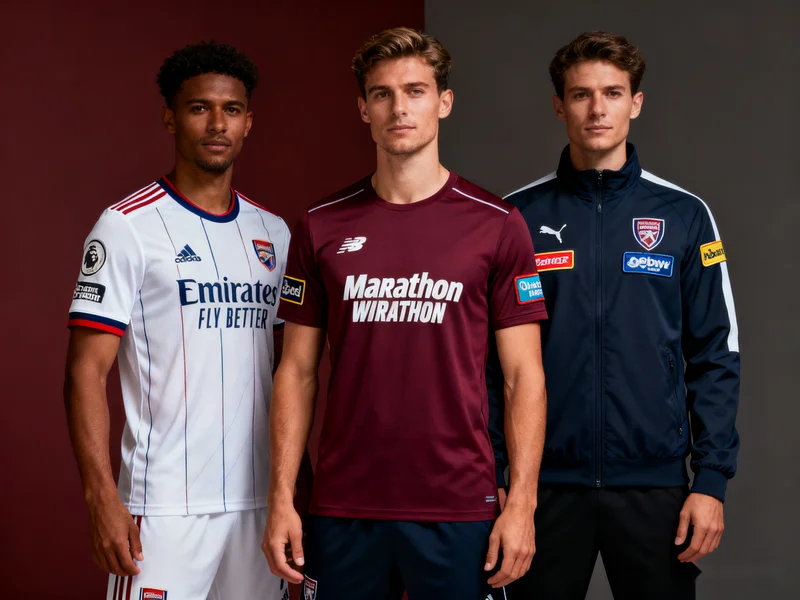
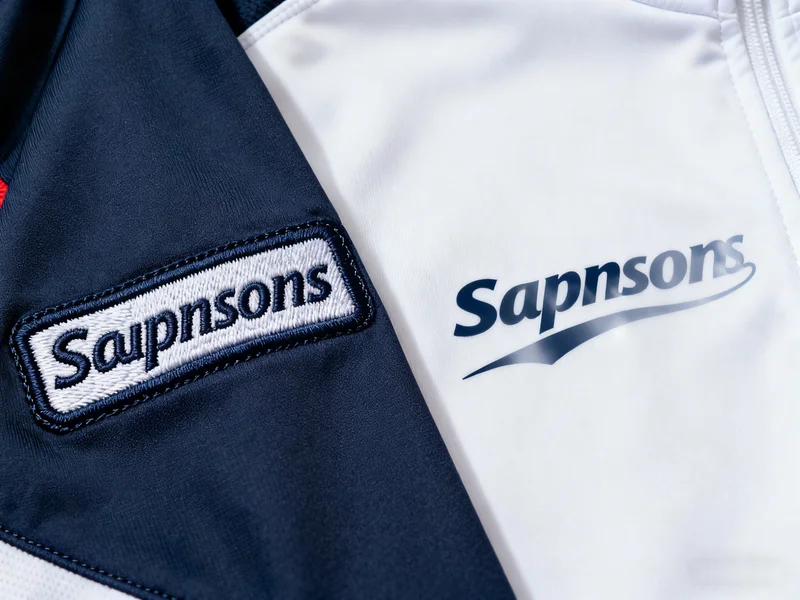
A sponsor patch heat transfer is a type of logo or branding patch that uses heat and pressure to bond directly onto a garment.
It replaces the need for stitching and allows precise reproduction of logos, text, and gradients — ideal for sports uniforms, race jerseys, event apparel, and promotional wear.
This method uses heat transfer film or printed transfer sheets, which can replicate sponsor logos in vivid colors, gradients, and metallic finishes while keeping the fabric lightweight and flexible.

Why Sponsor Patch Heat Transfer Is Gaining Popularity
Modern sportswear and event apparel prioritize speed, consistency, and comfort — all of which heat transfer technology supports.
Here’s why brands and manufacturers are switching:
| Feature | Advantage |
|---|---|
| Fast Production | No need for sewing or embroidery setup — ideal for large-scale sponsorship events. |
| Smooth & Lightweight Finish | The patch bonds seamlessly to the garment, preserving flexibility. |
| Design Accuracy | Perfect for detailed sponsor logos with color gradients or fine text. |
| Cost-Effective | Lower labor and setup costs than traditional embroidered sponsor badges. |
| Durability | Resistant to washing, stretching, and UV exposure when applied correctly. |
In short, sponsor patch heat transfer allows apparel producers to respond quickly to sponsorship changes or last-minute logo updates — a must for sports tournaments, racing teams, and brand collaborations.
How Sponsor Patch Heat Transfer Works
- Design Preparation
The sponsor logo is digitally printed or plotted onto heat transfer film, using eco-friendly inks or PU materials. - Cutting and Positioning
The patch is pre-cut into the required shape (rectangle, circle, or custom logo). - Heat Application
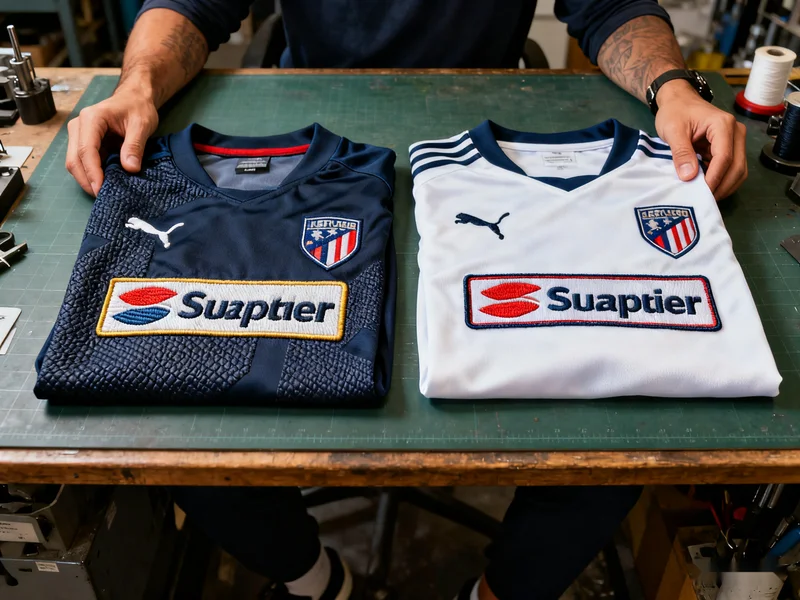
Using a heat press machine (typically 130–160°C), the patch is bonded to the garment surface within seconds. - Cooling and Quality Check
Once cooled, the film is peeled off, leaving a smooth, durable sponsor logo patch on the fabric.
The process ensures consistent quality across all uniforms, which is critical for teams and events with multiple sponsors.
Applications of Sponsor Patch Heat Transfer
| Application | Example |
|---|---|
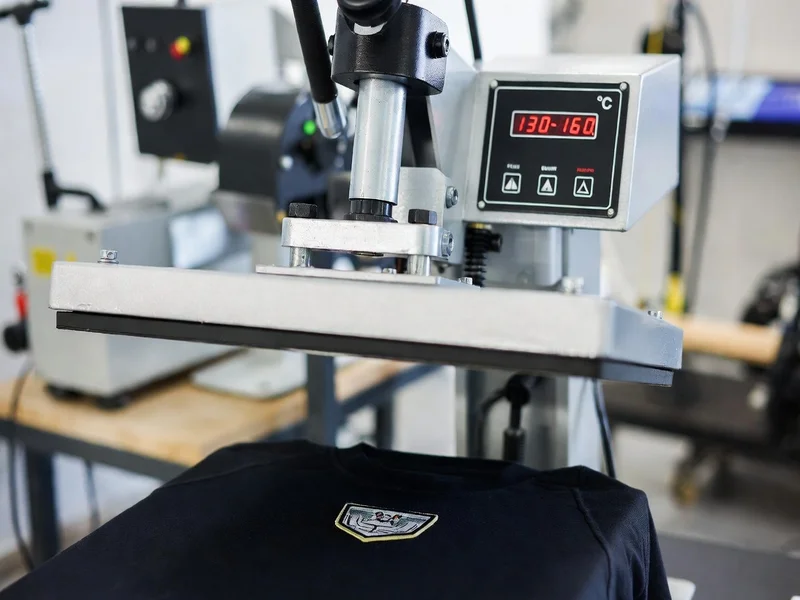
| Sports Jerseys | Football, basketball, or racing uniforms featuring sponsor logos. |
| Event Apparel | Marathon, motorsport, and esports uniforms. |
| Corporate Wear | Promotional T-shirts or jackets with brand badges. |
| Fan Merchandise | Replica jerseys and team apparel for retail. |
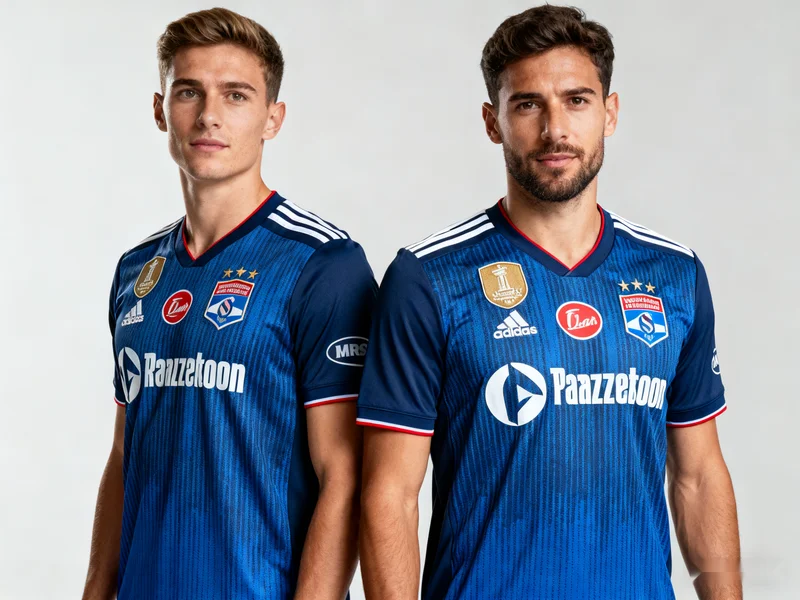
Unlike stitched badges, heat transfer patches maintain the aesthetic integrity of performance fabrics — important for breathable, lightweight jerseys.
Why Heat Transfer Beats Traditional Embroidery for Sponsor Logos
| Aspect | Heat Transfer | Embroidery |
|---|---|---|
| Application Time | Seconds per patch | Several minutes per patch |
| Weight | Light and flexible | Heavier on performance fabrics |
| Surface Feel | Smooth and soft | Raised and textured |
| Design Options | Photo-realistic printing, gradients | Limited to solid thread colors |
| Cost Efficiency | Ideal for mass customization | Higher cost per unit |
For dynamic sponsorships — where logos change seasonally or across teams — heat transfer patches deliver speed and flexibility that embroidery can’t match.
Qinghan’s Expertise in Sponsor Patch Manufacturing
With years of experience producing custom sponsor patches and heat transfer labels for global sportswear brands, Qinghan provides:
- Diverse patch technologies: Heat transfer, silicone, rubber, embroidered, woven, TPU and sublimated patches.
- Fast sample turnaround: Ideal for tight event deadlines or uniform launches.
- Precision color control: Using Pantone matching and heat-resistant inks.
- Durability testing: Ensuring patches survive repeated washes, stretching, and friction.
- Flexible MOQ & bulk production: Supporting both small runs for testing and full-scale sponsorship programs.
Qinghan’s production expertise helps apparel brands and sports teams achieve premium finishes with industrial efficiency, maintaining both brand consistency and visual appeal.
Design Tips for Effective Sponsor Patch Heat Transfer
| Design Element | Recommendation |
|---|---|
| Material Choice | Use TPU or PU film for flexibility and durability. |
| Logo Contrast | Ensure strong visibility on dark/light fabric backgrounds. |
| Placement | Common areas: chest, sleeve, shoulder, or back. |
| Finishing | Choose matte or glossy surfaces based on garment style. |
| Testing | Always heat-test on sample fabric to verify adhesion and color stability. |
The Future of Sponsor Patches: Smart, Sustainable, and Instant
In 2025 and beyond, heat transfer technology is evolving with eco-friendly films and low-temperature adhesives, reducing fabric damage and carbon emissions.
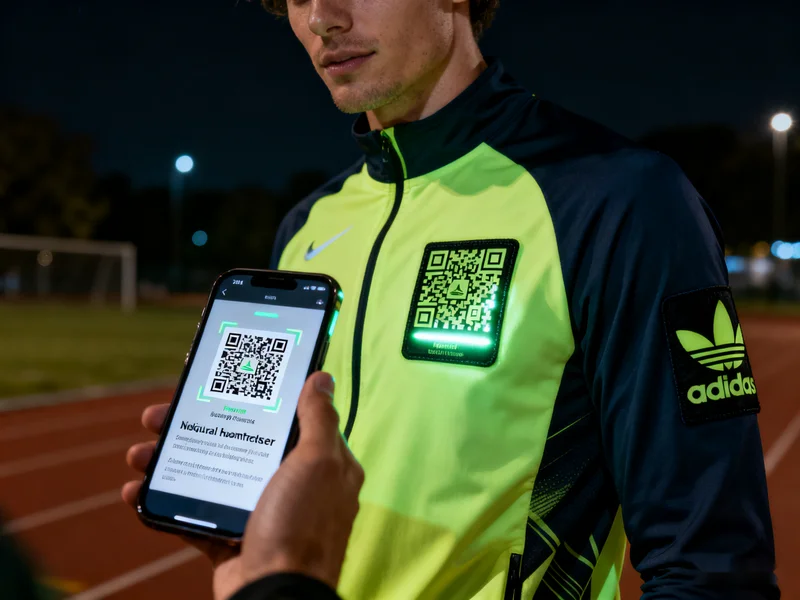
Brands are also integrating QR codes, reflective finishes, and silicone textures into sponsor patches — blending branding with innovation.
Final Thoughts
Sponsor patch heat transfer is transforming how sports teams, apparel brands, and event organizers manage their sponsorship visuals.
It combines speed, precision, and modern aesthetics, offering a smart solution for high-performance apparel.
For brands aiming to stay flexible and efficient, choosing a professional manufacturer like Qinghan ensures every patch — from a single logo to a full sponsor set — delivers quality, consistency, and style worthy of the global stage.
About Author
——————————————————————————————————————————————

Apollo
Senior E-commerce Manager
Apollo is an experienced e-commerce manager specializing in patches, apparel accessories, and digital marketing, helping global textile brands grow with proven online strategies.
——————————————————————————————————————————————