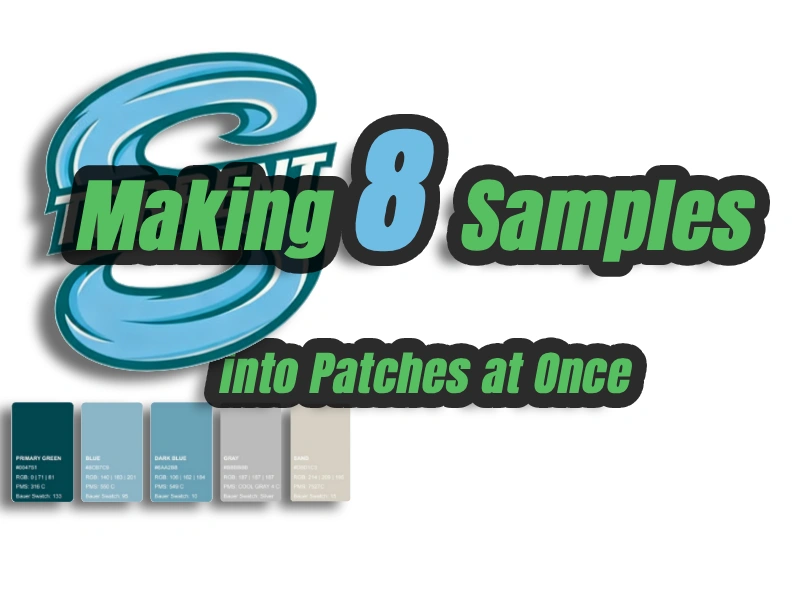
Making a sample into a patch—especially when a client demands eight different prototypes under an extremely tight timeline—requires expert material evaluation, rapid design coordination, precise 3D-layer planning, manual color confirmation, and seamless communication across production teams and garment factories.
What Does “Making a Sample Into a Patch” Mean for High-Requirement Clients?
Short Answer:
It means transforming a design or artwork into a manufacturable patch while meeting strict client expectations for texture, layering, color, and production speed.
Detailed Insight:
For B2B brands in apparel, footwear, and accessories, the process of making a sample into a patch involves far more than duplication. When the client has strict standards, requests multiple patch types, and requires 8 complete samples at once, the difficulty multiplies.
This project showcases what it takes to deliver high-complexity patches when:
- every design is different,
- every detail must match brand specifications, and
- production time is extremely limited.
The combination of high expectations + multiple SKUs + urgent deadlines creates a demanding scenario that only experienced patch manufacturers can successfully manage.
1. How Do You Choose the Right Material When the Client Has High Requirements?
Short Answer:
Material selection must match the client’s visual, tactile, and structural demands—especially when multiple samples must be delivered fast.
Detailed Insight:
The customer initially wanted a direct comparison between:
- Pure silicone patches, and
- Fabric + silicone combination patches
Both materially and visually, these two solutions deliver different levels of flexibility, glossiness, 3D depth, and durability. After professional evaluation, the client chose the tatami-style textured process, a more sophisticated technique that enhances both appearance and tactile impact.
Selecting this texture under tight deadlines required:
- Understanding the client’s brand identity
- Confirming feasibility across eight different designs
- Ensuring consistent quality despite the volume
This first step alone is challenging when time is limited and expectations are high.
2. What Are the Main Challenges in Making a Sample Into a Patch When Producing 8 Styles at Once?
The complexity increases dramatically when the order involves multiple patch types, each with unique structure, color, and 3D layering requirements.
Below are the three major challenges of this project:
Challenge 1: Pre-Production — High Expectations + 8 Designs + Tight Timeline
Short Answer:
Delivering eight first-round samples under time pressure requires extremely efficient communication and design validation.
Deep Explanation:
The client demanded:
- Eight completely different patch designs
- Precise recommendations for materials and construction
- Zero errors despite urgent timing
- Rapid approval without room for multiple revisions
Any delay in:
- Artwork adjustments
- Material recommendations
- Layering suggestions
- Color matching
…would have pushed the sampling schedule beyond the deadline.
Despite the pressure, through highly efficient communication, experienced pre-sales guidance, and accurate technical recommendations, the client approved all eight designs for first-time sampling—without needing additional revisions.
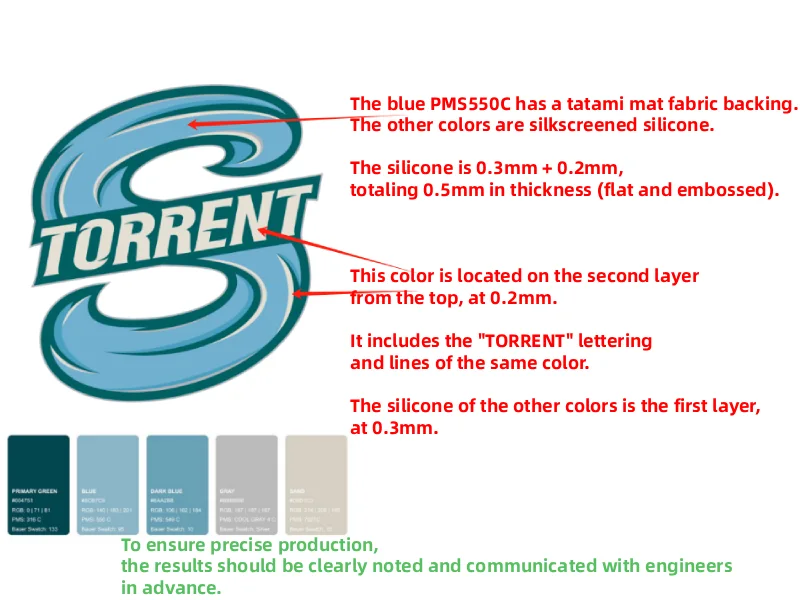
This demonstrates the manufacturer’s ability to turn complex requirements into actionable production steps quickly.
Challenge 2: Production — 1–3 Layer 3D Effects for 8 Unique Designs
Short Answer:
The more designs and the more layers involved, the harder it becomes to maintain visual consistency under urgent timing.
Deep Explanation:
Every one of the eight patches required different:
- 3D layer depths
- Silicone thicknesses
- Edge structures
- Color separations
- Texture combinations
Designs with 1–3 layered structures must maintain accurate height transitions—any miscalculation affects:
- Logo readability
- Light/shadow effects
- Tactile quality
- Overall brand impression
In fast production cycles, avoiding errors is difficult.
Therefore, each design underwent precise, individual color matching.

Even with time pressure, quality was not compromised.
Challenge 3: Post-Production — Coordinating Early With the Garment Factory
Short Answer:
Tight deadlines leave no room for failed garment-factory testing. Early communication prevents costly rework.
Deep Explanation:
After samples were completed, the next challenge was ensuring they passed:
- adhesion tests
- washing tests
- pressure/temperature application tests
To avoid delays, the team proactively communicated with the clothing factory before samples arrived, aligning:
- application temperature
- heat-pressing time
- washing durability expectations
- QC inspection procedures
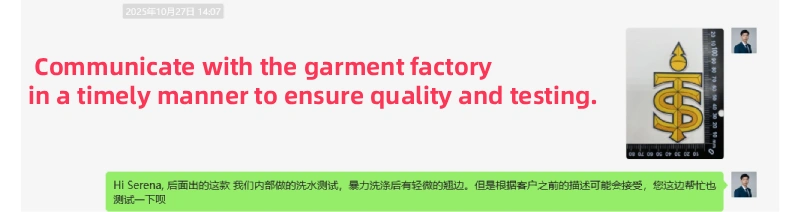
This step ensured the project moved into mass production smoothly—an essential advantage under strict deadlines.
3. What Was the Final Result?
Short Answer:
All eight patch samples were completed on schedule, meeting the client’s high requirements for texture, structure, color, and 3D layering.
Detailed Outcome:
Despite:
- high design complexity,
- eight different patch styles,
- strict expectations for texture and accuracy,
- and a very tight schedule,
the project was delivered successfully—with the customer fully satisfied.
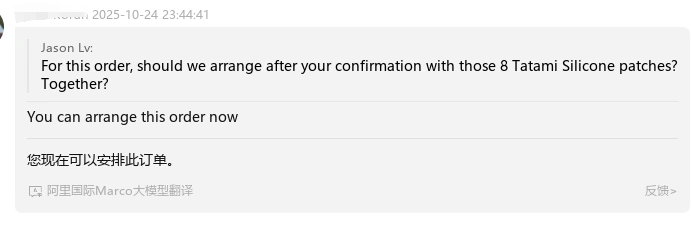
4. Why Is Communication Even More Important Under Tight Deadlines?
Short Answer:
Fast sampling requires zero misalignment. Clear communication is the only way to avoid delays and maintain quality.
Detailed Explanation:
For high-requirement B2B clients, especially those ordering multiple patch styles, communication is critical in all three phases:
1. With the Client
- clarifying expectations
- confirming materials
- adjusting color palettes
- validating 3D-layer structures
- preventing rework
2. With the Production Team
- ensuring every design is understood precisely
- controlling silicone layer thickness
- validating texture consistency
- managing tight scheduling
3. With the Garment Factory
- aligning application requirements
- preparing for testing
- preventing quality disputes
This multi-channel communication is the key factor that ensures an urgent, multi-design project can succeed.
5. Summary: What Should B2B Buyers Know When Making a Sample Into a Patch Under Tight Timelines?
Featured Snippet-Friendly Key Points:
- High-requirement orders need rapid, accurate design consultation.
- Producing eight different patch samples at once significantly raises complexity.
- Tight deadlines make communication even more crucial.
- Color confirmation must be precise and done early.
- 3D-layer planning affects visual impact and brand integrity.
- Pre-coordination with garment factories avoids testing delays.
- Professional, experienced suppliers are essential for urgent projects.
Conclusion
This project proves that making a sample into a patch becomes far more challenging when a client demands:
- strict visual standards
- eight unique designs
- complex 1–3 layer structures
- and a very tight sampling schedule
Through expert guidance, precise craftsmanship, and seamless communication among clients, production staff, and garment factories, the project was completed smoothly—and delivered with zero delay.
About Author
——————————————————————————————————————————————

Jason
Sales Manager
With extensive industry knowledge and a responsible work ethic, I deliver professional guidance and reliable support for every client collaboration.
——————————————————————————————————————————————