개발할 때 TPU heat transfer label, we do not simply recommend a random temperature or pressing time.
Before a product is officially recommended to a customer, we conduct actual application tests to determine suitable TPU heat transfer label parameters.
These parameters are developed based on factors such as:
- Material thickness
- Adhesive layer characteristics
- Product structure
- 패브릭 유형
- Heat resistance of the substrate
- Bonding performance
The goal is to find the right balance between strong adhesion and protecting the TPU label from heat damage.
What Do TPU Heat Transfer Label Parameters Usually Include?
A typical heat transfer recommendation may look like this:
Temperature: 150°C
Time: 15 seconds
Pressure: Medium
These numbers are not simply chosen based on experience or theory.
They are normally established through repeated testing to determine a suitable processing window for the specific product.
The ideal parameters should provide enough heat and pressure for the adhesive layer to bond properly while avoiding excessive heat exposure that could affect the TPU surface.
Therefore, the recommended parameters should be treated as an important part of the product specification.


A Real Production Problem We Encountered
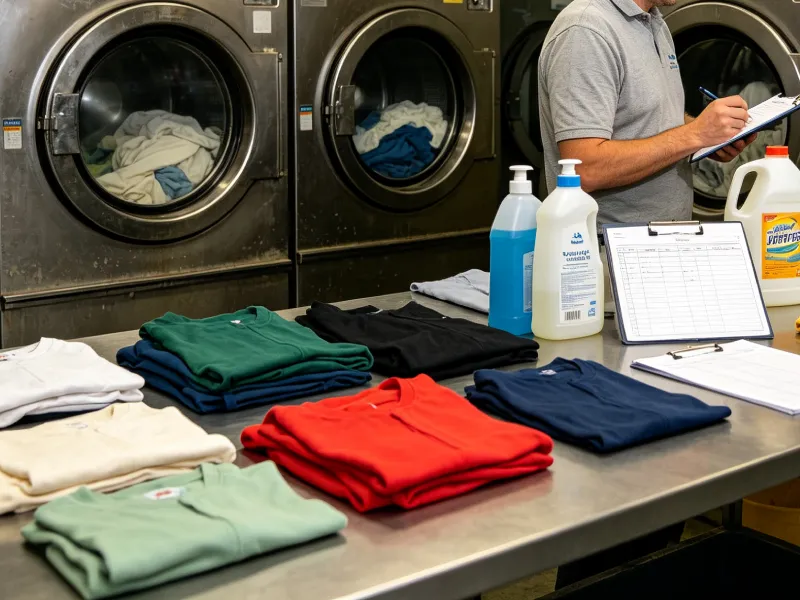
We once encountered a situation where a customer received TPU heat transfer labels and performed application testing at their own factory.
The customer had previously used products from another supplier and was accustomed to using relatively high heat transfer temperatures.
During their test, they increased the pressing temperature based on their previous production experience.
After testing, they reported:
“The TPU surface has changed. Could there be a problem with the product?”
We immediately repeated the test internally using the customer’s processing conditions.
The result confirmed that the TPU surface had indeed been affected.
However, when we repeated the test using the original parameters from our test report, the TPU label performed normally.
After analyzing the situation, we determined that the problem was not caused by the TPU material itself.
The heat transfer conditions being used were simply outside the recommended processing range for that particular product.
Why Can the Same TPU Label Produce Different Results at Different Factories?
Even when the recommended parameters are the same, the final result can vary between factories.
Several factors can affect the outcome.
1. Different Heat Press Equipment
Different heat press machines can have different levels of temperature accuracy.
For example, a machine may display:
150°C
but the actual temperature of the heating plate may be slightly higher or lower.
Machine pressure and pressure distribution can also vary.
As a result, two factories using the same displayed temperature, pressing time, and pressure may still obtain slightly different results.
This is why equipment calibration and small-scale testing are important before bulk production.
2. Different Fabrics
The same TPU heat transfer label may perform well on one fabric but require different conditions on another.
For example, the label may bond well to:
100% polyester
but require additional testing when applied to:
- Nylon
- Stretch fabrics
- Coated fabrics
- Water-repellent fabrics
- Fabrics with special surface treatments
Different fabrics have different surface structures, heat absorption characteristics, coatings, and chemical properties.
These factors can affect how the adhesive layer bonds to the fabric.
Therefore, TPU heat transfer label parameters should not automatically be transferred from one fabric to another without testing.
3. Different Operating Practices
Another common problem is the assumption that:
Higher temperature = stronger adhesion
This is not necessarily true.
Some production teams may increase the temperature or pressing time when they want to improve bonding strength.
However, excessive heat can cause problems such as:
- TPU surface deformation
- Gloss changes
- Color changes
- Surface damage
- Material distortion
- Adhesive overflow
The correct approach is to start with the supplier’s recommended parameters and then make controlled adjustments based on the actual fabric and equipment.
Why Don’t We Simply Recommend the Highest Temperature?
The purpose of heat transfer is not to apply as much heat as possible.
The objective is to provide enough heat, time, and pressure for the adhesive layer to activate and bond effectively.
At the same time, the TPU material itself needs to remain stable.
This creates a balance between:
Bonding Strength ↔ Heat Exposure ↔ Product Appearance
Too little heat may result in weak adhesion.
Too much heat may damage the TPU surface.
Too much pressing time can also expose the product to unnecessary thermal stress.
Therefore, the best parameter is not necessarily the highest temperature or longest pressing time.
It is the parameter that provides stable bonding without compromising the product.
How Should TPU Heat Transfer Labels Be Tested Before Bulk Production?
To reduce production risks, we recommend conducting a small-scale application test before starting mass production.
Ideally, the test should use:
- The actual production fabric
- The actual heat press machine
- The actual production operator
- The final TPU label
- The intended application conditions
This provides a much more reliable result than testing only on a laboratory sample or a different fabric.
After pressing, the sample should also be evaluated for:
Appearance + Adhesion + Surface Condition + Washing Performance
This helps identify potential problems before they affect the bulk order.
What Should You Check When a TPU Label Has a Problem?
If a TPU heat transfer label shows poor adhesion or surface damage, do not immediately assume that the material is defective.
First check the actual processing conditions:
✔ Heat transfer temperature
✔ Pressing time
✔ Pressure
✔ Heat press equipment
✔ Fabric composition
✔ Fabric surface treatment
✔ Actual TPU label construction
Only after these factors have been checked can the real cause of the problem be identified.
In many cases, a small adjustment to the application process can solve the problem without changing the product itself.
FAQ: TPU Heat Transfer Label Parameters
What temperature should be used for TPU heat transfer labels?
There is no single temperature suitable for every TPU heat transfer label. The recommended temperature depends on the TPU structure, adhesive layer, thickness, and fabric. Always start with the supplier’s tested parameters.
Can I increase the temperature to improve adhesion?
Not necessarily. Excessive temperature can damage the TPU surface or affect its appearance. It is better to adjust temperature, time, and pressure systematically after testing.
Why does the same TPU label perform differently on different fabrics?
Fabric composition, surface treatment, heat absorption, stretch, and coating can all affect adhesive bonding. A parameter that works well on polyester may not work identically on nylon or treated fabrics.
Why is my TPU label damaged after heat pressing?
Possible causes include excessive temperature, excessive pressing time, excessive pressure, inaccurate machine temperature, or incompatibility between the label and fabric. The actual application conditions should be checked first.
Should I test before bulk production?
Yes. A small production test using the actual fabric, equipment, TPU label, and operating conditions is strongly recommended before starting bulk production.
마지막 생각
The purpose of tested TPU heat transfer label parameters is not simply to provide a set of numbers for the customer to follow.
They represent the processing conditions under which the specific TPU label has been tested to achieve a suitable balance between adhesion, appearance, durability, and material protection.
For this reason, we recommend:
Follow the tested parameters → Conduct a small production test → Check the actual result → Make controlled adjustments if necessary → Start bulk production
When a heat transfer problem occurs, the first step should not always be to blame the material.
In many cases, understanding the relationship between temperature, time, pressure, equipment, fabric, and adhesive performance is the key to finding the real solution.
저자 소개
——————————————————————————————————————————————

하이디
영업 관리자
안녕하세요, 영업 매니저 하이디입니다. 전문성과 효율성으로 잘 알려진 저는 종종 최고의 영업 성과로 인정받곤 합니다. 저는 전문성과 헌신이 고객과의 지속적인 신뢰를 구축한다고 믿습니다.
——————————————————————————————————————————————