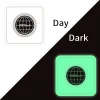
A luminous screen-printed silicone patch is made by layering glow-in-the-dark silicone ink with standard silicone through controlled screen printing. Only light-colored areas can glow, so precise layer planning is critical—especially for complex military designs requiring durability, clarity, and night visibility.
Client Question: Can a Silicone Patch with Complex Black Graphics Still Glow at Night?
Short answer: Yes—but only with the right structure, materials, and production logic.
This case comes from a Portuguese client developing a military shirt badge for active-duty soldiers. The project pushed the limits of what a luminous screen-printed silicone patch can realistically achieve.
Project Background: Military Standards, Zero Simplification Allowed
The client sent us a detailed design file with the following requirements:
- Material: Silicone
- Shape: Round
- Size: Ø 9 cm
- Application: Military uniform shirt
- Back finish: Hook-and-loop (Velcro)
- Special requirement: Glow-in-the-dark (luminous) effect
- Design rule: No simplification allowed
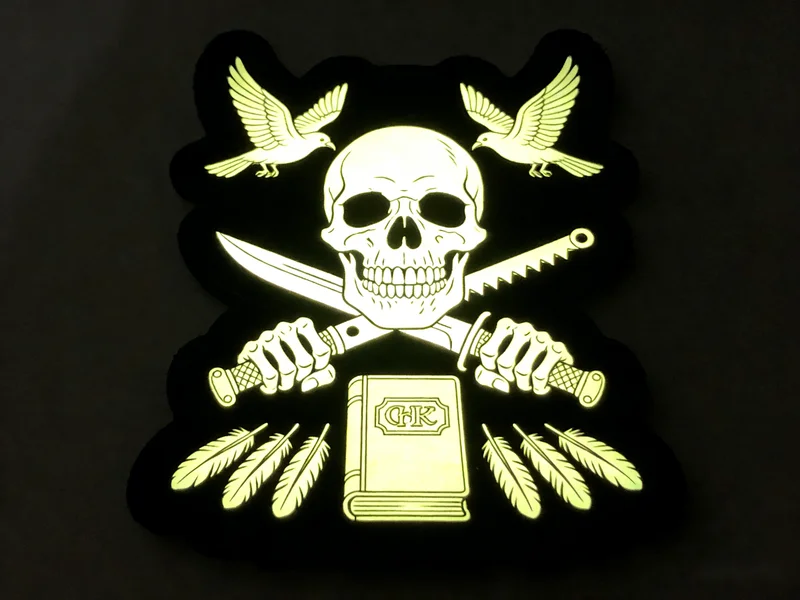
The artwork was visually dense and symbolic:
- Skull
- Hands
- Letters
- Birds
- Knife
- Book
- Feathers
The background was mostly black, while selected elements were white and required luminous performance at night.
The First Reality Check: Not All Colors Can Glow
Before jumping into production, we clarified a critical technical fact with the client:
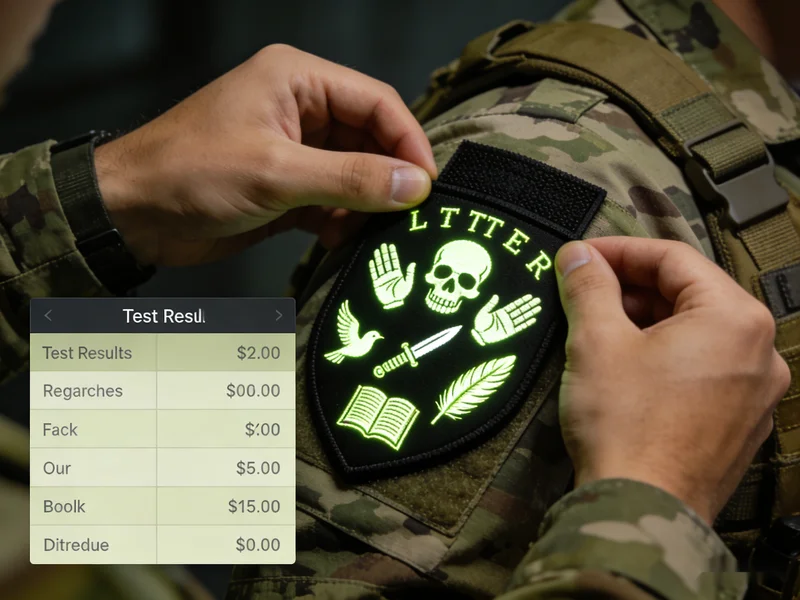
Glow-in-the-dark silicone only works with light or translucent colors.
Black or dark pigments physically block the luminous effect.
This meant:
- Black areas could not glow
- White and light-colored areas could glow
- The design had to remain visually identical during the day, yet functional at night
The client understood this limitation but insisted:
“The artwork must remain exactly as designed.”
This is where engineering, not compromise, became the solution.
Production Challenge #1: Complex Graphics + Luminous Performance
Military patches differ from fashion patches in one key aspect:
They are functional tools, not decorative elements.
The challenges included:
- Extremely dense black linework
- Multiple symbolic elements layered closely together
- Large size (9 cm diameter)
- Requirement for long-term durability on uniforms
A simple luminous top layer would not work.
Production Challenge #2: Silicone Directly on Velcro = High Risk
Another hidden risk emerged during internal evaluation:
- Silicone screen printing directly onto Velcro often leads to:
- Weak bonding
- Edge lifting
- Peeling during use
For military use—where patches are frequently removed and reattached—this risk was unacceptable.
Our Final Technical Solution: A 3-Layer Screen-Printed Silicone Structure
After internal meetings with our process engineers, we developed a three-layer silicone screen printing solution, with a total thickness of approximately 0.5 mm.
Layer Structure (from bottom to top):
Layer 1: Fabric Base Layer
- A white fabric backing was applied first
- Purpose:
- Stabilize the structure
- Ensure strong bonding to the Velcro
- Prevent peeling during repeated removal
Layer 2: Luminous Silicone Layer
- White silicone mixed with luminous pigment
- Applied only to:
- Skull
- Hands
- Letters
- Birds
- Knife
- Book
- Feathers
This ensured maximum glow visibility at night.
Layer 3: Black Silicone Cover Layer
- Standard black silicone screen printed on top
- Purpose:
- Preserve original artwork appearance
- Mask non-luminous areas
- Maintain sharp contrast in daylight
This layered approach allowed daytime accuracy + nighttime functionality.
Why This Method Works for Luminous Screen-Printed Silicone Patches
✔ Maintains original artwork without simplification
✔ Ensures glow effect only where physically possible
✔ Improves bonding strength for Velcro-backed patches
✔ Suitable for military uniforms and repeated use
✔ Controlled thickness prevents stiffness on garments
Final Result: Beyond Client Expectations
When the finished patches were tested in low-light conditions:
- All designated elements glowed clearly
- Black areas remained visually solid
- The patch retained sharp detail despite its size
- Velcro attachment passed repeated pull tests
The client confirmed that the final result exceeded expectations, both visually and functionally.
Key Takeaways for Brands Considering Luminous Silicone Patches
If you are developing a luminous screen-printed silicone patch, especially for uniforms, tactical gear, or functional apparel, keep these points in mind:
- Glow effects are material-dependent, not design-dependent
- Black cannot glow—layer planning is essential
- Large patches require structural reinforcement
- Silicone + Velcro always needs a bonding strategy
- Military and professional use demand risk control, not shortcuts
From Our Perspective as a Manufacturer
This project reflects a core principle we follow:
We don’t simplify customer designs to fit production.
We redesign the production to respect the design.
That mindset is especially important for B2B brands, military suppliers, and functional apparel developers—where failure in use can damage brand trust.
📌 If you’re planning a luminous silicone patch, glow-in-the-dark emblem, or functional military badge, and need realistic guidance on what’s possible (and what risks to avoid), early technical discussion will save time, cost, and reputation.
We prefer solving problems before production—not explaining them afterward.
About Author
——————————————————————————————————————————————

Laurie
Sales Manager
Hi, I’m Laurie, Sales Manager. I am detail-oriented and highly responsible, focusing on understanding clients’ real needs and delivering reliable solutions while building long-term, trusted partnerships.
——————————————————————————————————————————————