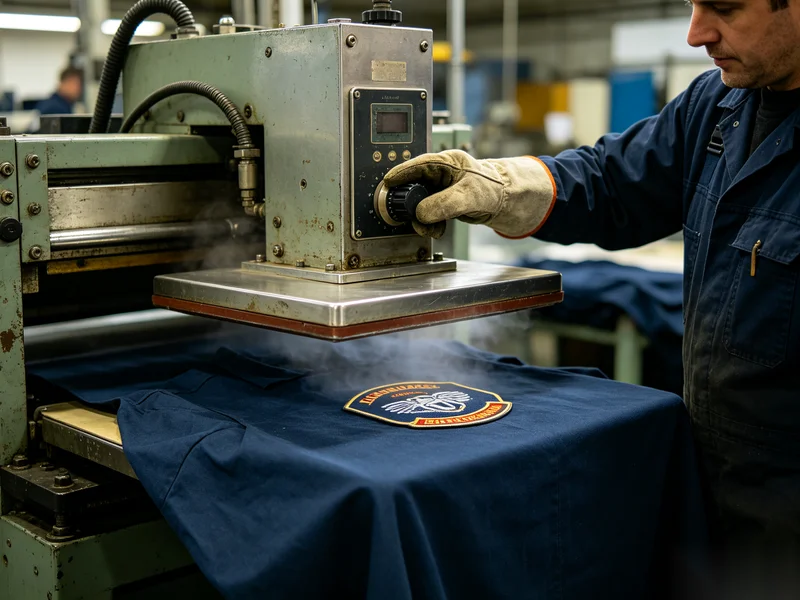
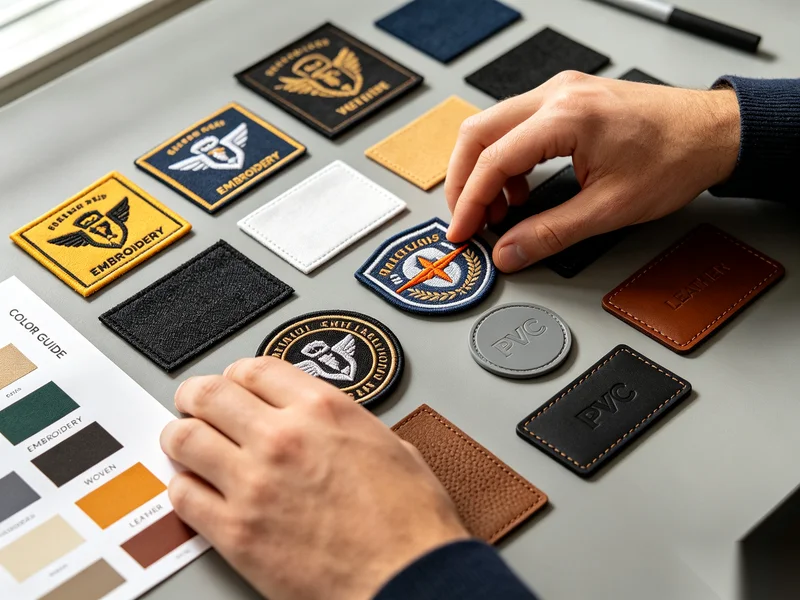
When developing custom sew-on silicone badges, most brands focus on logo appearance, color, and 3D effects. However, many production issues actually begin long before manufacturing—they start during the design stage.
After nearly three decades of engineering experience in apparel trims, we’ve found that many silicone badge designs overlook critical sewing requirements. These seemingly small details can lead to edge lifting, broken needles, uneven stitching, or unnecessary mold modifications.
This guide explains the key engineering principles behind sew-on silicone patches and how thoughtful design can improve durability, manufacturability, and product quality.
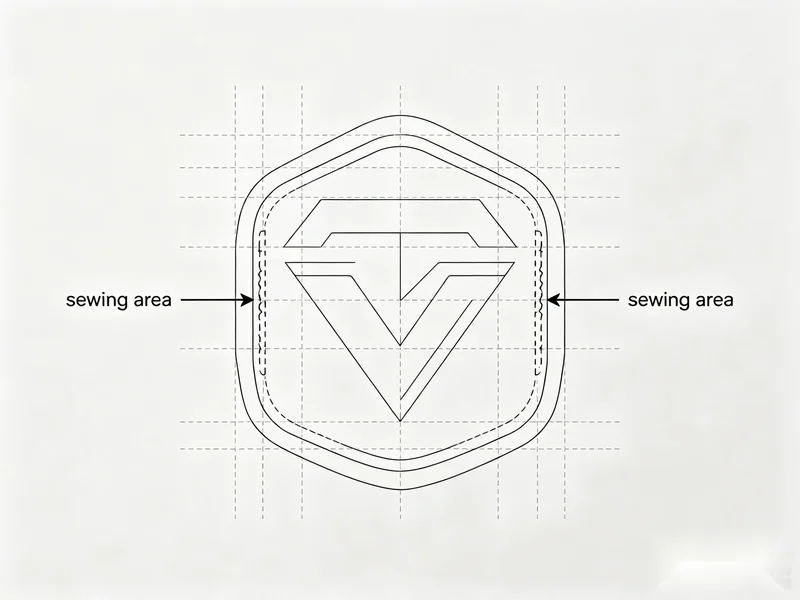
Why Can’t Silicone Badges Have the Same Sewing Margin on All Four Sides?
One of the most common design requests is a uniform sewing border around the entire badge—for example, a consistent 3 mm stitching margin.
While this looks symmetrical in artwork, it isn’t always the best solution once the badge is sewn onto a garment.
The reason is simple:
Garments do not experience equal stress in every direction.
For example, on a sports T-shirt:
- The left and right sides experience the greatest horizontal stretching during movement.
- The top and bottom edges experience much less force.
Because of this:
- Left and right edges mainly resist shear stress.
- Top and bottom edges mainly experience peel force.
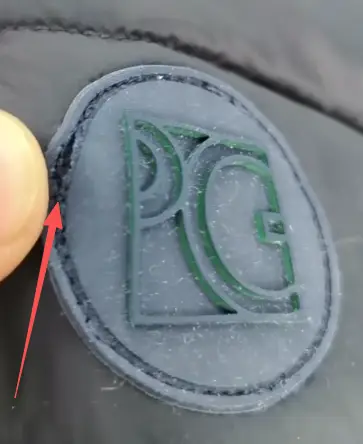
If every side uses the same narrow sewing allowance, the horizontal edges are more likely to:
- Lift after repeated washing
- Develop wavy edges
- Separate from the fabric over time
Recommended Design Practice
Instead of making all four sides identical, adjust the sewing allowance according to the direction of stress.
For most apparel applications:
- Increase the stitching area on the left and right sides.
- Use a slightly narrower allowance on the top and bottom.
This creates a more balanced load distribution and significantly improves long-term durability.
What Is the Ideal Thickness for Custom Sew-on Silicone Badges?
Many brands associate thicker silicone with a more premium appearance.
It’s common to request badges that are:
- 2 mm thick
- 3 mm thick
- Even 4 mm thick
However, thicker is not always better.
Problems Caused by Excessive Thickness
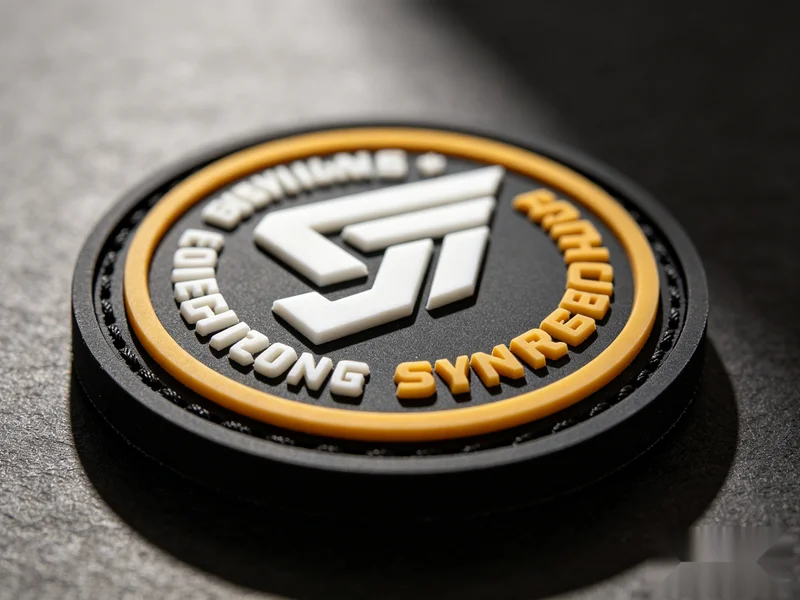
As thickness increases, sewing becomes considerably more difficult.
Potential issues include:
- Greater resistance when the needle penetrates the badge
- Increased load on industrial sewing machines
- Higher risk of broken needles
- Reduced control around curves and corners
- Slower production speed
For most garment applications, a moderate thickness provides the best balance between appearance and manufacturability.
Recommended Thickness
In most apparel projects:
- 1.5–2.0 mm is suitable for standard sew-on silicone badges.
- 2.5 mm may be appropriate for larger logos requiring stronger dimensional effects.
- Thicknesses above 3 mm should only be used when absolutely necessary and after evaluating sewing feasibility.
Choosing the right thickness helps achieve a premium appearance without compromising production efficiency.
What If the Sewing Channel Is Too Narrow?
Another common issue appears after the first sample.
Designers often assume poor stitching quality is caused by manufacturing defects when the real problem lies in the original artwork.
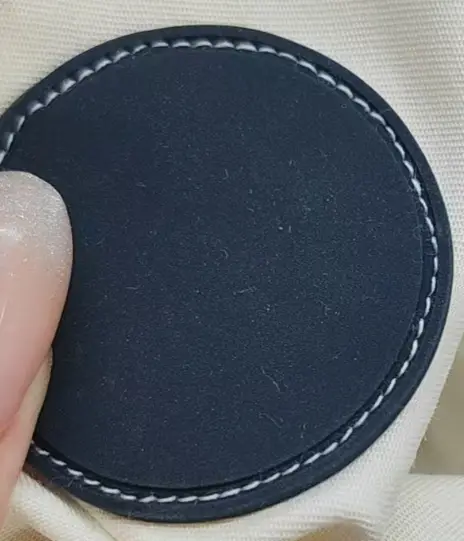
A customer once brought us a silicone badge whose sewing area was extremely narrow. Their previous supplier suggested redesigning the entire mold.
Fortunately, that wasn’t necessary.
The Engineering Solution
For sew-on silicone badges, the center of the stitching holes should generally remain:
2.0–2.5 mm away from the silicone edge.
If the sewing channel is narrower than this, manufacturers can often improve sewability by:
- Using finer sewing thread
- Increasing stitch spacing
- Optimizing sewing parameters
These adjustments frequently solve the problem without the expense of producing a new mold.
Recommended Specifications:
| Product Type | Recommended Thickness |
|---|---|
| Ordinary sportswear | 0.8–1.2 mm |
| Outdoor products | 1.2–1.8 mm |
| Heavy-duty items | Over 2.0 mm (sewability assessment required) |
Why Engineering Review Matters Before Mold Production
Many production challenges can be eliminated before sampling simply by reviewing the design from an engineering perspective.
An experienced manufacturer doesn’t just produce your artwork—they help adapt it for successful production.
Typical engineering optimizations include:
- Adjusting sewing margins
- Optimizing silicone thickness
- Improving sewing channel dimensions
- Simplifying difficult corners
- Enhancing structural durability
- Reducing unnecessary mold revisions
These improvements help reduce development costs while increasing production consistency.
Common Design Mistakes to Avoid
When designing custom sew-on silicone badges, try to avoid these common mistakes:
- Using identical sewing margins on all four sides
- Making the badge unnecessarily thick
- Designing sewing channels that are too narrow
- Placing stitching too close to the edge
- Ignoring garment stretching during actual wear
- Prioritizing appearance over manufacturability
Addressing these issues early leads to better samples, faster production, and more reliable finished products.
Choosing the Right Manufacturing Partner
Producing high-quality silicone patches involves much more than mold making.
A professional manufacturer should be able to:
- Review artwork before tooling
- Identify potential production risks
- Recommend structural improvements
- Optimize sewing performance
- Balance appearance, durability, and manufacturing efficiency
These engineering services often make the difference between a product that merely looks good in a rendering and one that performs reliably in real-world use.
Final Thoughts
Successful custom sew-on silicone badges begin with smart engineering—not just attractive artwork.
By considering stitching direction, stress distribution, badge thickness, and sewing channel dimensions during the design stage, brands can dramatically reduce production issues and improve product longevity.
At QingHan, our engineering team has specialized in apparel trims for over 28 years. We work closely with apparel brands, designers, and sourcing teams to optimize every silicone badge before production begins, helping transform creative concepts into durable, production-ready products.
If you’re developing custom silicone badges for apparel, hats, footwear, or bags, we’re happy to review your design and provide practical engineering recommendations before tooling—saving both time and development costs while ensuring the best possible result.
About Author
——————————————————————————————————————————————

Heidi
Sales Manager
Hi, I’m Heidi, Sales Manager. Known for professionalism and efficiency, I am often recognized as the top sales performer. I believe expertise and dedication build lasting trust with clients.
——————————————————————————————————————————————