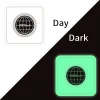
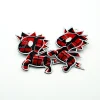
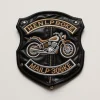
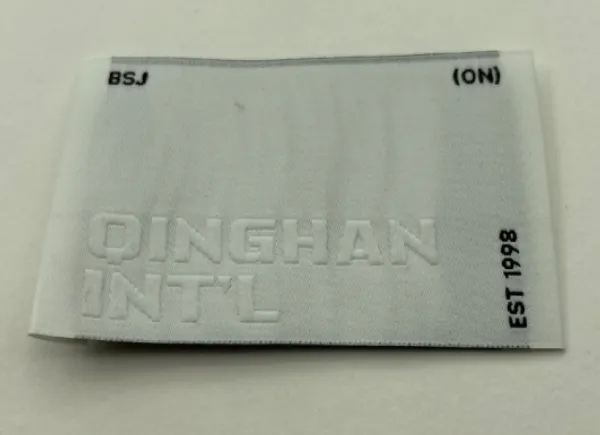
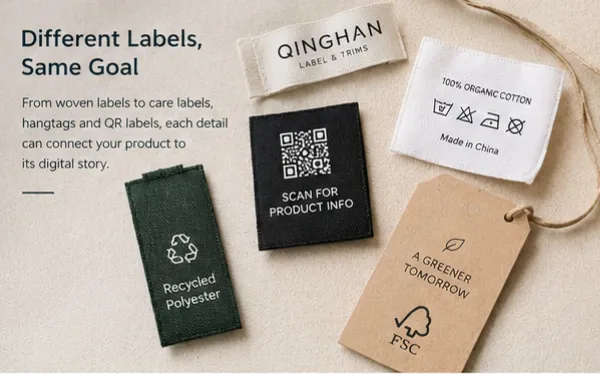
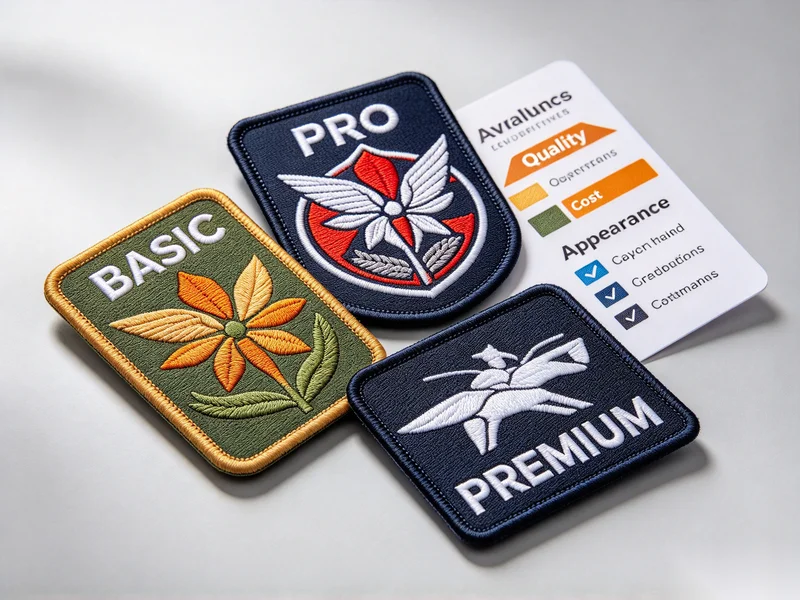
UV hang tags offer brands a way to add gloss, texture, and subtle dimension to product packaging. By curing specially formulated ink with ultraviolet light, UV printing can create a raised surface effect without relying entirely on traditional embossing. For brands looking for a premium finish, it can also provide a practical alternative when double-sided embossing creates structural or visual challenges.
What Are UV Hang Tags?
UV hang tags are product tags that use ultraviolet-curable ink or coating to create decorative effects on selected areas of the surface.
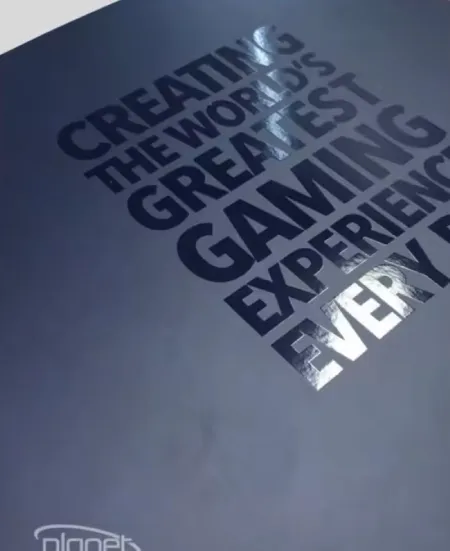
During production, UV light cures the specially formulated ink or coating, allowing it to solidify rapidly. Depending on the material and printing process, the finished surface can have a glossy appearance, a noticeable tactile texture, or a slightly raised effect.
Unlike conventional printing inks that may require more time to dry, UV-cured finishes can be handled relatively quickly after proper curing. This can help reduce the risk of wet ink transferring between stacked tags, although correct curing and handling remain essential.
UV printing can be used for different design purposes, including:
- Highlighting a brand logo
- Creating glossy details on a matte background
- Adding a subtle raised texture
- Emphasizing selected text or graphic elements
- Creating contrast between coated and uncoated areas
For brands that want more than a flat printed design, UV finishing offers another way to make a hang tag visually and physically distinctive.
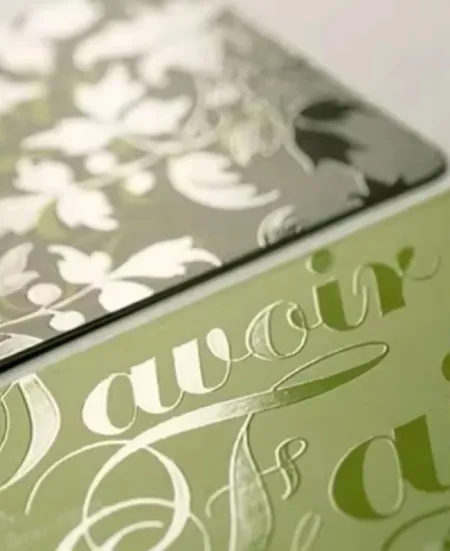
A Real Case: Replacing Double-Sided Embossing with Raised UV Printing
Recently, a customer wanted to create a hang tag with embossed effects on both sides.
At first glance, double-sided embossing seemed like a straightforward way to give the tag a premium, dimensional appearance. However, the construction presented a manufacturing challenge.
When both sides of a tag require raised details, the embossed areas can interfere with each other. During mounting, laminating, or other finishing operations, pressure applied to one side may flatten or damage the raised details on the other side, depending on the structure and production sequence.
There was also a visual consideration. Adding too many raised elements on both sides risked making the overall design look crowded rather than refined.
Instead of simply proceeding with the original process, we reviewed the intended effect and discussed alternative finishing options with the customer.
Our recommendation was to use raised UV printing with an approximate target thickness of 0.2 mm, subject to production testing and the selected material.
This approach offered a different way to achieve the desired tactile effect.
Rather than relying on mechanically embossed paper to create the raised areas, the cured UV layer provided a subtle height difference that could be felt when touched.
The customer could retain the tactile character of the design while avoiding some of the structural conflicts associated with double-sided embossing.
After reviewing the proposed solution, the customer accepted the alternative.
Why Raised UV Printing Can Be an Alternative to Embossing
Embossing and raised UV printing can both add dimension to a hang tag, but they achieve that effect in different ways.
Embossing uses pressure and tooling to deform the substrate, creating raised or recessed shapes in the material itself. Raised UV printing builds up a cured ink or coating layer on the surface.
This difference matters when choosing a finishing process.
1. Less Dependence on Paper Deformation
With embossing, the paper or board must deform to create the desired relief. When raised areas are required on both sides, the design, substrate thickness, tooling, and production sequence all influence the final result.
Raised UV printing creates its height through a surface layer instead. This can be useful when the goal is to add tactile detail without deeply deforming the paper.
However, the UV layer still needs to be compatible with subsequent finishing steps, including laminating, folding, and stacking.
2. A Subtle Tactile Effect
Raised UV printing can create a noticeable difference in surface height.
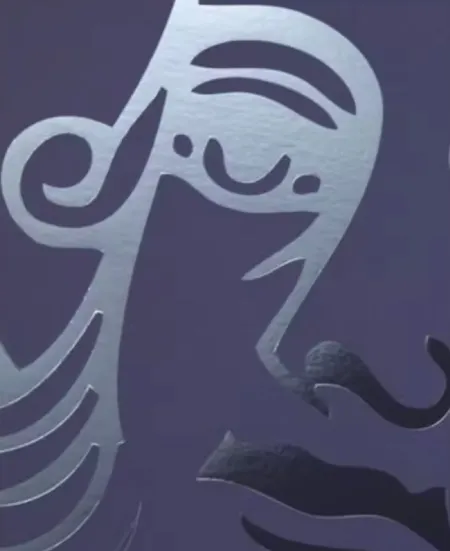
When a customer runs a finger over the logo, the raised area provides a tactile cue that makes the design feel different from the surrounding surface.
This effect can be especially effective for brand names, symbols, fine lines, and selected graphic details.
The goal is not necessarily to make the logo extremely thick. In many premium packaging designs, a restrained tactile effect looks more sophisticated than excessive surface relief.
3. Selective Gloss and Surface Contrast
UV finishes can also create contrast between different areas of a hang tag.
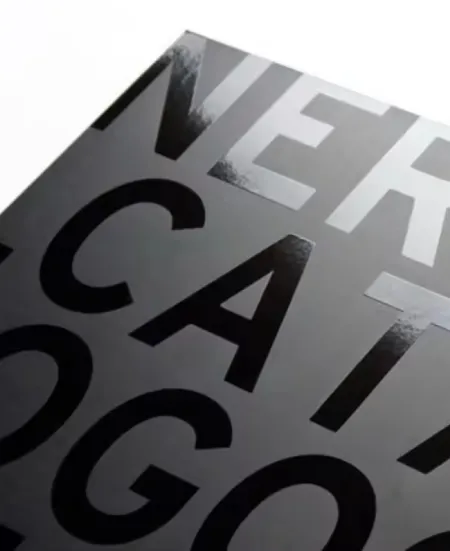
For example, a logo with a glossy UV coating on a matte background can stand out without introducing additional colors or complicated graphics.
This makes UV finishing useful for minimalist designs where the brand wants to communicate quality through material and texture rather than visual complexity.
4. Potential Production Efficiency Benefits
UV-curable ink or coating can solidify rapidly under appropriate UV exposure. This can help reduce drying-related waiting time and the risk of ink transfer during stacking.
However, fast curing does not eliminate every production risk. Ink compatibility, coating thickness, UV exposure, adhesion, and handling conditions must all be controlled.
For a successful result, the process should be tested using the actual substrate and finishing sequence.
UV Printing vs. Embossing for Hang Tags
Neither process is universally better. The right choice depends on the desired appearance, the tag construction, and the production requirements.
| Recurso | Raised UV Printing | Relevo |
|---|---|---|
| How the effect is created | Builds up a cured surface layer | Deforms the substrate using pressure and tooling |
| Tactile effect | Raised coating or ink texture | Raised or recessed paper structure |
| Efeito visual | Can combine gloss with localized dimension | Creates a sculpted, dimensional appearance |
| Double-sided designs | May avoid some conflicts caused by deep deformation | Requires careful control of opposing raised areas |
| Detalhes gráficos finos | Suitable for many logos and selected details | Depends on tooling and substrate |
| Acabamento da superfície | Glossy or other available UV effects | Depends on paper, tooling, and finishing |
| Key considerations | Adhesion, curing, coating thickness, surface compatibility | Paper thickness, relief depth, tooling, and deformation |
For some projects, the two processes can also be combined. For example, a tag may use embossing for a large graphic element and UV coating for smaller details.
The important point is to select each process according to its function rather than adding finishing effects simply because they are available.
Which Materials Can Be Used for UV Hang Tags?
UV finishing can be applied to various substrates, including suitable coated papers, paperboard, and certain plastic films such as PET.
No entanto, UV printing is not automatically compatible with every hang tag material.
Different surfaces have different characteristics. A coated paper surface may accept a particular UV ink well, while a smooth plastic film may require a compatible ink system, surface treatment, or primer to achieve reliable adhesion.
Before mass production, manufacturers should evaluate the following factors:
- Surface compatibility: Is the substrate suitable for the selected UV ink or coating?
- Adhesion: Does the cured layer remain attached during handling and use?
- Curing conditions: Can the ink or coating be fully cured under the available production settings?
- Flexibilidade: Will the finish crack or separate if the tag bends?
- Abrasion resistance: Can the surface withstand normal handling and rubbing?
- Subsequent processing: Will lamination, cutting, folding, or other finishing steps affect the UV layer?
These checks are especially important when a customer requests a thicker raised UV effect. A thicker coating may provide more tactile dimension, but it can also introduce additional requirements for curing, adhesion, and durability.
For this reason, a sample test using the actual substrate is more reliable than assuming that the same UV process will perform identically on every material.
How to Use UV Finishing to Make a Hang Tag Look More Premium
The best UV effect is not necessarily the most noticeable one. For many apparel and lifestyle brands, the goal is to create a controlled contrast that supports the overall brand identity.
Here are several practical approaches.
Highlight the Brand Logo
Applying raised or glossy UV to a logo can make it stand out from the background without changing the overall color palette.
This approach works well for brands that prefer a clean, understated design.
Combine Glossy UV with a Matte Background
A matte surface with selected glossy UV details creates contrast through reflection and texture.
Because the effect depends on lighting and viewing angle, it can be visually interesting without making the tag look overly decorative.
Use UV for Fine Lines and Small Graphic Details
Selected lines, symbols, borders, or lettering can receive UV treatment while the remaining artwork stays flat.
This keeps the design visually organized and concentrates the finishing cost on the elements that matter most.
Use Raised UV Instead of Adding More Embossed Elements
When a design already contains dimensional details, adding embossing everywhere can make the tag look crowded.
Raised UV can be considered for selected areas where a tactile effect is desirable but deeper substrate deformation is unnecessary.
The final design should balance the number of finishing effects, their placement, and the overall visual hierarchy.
What Should Buyers Confirm Before Ordering UV Hang Tags?
To avoid unexpected results, buyers should clarify the intended effect and technical requirements before production.
A useful specification includes:
- Substrate: Specify the paper, paperboard, PET, or other material.
- UV effect: Clarify whether the requirement is a glossy coating, raised UV, or another surface effect.
- Target thickness: If a specific height is required, identify it as a target for technical review and sampling.
- Application area: Mark the exact locations of the logo, text, or graphics that need UV treatment.
- Surface finish: Specify whether the background should be matte, glossy, laminated, or uncoated.
- Durability requirements: Identify any expectations for adhesion, abrasion resistance, or handling.
- Additional finishing: Confirm whether the tag will undergo embossing, lamination, cutting, folding, or other processes.
- Aprovação da amostra: Approve the appearance and tactile effect before mass production.
For a design that combines double-sided effects, it is particularly useful to provide artwork for both sides and indicate which areas must remain raised.
A physical sample can help confirm details that are difficult to evaluate on a screen, including the actual height, gloss, texture, and overall feel.
Frequently Asked Questions About UV Hang Tags
What is UV printing on a hang tag?
UV printing uses ultraviolet-curable ink or coating that solidifies under UV exposure. Depending on the process, it can create glossy details, surface contrast, or a raised tactile effect on selected areas of a hang tag.
Are UV hang tags waterproof?
A UV coating may improve resistance to moisture and surface wear, but it does not automatically make the entire hang tag waterproof. Performance depends on the substrate, ink or coating system, curing, and any additional protective layers.
Can raised UV printing replace embossing?
In some applications, yes. Raised UV can provide a tactile surface effect without deforming the substrate as deeply as embossing. However, it does not reproduce every sculpted effect that embossing can achieve.
Can UV printing be used on PET hang tags?
It can be suitable for certain PET surfaces when the ink system and surface preparation are compatible. Adhesion and abrasion testing should be conducted before mass production.
Is thicker raised UV always better?
No. Greater thickness can make the effect more noticeable, but it may also increase material use and introduce additional curing or adhesion challenges. The appropriate thickness should be determined by the design, substrate, and production tests.
Can UV printing and embossing be combined on the same hang tag?
Yes. The processes can serve different purposes within one design. For example, embossing can create a major dimensional element while UV coating highlights a logo or smaller details. Their compatibility should be checked against the actual production sequence.
Final Thoughts: Choose the Effect That Best Serves the Design
UV hang tags offer brands another way to create a distinctive packaging experience through gloss, texture, and subtle dimension.
In our customer’s project, double-sided embossing introduced structural and visual challenges. By considering raised UV printing as an alternative, we found a way to preserve the tactile character of the logo while reducing dependence on opposing embossed areas.
The broader lesson is that premium finishing is not about using the greatest number of processes. It is about understanding what each process can achieve and selecting the right combination for the product.
Whether you are developing paper hang tags, coated-card hang tags, or PET tags, consider the intended visual effect, tactile experience, substrate compatibility, and production requirements together.
A well-designed hang tag does more than display a logo. It gives customers another way to experience the brand through touch, texture, and detail.
Sobre o autor
——————————————————————————————————————————————

Laurie
Gestor de vendas
Olá, eu sou a Laurie, Diretora de Vendas. Sou orientada para os pormenores e altamente responsável, concentrando-me em compreender as necessidades reais dos clientes e em fornecer soluções fiáveis, ao mesmo tempo que construo parcerias de confiança a longo prazo.
——————————————————————————————————————————————