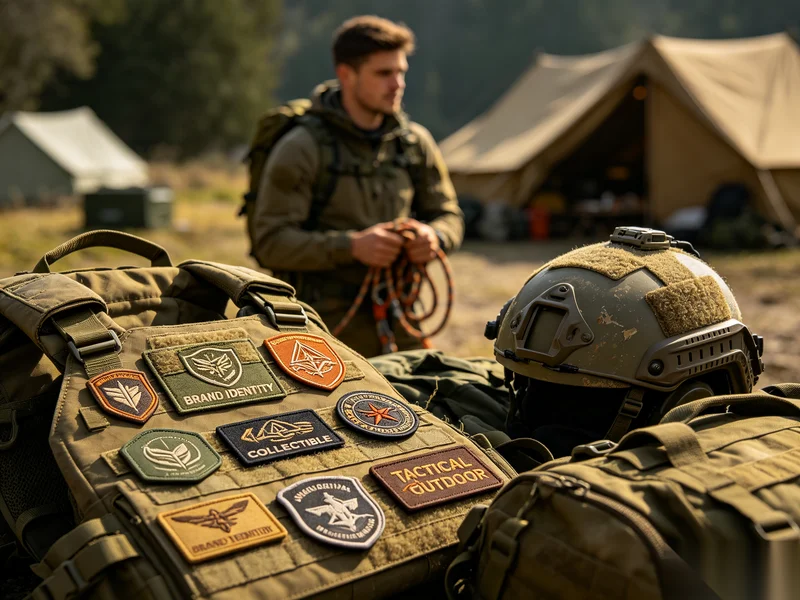
New product development is not simply about adding a few new products to a catalog. It is about exploring how changes in materials, techniques, textures, and applications can give traditional apparel trims a fresh look.
For the Qinghan FW 2027 patch collection, several new designs demonstrate how familiar patch-making techniques can be combined with new structures and applications. For sales teams, understanding these new products is not just about remembering their names. More importantly, it means understanding what makes each design different, which customers it suits, and what problems or design needs it can address.
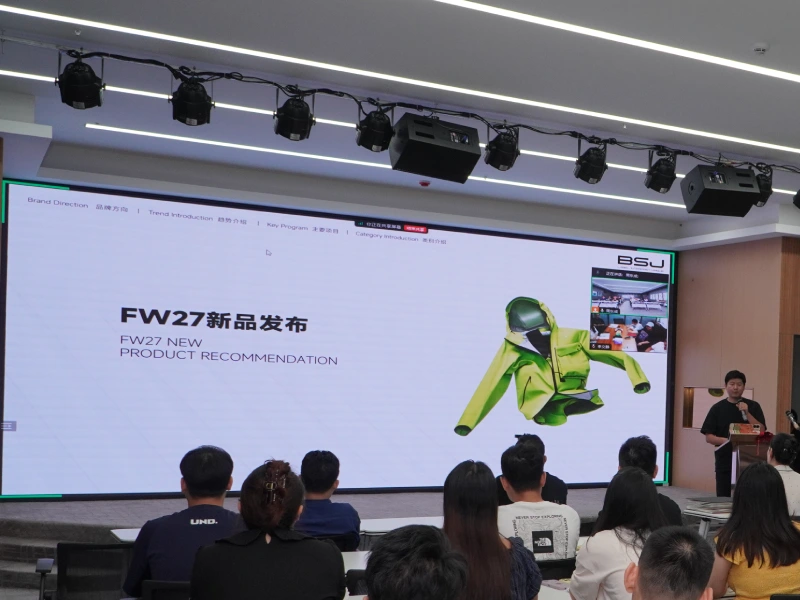
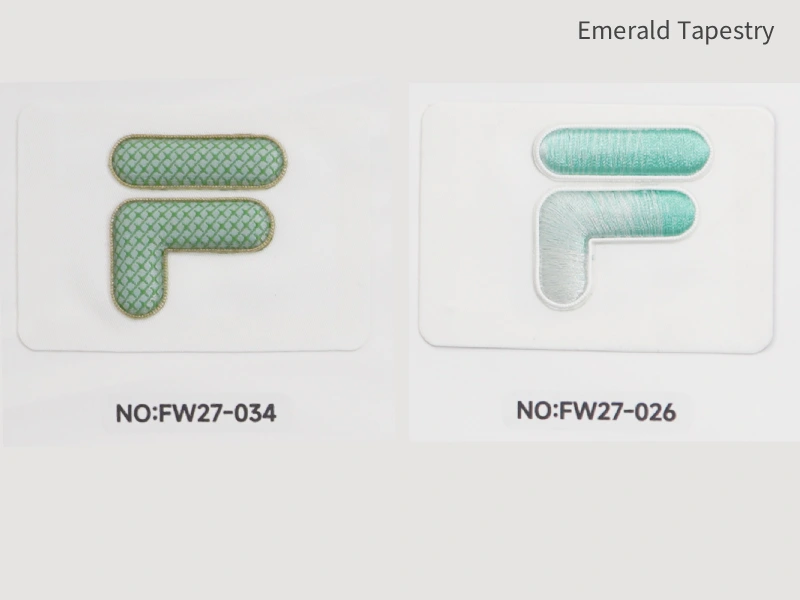
1. “Emerald Tapestry”: Giving Woven Labels a More Dimensional Look
Traditional woven labels are usually associated with a flat and clean appearance. The “Emerald Tapestry” series takes woven label construction further by introducing dimensional effects, creating more visual and tactile depth.
Compared with a conventional woven label, this type of design can make a brand logo or graphic element stand out more clearly while retaining the refined appearance of woven construction.
This approach is particularly suitable for fashion brands that care about:
- Detalhes finos
- Marca de qualidade superior
- Tactile texture
- Distinctive logo presentation
- More sophisticated apparel trims
When a customer initially asks for a standard woven label, this type of dimensional woven design can also be introduced as an alternative, especially when the brand wants to create a more distinctive visual identity.
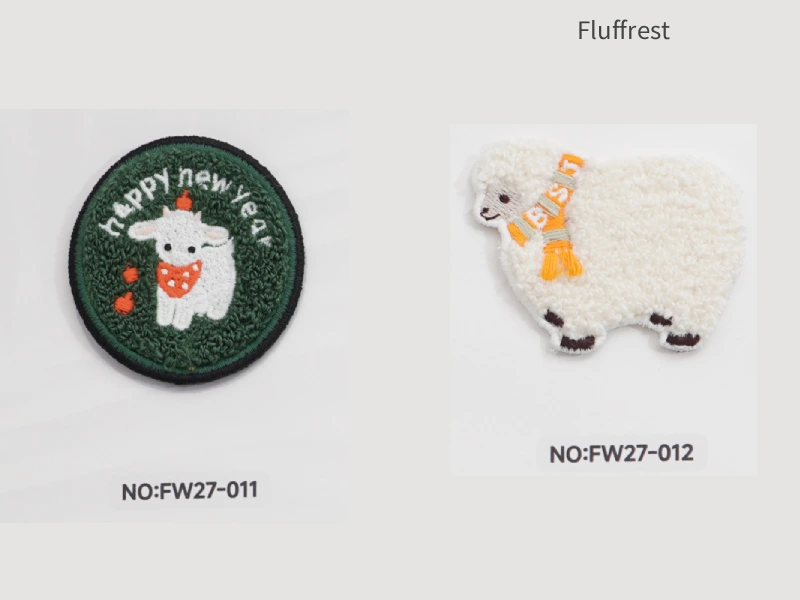
2. “Fluffrest”: Connecting Texture with Specific Applications
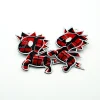
O “Fluffrest” series incorporates a soft, fluffy texture into children’s apparel products.
This design demonstrates an important principle in product development: the value of a technique depends not only on how it is made, but also on where it is used.
For children’s apparel, softness, visual appeal, comfort, and playfulness are particularly important. A fluffy patch or trim can therefore become more than a decorative element—it can contribute directly to the overall product experience.
This type of design can be particularly relevant for:
- Children’s clothing brands
- Baby and kids’ apparel
- Casual fashion
- Playful lifestyle products
When recommending a new patch, it is therefore important to consider the customer’s final application rather than focusing only on the manufacturing technique.
3. “Bionic”: Creating New Effects Through Multiple Techniques
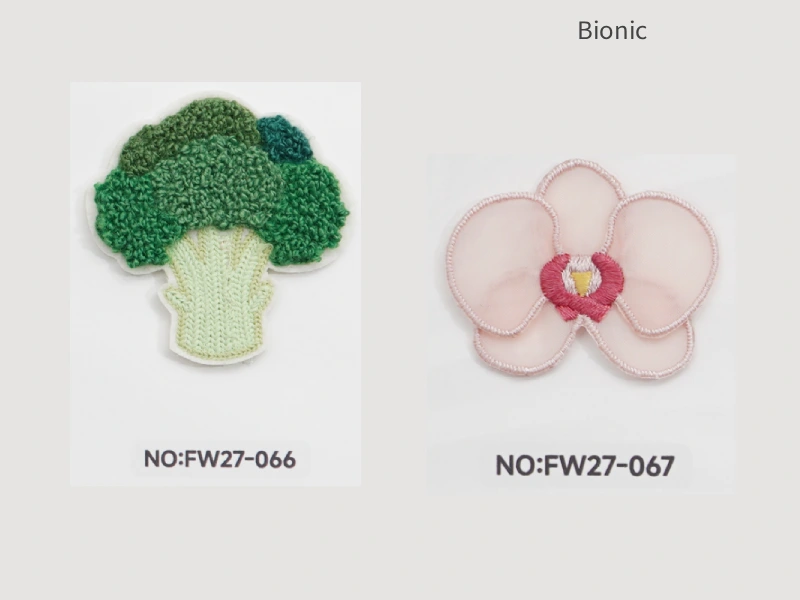
O “Bionic” series takes inspiration from natural plant forms and combines different embroidery techniques, such as chain embroidery and chenille embroidery, to create richer visual layers and textures.
Instead of relying on a single technique, combining different embroidery structures allows different parts of a design to have different visual and tactile characteristics.
For example, chain embroidery can provide defined lines and decorative contours, while chenille embroidery can create a softer and fuller surface.
This type of multi-technique patch can be particularly interesting for:
- Marcas de moda
- Marcas de exterior
- Roupa para crianças
- Marcas de estilo de vida
- Designers looking for distinctive surface effects
It also demonstrates how combining materials and techniques can create a product that looks substantially different from a conventional embroidered patch.
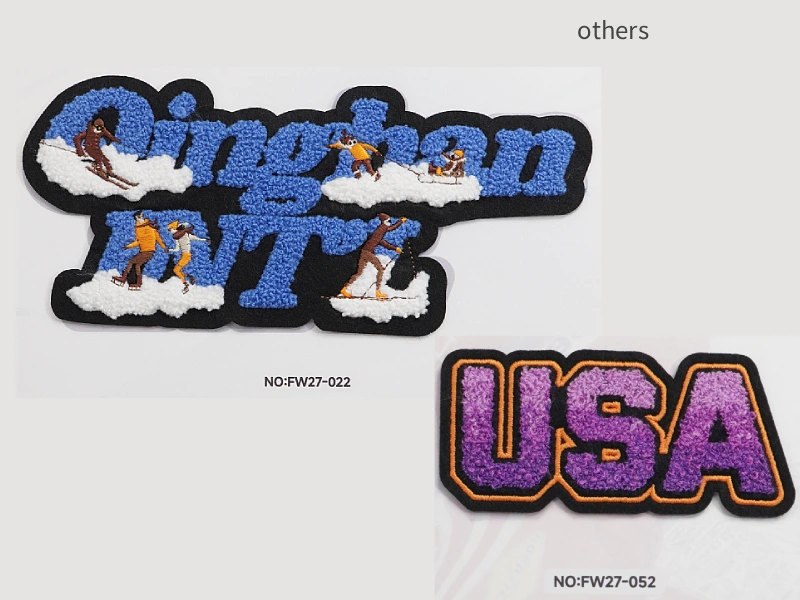
4. Other FW 2027 Designs: Looking Beyond Appearance
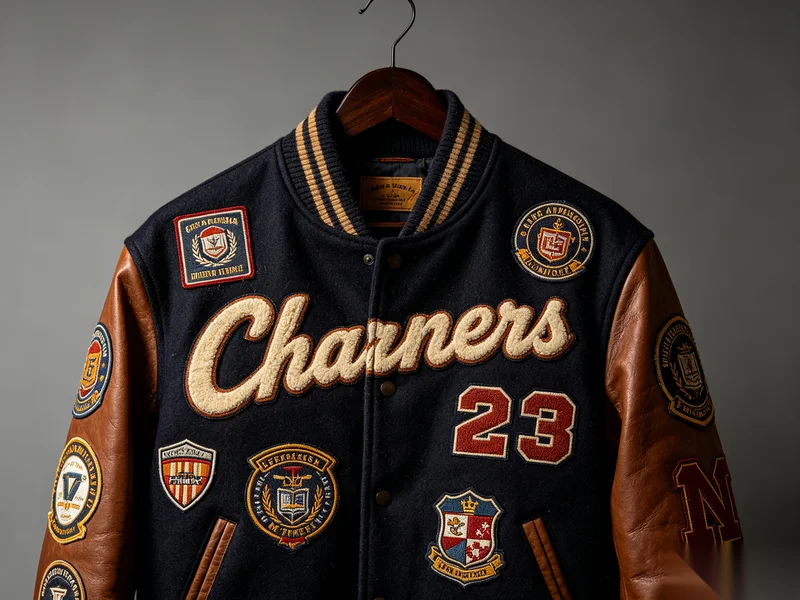
Other designs in the FW 2027 collection also explore new directions in texture, surface effects, material combinations, and functionality.
This leads to another important consideration when introducing new products:
A new product should not simply be described as “a new patch.”
Instead, we should ask:
- What makes it different from a conventional patch?
- What customer problem does it solve?
- What visual or tactile effect does it create?
- Which types of brands would benefit from it?
- What products would it work particularly well with?
This approach makes product recommendations much more meaningful.
5. How Should We Learn and Recommend New Patch Designs?
The FW 2027 collection also provides a useful framework for evaluating new apparel trims.
Product Characteristics
First, identify the biggest difference between the new product and a conventional version.
Is it:
- More dimensional?
- Softer?
- More tactile?
- More visually dynamic?
- More functional?
- A combination of multiple techniques?
Manufacturing Techniques
Next, understand how the effect is created.
A new patch may involve:
- Special embroidery techniques
- Multiple embroidery structures
- Different materials
- Layered construction
- Dimensional effects
- Innovative finishing processes
Understanding the process makes it much easier to explain the product to customers.
Cenários de Aplicação
Consider which products the patch is best suited for.
Por exemplo:
Kidswear → soft, playful, tactile designs
Sportswear → lightweight, durable, functional effects
Outdoor → durable and performance-oriented constructions
Fashion → premium textures and distinctive visual effects
Customer Needs
The most effective recommendation starts with the customer’s existing requirement.
If a customer asks for a standard woven label, for example, the sales team can determine whether the brand would benefit from a dimensional woven solution.
If a customer is developing children’s apparel, a soft textured patch may be more relevant.
The key is to connect product characteristics with customer needs, rather than simply presenting a catalog of new products.
Why FW 2027 New Patch Designs Matter
The value of a new product is not simply that it looks different.
The more important question is whether it creates additional value for the brand.
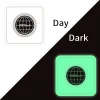
The FW 2027 collection demonstrates how traditional apparel trims can evolve through new materials, combinations, textures, and applications.
For Qinghan, product development is therefore not only about manufacturing new patches. It is also about understanding the relationship between design, manufacturing technology, application scenarios, and brand positioning.
When sales teams understand that relationship, new product recommendations become much more effective. Instead of simply telling customers, “Here is our new patch,” they can explain why the product is relevant to their brand and how it can improve the final garment.
That is ultimately what makes new patch designs valuable—not simply being new, but being useful, distinctive, and suitable for the right application.
Sobre o autor
——————————————————————————————————————————————

Mary
Gestor de vendas
Olá, chamo-me Mary. Apaixonada por explorar as novas tendências do sector, mantenho-me à frente da curva e ofereço aos clientes soluções inovadoras adaptadas às suas necessidades.
——————————————————————————————————————————————