When developing a custom metal label, the visual design is only one part of the process. Equally important is how the label will be attached to the final product.
Different attachment methods can affect the label’s stability, appearance, installation process and suitability for different materials.
Whether used on apparel, bags, footwear or accessories, choosing the right fixing method at the beginning of product development can help avoid unnecessary adjustments during sampling and bulk production.
At QINGHAN, we work with different metal label attachment solutions to meet various product requirements. Here are five common methods to consider.
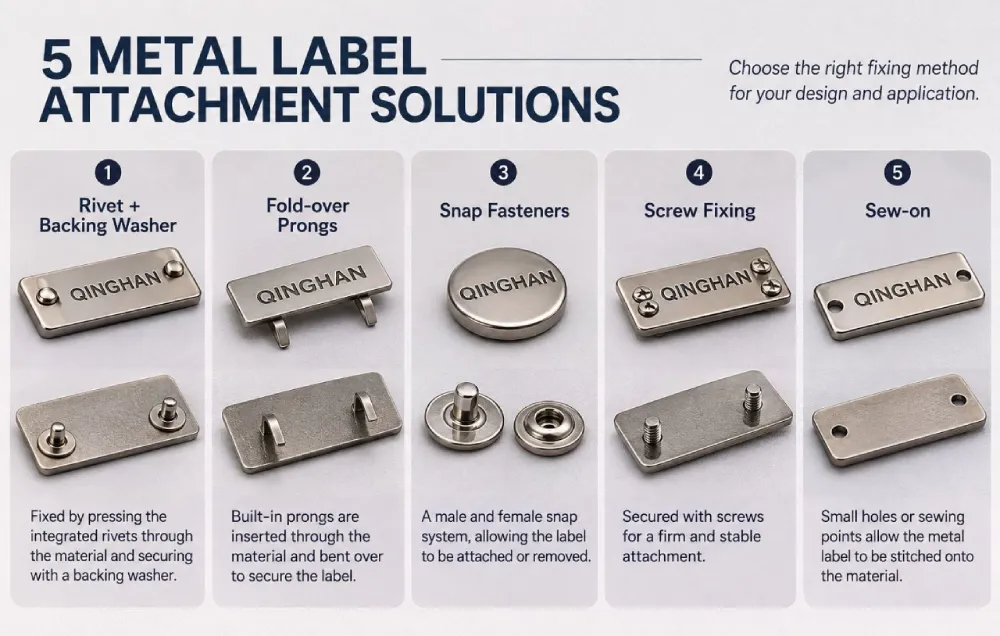
1. Integrated Rivet + Backing Washer
This method uses integrated rivets on the back of the metal label. The rivets pass through the material and are secured with a backing washer on the reverse side.
It provides a firm attachment and is suitable for applications where a relatively stable and secure fixing method is required.
2. Fold-over Prongs
Fold-over prongs are built into the back of the metal label. They pass through the material and are bent over on the reverse side to hold the label in place.
This is a practical solution for attaching metal labels to suitable materials, particularly when a simple mechanical fixing structure is preferred.
3. Snap Fasteners
Snap fasteners consist of male and female components that connect to secure the label.
Unlike permanent fixing methods, this solution allows the label to be attached and removed when needed. It can be considered for products where replaceability or detachable branding is part of the design.
4. Screw Fixing
With screw fixing, the metal label is secured using screws, typically through prepared holes in the label and product material.
It offers a firm and stable connection and can be suitable for thicker materials or products where a more substantial attachment structure is required.
5. Sew-on
Sew-on metal labels feature small holes or designated sewing points around the label.
They are attached directly to the product using stitching, making this method suitable for applications where sewing is preferred over mechanical fasteners.
It can also provide a clean integration with the surrounding fabric or textile material.
How to Choose the Right Metal Label Attachment Method?
There is no single attachment method that works for every application. The right choice depends on several factors:
- Matériel: Fabric thickness, flexibility and surface structure can affect the fixing method.
- Product Design: The attachment should complement the overall design without affecting the product’s appearance or functionality.
- Durabilité: Consider how securely the label needs to remain attached during everyday use.
- Installation: Different methods may require different tools, processes and production conditions.
- Application Requirements: Whether the label needs to be permanent, removable or replaceable is also an important consideration.
Ideally, the attachment method should be discussed during the initial product development stage, rather than being decided only after the metal label design has been finalized.
Need Help Developing Custom Metal Labels?
At QINGHAN, we are a direct manufacturer with 28 years of experience in custom Garment Trims.
We work with customers on customized metal labels and different attachment solutions, considering the product material, design requirements and intended application.
By evaluating both the label design and its fixing structure at an early stage, we help ensure that the final product is not only visually appealing but also practical for production and everyday use.
Looking for the right attachment solution for your next metal label project? Feel free to contact our team to discuss your requirements.
À propos de l'auteur
——————————————————————————————————————————————

Jason
Directeur des ventes
Grâce à une connaissance approfondie du secteur et à une éthique de travail responsable, je fournis des conseils professionnels et un soutien fiable pour chaque collaboration avec un client.
——————————————————————————————————————————————