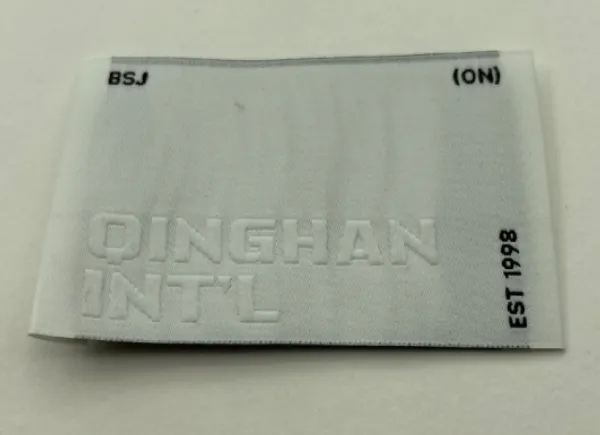
Combining woven labels with water-soluble embroidery creates an opportunity to blend precise logo details with delicate, lace-like embroidery. While traditional sewing can join the two components, an integrated embroidery process can provide a more seamless appearance, better dimensional stability, and improved production consistency. The right method depends on the design, material structure, quantity, and desired finish.
What Is the Combination of Woven Labels and Water-Soluble Embroidery?
Woven labels and water-soluble embroidery serve different purposes in apparel design.
Woven labels are ideal for displaying brand names, logos, and fine lettering because their patterns are formed by interlacing yarns. Water-soluble embroidery, meanwhile, uses a water-soluble backing or base that is removed after embroidery, leaving behind a delicate, open structure that can resemble lace.
Combining these two techniques allows brands to achieve several effects in one component:
- Precise woven logo details
- Delicate, open embroidery patterns
- Three-dimensional texture and decorative detail
- A lightweight, lace-like appearance
- A distinctive finish for premium apparel
However, the final result depends heavily on how the woven label and embroidery are joined. The production method can affect not only appearance but also shape stability, workmanship, and manufacturing efficiency.
Method 1: Produce the Woven Label and Embroidery Separately, Then Sew Them Together
The traditional approach is to manufacture the woven label and water-soluble embroidery separately, then join them through sewing.
This method offers flexibility during product development. Because the two components are produced independently, their designs and dimensions can be adjusted separately before assembly.
It can be suitable for certain small-batch projects, designs requiring separate components, or applications where a visible seam is part of the intended construction.
However, this approach also introduces several potential challenges.
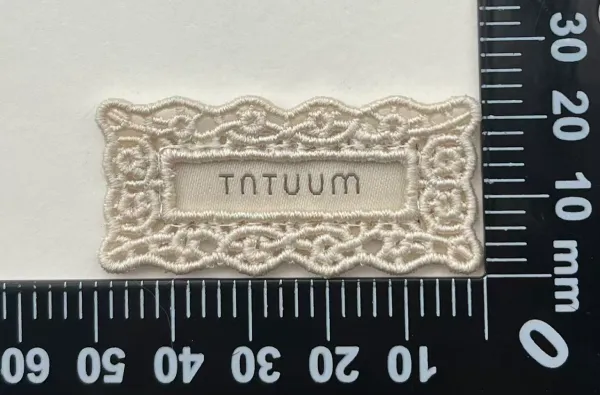
1. Embroidery Edges May Curl
Water-soluble embroidery is often delicate and flexible, particularly after the soluble backing has been removed.
During sewing, the material may shift or stretch under the influence of needle movement, thread tension, and handling. If the embroidery is not adequately stabilized, its edges may curl or fail to lie flat.
The extent of this risk depends on the embroidery pattern, thread density, stitch structure, and assembly method.
2. The Embroidery Pattern May Become Distorted
Fine lace-like embroidery can be sensitive to uneven tension.
If the woven label and embroidery are not aligned accurately, or if the sewing process pulls the embroidery in different directions, the finished shape may become distorted.
This is particularly noticeable in symmetrical patterns, delicate floral designs, and intricate decorative borders.
3. The Joining Line May Be Too Visible
Sewing two separately produced components can create a visible transition between the woven label and the embroidery.
For some designs, this is acceptable or even desirable. However, for premium apparel that requires a seamless visual effect, a prominent joining line may interrupt the overall design.
4. Additional Assembly Increases Production Complexity
Separate production followed by sewing introduces an additional manual or machine-assembly step.
This can increase handling time and create another point where alignment, tension, and workmanship must be controlled.
For larger orders, maintaining consistent positioning across every finished piece may require additional inspection and process control.
The key takeaway: Separate sewing offers flexibility, but it may not be the best choice when the design depends on delicate embroidery, precise alignment, and a seamless transition between materials.
Method 2: Integrate the Woven Label into the Embroidery Structure
An alternative is to manufacture the woven label first, then position it accurately within the embroidery design so that both elements are incorporated into a unified construction.
Rather than treating the woven label and embroidery as two independent finished components, the production process is planned around how they will work together.
The woven label provides the defined logo or brand information, while the surrounding embroidery creates the decorative structure.
Depending on the design, the woven label can be secured and integrated during the embroidery process, reducing the need for separate post-production sewing.
This method requires careful planning of the artwork, positioning, stitch sequence, and material handling. The exact technique will depend on the construction and the capabilities of the embroidery equipment.
When properly developed, an integrated approach can offer several advantages.
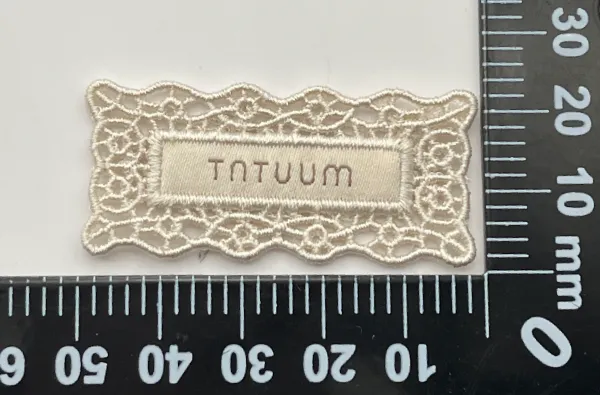
1. A More Natural, Unified Appearance
Because the woven label is positioned as part of the overall embroidery construction, the transition between the two elements can appear more natural.
The woven logo remains clear and defined, while the surrounding embroidery creates a delicate decorative frame.
This can help the finished component look more like a single designed piece rather than two separate products joined together afterward.
2. Improved Shape Stability
A carefully designed integrated construction can help control the relative positioning of the woven label and embroidery.
By reducing unnecessary handling and separate assembly operations, the process may also reduce opportunities for misalignment, edge curling, and distortion.
However, integration alone does not guarantee dimensional stability. The embroidery pattern, thread tension, positioning method, soluble backing, and washing process still need to be properly controlled.
3. Fewer Separate Assembly Steps
When the design can be completed through an integrated process, the manufacturer may be able to eliminate or reduce the separate sewing operation.
This can shorten the production workflow and reduce manual handling.
For bulk orders, fewer assembly steps may also make it easier to maintain consistent positioning and appearance across the production run.
4. A Better Balance Between Logo Precision and Decorative Detail
One of the main advantages of this combination is that each technique contributes its own strengths.
The woven label can reproduce the brand logo with clear lettering and defined details, while water-soluble embroidery adds texture, dimensionality, and a lightweight lace-like effect.
This balance is particularly valuable when the logo needs to remain legible without making the surrounding decorative embroidery look heavy.
Sewn Combination vs. Integrated Embroidery: Which Should You Choose?
Neither method is universally superior. The appropriate choice depends on the design requirements, production quantity, and expected finish.
| Comparison | Separate Production and Sewing | Integrated Embroidery |
|---|---|---|
| Construction | Two components joined afterward | Woven label incorporated into the embroidery structure |
| Design flexibility | Components can be adjusted separately | Requires coordinated design and process planning |
| Visual transition | Joining line may be more visible | Can create a more unified appearance |
| Alignment | Depends on separate assembly accuracy | Positioning can be controlled within the planned process |
| Production workflow | Includes an additional joining step | May reduce separate assembly work |
| Shape stability | Depends on sewing tension and material handling | Can reduce some distortion risks with suitable process control |
| Best suited for | Designs that benefit from separate components or visible seams | Designs requiring a refined, integrated appearance |
For straightforward applications, sewing may be sufficient and economical.
For intricate designs that combine a precise woven logo with delicate lace-like embroidery, an integrated approach is worth evaluating during product development.
The decision should be based on the required finished effect rather than on the assumption that one production method is always better.
Which Apparel Products Benefit Most from This Combination?
The combination of woven labels and water-soluble embroidery is particularly suitable for products where branding and decorative workmanship are both important.
High-End Women’s Fashion
Designer garments often use delicate decorative details to communicate quality and individuality. A woven logo integrated into lace-like embroidery can provide a refined branding element without overwhelming the garment.
Wedding Dresses and Formalwear
Water-soluble embroidery can create lightweight decorative structures suitable for elegant designs. Integrating a woven label may allow the brand identity to become part of the overall decorative composition.
Lingerie and Intimate Apparel
For lingerie, the balance between delicate appearance, lightweight construction, and clear branding is particularly important. The combination can be explored for decorative labels and ornamental components, subject to the garment’s comfort and durability requirements.
Premium Children’s Clothing
Decorative embroidery combined with a clearly defined woven logo can create a distinctive brand detail. Material selection, edge comfort, attachment security, and applicable product safety requirements should be considered during development.
Designer and Boutique Brands
For smaller fashion labels, distinctive apparel trims can help establish a recognizable visual identity. An integrated woven-label and embroidery design can become a signature detail rather than a conventional brand tag.
Important Factors to Confirm Before Production
The quality of the finished product depends on more than the choice between sewing and integration. Several technical details should be reviewed before confirming the production method.
Artwork and positioning: The woven logo and embroidery pattern should be designed together. Confirm the logo dimensions, spacing, border, and final position.
Embroidery density: Excessive stitch density can make delicate embroidery stiff or cause distortion, while insufficient density may affect structural integrity. The correct balance depends on the pattern and intended effect.
Water-soluble backing: The backing must support the embroidery during production and dissolve appropriately during removal. Washing conditions and any remaining residue should be checked.
Thread tension and stabilization: The embroidery structure must remain stable throughout stitching and backing removal. Uneven tension can affect the shape and appearance.
Edge finishing: Confirm how the outer embroidery edge should look and whether any additional trimming or finishing is required.
Attachment to the garment: The final component must be suitable for its intended application. Sewing positions, contact with the skin, garment washing, and long-term durability may all affect the design.
Sampling and approval: A physical sample is especially important for delicate embroidery. It allows the buyer to evaluate the texture, flexibility, logo clarity, alignment, and overall finish before bulk production.
Frequently Asked Questions About Combining Woven Labels and Water-Soluble Embroidery
What is water-soluble embroidery?
Water-soluble embroidery is produced on a soluble backing or base that is removed after stitching, leaving an open embroidery structure. It can create delicate, lace-like patterns, depending on the stitch design and thread construction.
Can a woven label be combined with water-soluble embroidery?
Yes. The woven label can be produced separately and sewn to the embroidery, or it can be positioned and incorporated into a coordinated embroidery construction. The suitable method depends on the design and production requirements.
Is integrated embroidery always better than sewing the two components together?
No. Integrated construction can provide a more unified appearance and reduce separate assembly work, but it requires coordinated design and process planning. Separate sewing may be more appropriate when flexibility or a visible seam is required.
Does integrating the woven label prevent embroidery distortion?
It can reduce some risks associated with separate handling and assembly, but it does not eliminate distortion entirely. Stitch density, thread tension, backing removal, and material behavior still need to be controlled.
Which products are suitable for woven labels combined with water-soluble embroidery?
Potential applications include high-end women’s fashion, wedding dresses, lingerie, premium children’s clothing, and designer apparel. The final construction should be tested for the specific garment and intended use.
What should buyers provide when requesting a quote?
Provide the logo artwork, embroidery pattern, finished dimensions, preferred construction method if known, intended garment application, order quantity, and any requirements for washing or durability. Reference photos and an approved physical sample can further improve production accuracy.
Final Thoughts: The Right Construction Makes the Difference
Combining woven labels with water-soluble embroidery is more than simply joining two decorative materials. It is a design and manufacturing decision that affects the appearance, structure, and production efficiency of the finished apparel trim.
Separate sewing offers flexibility and can meet the needs of many standard applications. However, when the design requires a more seamless transition between a precise woven logo and delicate lace-like embroidery, an integrated construction may offer a more refined result.
The best approach is to evaluate the artwork, embroidery structure, material behavior, and intended garment application together before production begins.
With the right combination method, a simple woven logo can become an elegant design feature that enhances the identity and perceived value of the garment.
À propos de l'auteur
——————————————————————————————————————————————
Heidi
Directeur des ventes
Bonjour, je suis Heidi, responsable des ventes. Connue pour son professionnalisme et son efficacité, je suis souvent reconnue comme la meilleure vendeuse. Je suis convaincue que l'expertise et le dévouement permettent d'établir une confiance durable avec les clients.
——————————————————————————————————————————————