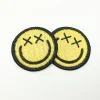
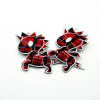
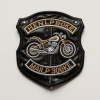
Mold silicone printing combines printed graphics with molded silicone structures to create apparel labels and patches that feature both fine visual details and raised 3D effects. It is particularly useful for designs with small text, intricate lines, multiple colors, and dimensional elements that are difficult to reproduce through conventional silicone molding alone.
What Is Mold Silicone Printing?
Silicone labels and patches are widely used in sportswear, outdoor apparel, casual clothing, footwear, bags, and other branded products. Their soft touch, dimensional appearance, and durable material properties make them a popular choice for apparel branding.
Traditional molded silicone products are generally made by preparing a mold, filling it with silicone material, and allowing the material to cure into a defined shape. The mold determines the product’s outline, thickness, and raised or recessed details.
This process works well for logos with clear outlines, simple shapes, and distinct dimensional layers. However, when a design includes very small lettering, intricate lines, multiple colors, or complex graphic elements, relying entirely on the mold structure may limit the level of detail that can be reproduced.
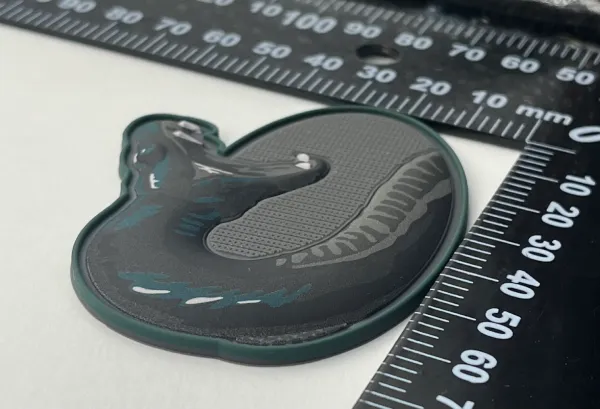
Mold silicone printing offers an alternative by combining printing techniques with molded silicone construction. Printed graphics provide detailed visual elements, while the molded silicone structure creates thickness, raised areas, and a distinctive tactile effect.
The result is an apparel trim that combines the visual flexibility of printing with the dimensional character of silicone.
Why Is Mold Silicone Printing Suitable for Complex Designs?
For apparel brands, a logo is more than a simple identification mark. It is part of the product’s visual identity. Some designs require a strong 3D appearance, while others need fine lettering, detailed graphics, and multiple colors.
Traditional molded silicone and mold silicone printing serve different design requirements. Understanding their strengths helps brands select the right production method.
1. Reproducing Fine Details That Are Difficult to Mold
Traditional silicone molding relies heavily on the mold’s structure to reproduce graphic details. It is generally suitable for designs with relatively clear outlines, thicker lines, and well-defined raised or recessed areas.
However, some artwork contains details such as:
- Very thin lines and intricate patterns
- Small text, letters, and numbers
- Multiple colors within a single logo
- Detailed illustrations and decorative elements
- Fine transitions between different graphic areas
These elements may be difficult to reproduce accurately through molding alone, especially when the details are extremely small or closely spaced.
Printing adds another way to reproduce the graphic information. Instead of relying entirely on raised and recessed mold structures, the design’s finer visual elements can be printed onto the silicone surface.
This approach gives designers more flexibility when developing logos that combine detailed artwork with dimensional silicone features.
2. Maintaining the Raised 3D Texture of Silicone
Mold silicone printing does not mean the finished product has to be flat.
One of the main advantages of combining printing with molding is that different areas of the design can serve different visual and tactile purposes.
Por ejemplo:
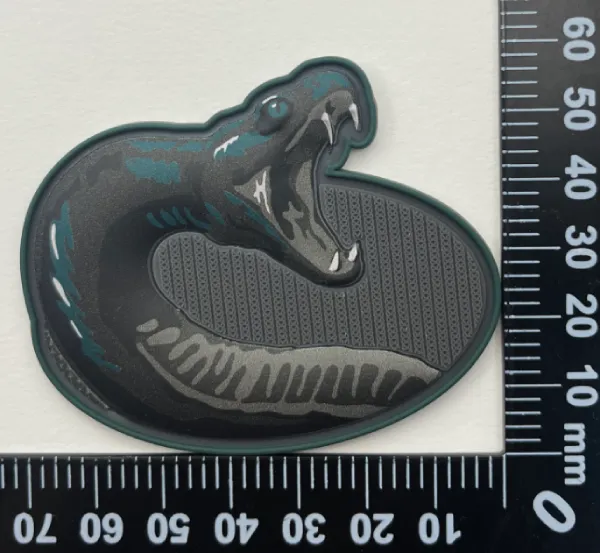
- Printed areas can reproduce small text, fine lines, and color details.
- Raised silicone areas can emphasize the main logo or selected graphic elements.
- Different molded heights can create visual depth and a more distinctive tactile experience.
In this production approach, printing contributes to graphic detail, while the molded silicone structure creates the three-dimensional effect.
This makes it possible to develop labels and patches that retain the soft, raised feel associated with silicone while reproducing more complicated artwork.
3. Achieving More Flexible Color Combinations
Color is another important consideration for apparel branding.
Some logos use only one or two solid colors, while others contain several color areas, detailed illustrations, or color combinations that are difficult to represent through mold geometry alone.
Printing can help reproduce multiple colors and distinguish individual graphic areas more flexibly. It is particularly useful when the design requires small colored elements alongside a raised silicone logo.
However, the final color appearance depends on the printing method, silicone material, surface finish, production conditions, and approved color references. A physical sample is recommended when accurate brand color matching is important.
Mold Silicone Printing vs. Traditional Molded Silicone
Both processes have advantages. The right choice depends on the artwork, desired appearance, and product application.
| Comparison | Traditional Molded Silicone | Mold Silicone Printing |
|---|---|---|
| Main production approach | Silicone is shaped through a mold | Printing is combined with molded silicone |
| Fine text and lines | Depends heavily on mold detail | Printing can reproduce finer graphic elements |
| Color presentation | Usually relies on molded color sections and material effects | Offers more flexibility for printed color details |
| 3D effect | Created through mold depth and structure | Retains dimensional effects through molded areas |
| Design suitability | Clear outlines and relatively simple graphics | More detailed graphics and mixed visual effects |
| Key consideration | Mold structure and minimum detail size | Printing compatibility and the relationship between printed and molded areas |
The comparison is general rather than absolute. Actual results depend on the artwork, production method, material, and required dimensions.
For a simple logo with thick lettering and a clear raised outline, traditional molded silicone may be sufficient. For a logo containing small text, detailed graphics, and several colors alongside raised elements, mold silicone printing may be worth considering.
How to Choose the Right Design for Mold Silicone Printing
Not every silicone label requires a combination of printing and molding. Before starting production, brands and designers should evaluate several factors.
1. Check the Smallest Design Details
Review the smallest text, thinnest lines, and most closely spaced graphic elements in the original artwork.
These details help determine which parts should be printed and which can be reproduced through mold structures.
Extremely small details may still require adjustment. Printing does not guarantee that every element can be reproduced regardless of its size.
2. Decide Which Areas Should Be Raised
A design usually looks more balanced when dimensional effects are used selectively.
For example, the main brand name or central symbol can be raised, while small supporting text and decorative details remain printed.
This approach helps establish a clear visual hierarchy without making every part of the label unnecessarily thick.
3. Confirm the Required Color Effects
Prepare clear color references and identify which colors need to be printed and which areas should be created through colored silicone.
For important brand colors, confirm the appearance through physical samples under suitable lighting conditions.
4. Consider the Final Application
The intended application also affects the design.
A silicone logo for sportswear may require a soft, flexible construction that works comfortably with the garment. A label for bags or footwear may prioritize dimensional appearance and surface durability.
The attachment method, garment fabric, label thickness, and intended use should all be considered during development.
What Should Be Confirmed Before Mass Production?
Combining printing and molding introduces additional production considerations. Confirming the following details before mass production can help reduce artwork adjustments and sampling delays.
- Artwork file: Provide clear vector artwork where possible, preferably AI, EPS, or vector PDF files. Small text should be checked carefully.
- Color references: Specify the required colors and identify which areas use printing or colored silicone.
- Dimensional structure: Confirm the overall thickness and the intended height differences between raised areas.
- Fine-detail limitations: Review small lettering, thin lines, and narrow gaps with the manufacturer before approving the artwork.
- Attachment method: Confirm whether the silicone label will be sewn on, heat applied, or attached using another suitable method.
- Sample approval: Evaluate the physical sample for color, detail clarity, surface finish, flexibility, and dimensional appearance before approving bulk production.
A digital design preview is useful for confirming the general layout, but it cannot fully represent the final tactile effect or all production details. Physical sampling is especially important for designs that combine multiple colors and raised structures.
Applications of Mold Silicone Printing in Apparel and Accessories
Mold silicone printing can be considered for a range of products where detailed graphics and dimensional branding are both important.
Ropa deportiva
Sportswear often uses silicone logos on tops, jackets, leggings, and training garments. Printed details can help reproduce complex brand graphics, while raised areas create a recognizable 3D appearance.
Ropa para actividades al aire libre
Outdoor apparel may use silicone labels on jackets, technical garments, and accessories. The design can combine detailed visual elements with a dimensional surface, depending on the material and application requirements.
Footwear and bags
Silicone labels and patches can be used on shoe uppers, backpacks, travel bags, and other accessories. Molded structures help emphasize the logo, while printing adds flexibility for more detailed designs.
Casual and fashion apparel
For fashion brands, silicone labels can serve as decorative branding elements on hoodies, T-shirts, trousers, and other garments. The combination of printed graphics and raised textures creates additional design possibilities.
The final suitability depends on the product’s construction, attachment method, and expected conditions of use.
Frequently Asked Questions About Mold Silicone Printing
1. Is mold silicone printing the same as traditional silicone molding?
No. Traditional silicone molding mainly uses mold structures to create the product’s shape, thickness, and raised details. Mold silicone printing combines printing with molded silicone construction to reproduce finer graphic details while retaining dimensional effects.
2. Can mold silicone printing reproduce small text and complex logos?
It can reproduce many details that may be difficult to achieve through molding alone. However, the actual level of detail depends on the printing process, artwork size, material, and production conditions. Extremely small text or thin lines may still need to be simplified.
3. Does mold silicone printing produce a 3D effect?
Yes. The three-dimensional appearance comes from the molded silicone structure. Printing is used to add graphic details and colors, while selected molded areas can remain raised to create tactile depth.
4. Can multiple colors be used in mold silicone printing?
Multiple colors can be incorporated according to the artwork and selected production method. The achievable color effects should be confirmed through sampling, particularly when accurate brand color matching is required.
5. Is mold silicone printing suitable for sportswear?
It can be suitable for sportswear, activewear, and other garments, provided the silicone construction and attachment method are appropriate for the application. Flexibility, garment compatibility, and durability requirements should be evaluated during product development.
6. Do I need to provide vector artwork?
Vector artwork is recommended because it makes it easier to inspect logo outlines, small lettering, and fine graphic elements. AI, EPS, and vector PDF files are commonly used for production preparation. If only a JPG or PNG is available, the manufacturer may need to recreate or adjust parts of the artwork.
Reflexiones finales
Mold silicone printing provides apparel brands with another way to combine detailed graphics, flexible color presentation, and raised silicone textures in a single product.
Rather than choosing between a detailed printed logo and a dimensional molded logo, brands can use printing for fine visual elements and molding for selected 3D structures. This approach is particularly useful for designs that require both visual complexity and tactile branding.
At QingHan, selecting the right silicone label production method starts with understanding the artwork, intended application, and desired finished appearance. By evaluating these factors during the design and sampling stages, brands can develop silicone labels and patches that better match their product requirements.
Acerca del autor
——————————————————————————————————————————————

Heidi
Director de ventas
Hola, soy Heidi, Directora de Ventas. Conocida por mi profesionalidad y eficiencia, a menudo se me reconoce como la mejor vendedora. Creo que la experiencia y la dedicación crean una confianza duradera con los clientes.
——————————————————————————————————————————————