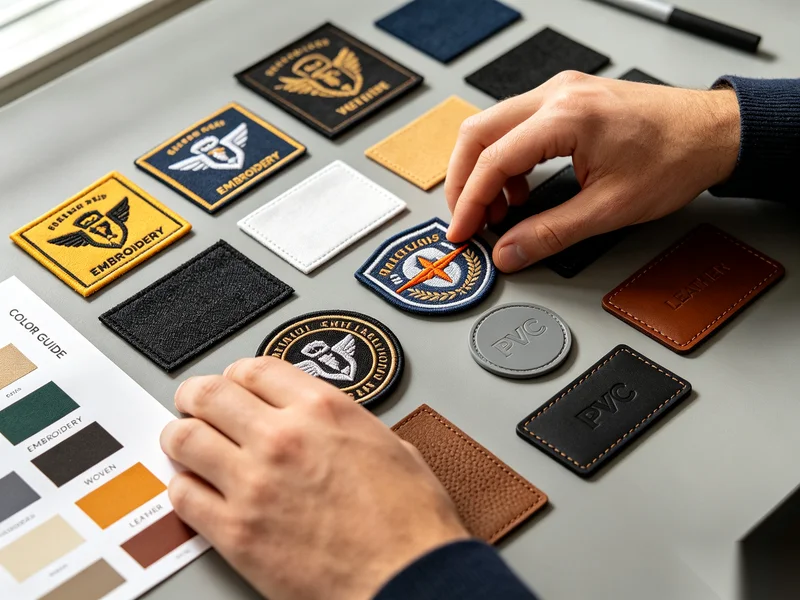
Care labels for clothing provide essential information about washing, drying, ironing, and maintaining garments. They help consumers care for products properly, reduce fabric damage, support regulatory compliance, and enhance customer satisfaction while protecting the reputation of apparel brands.
What Are Care Labels for Clothing?
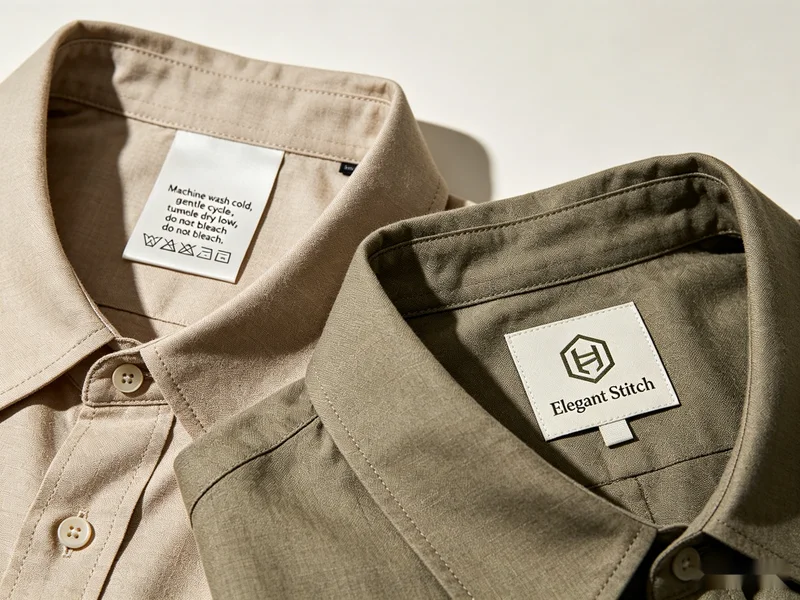
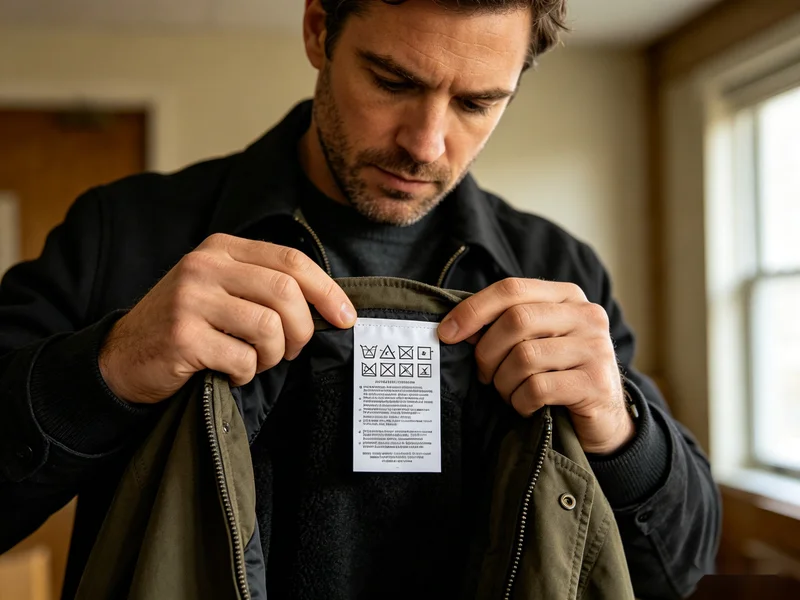
Care labels for clothing are informational labels attached to garments that provide instructions on how to properly clean, dry, iron, and maintain the product. They are one of the most important labels found on apparel because they help consumers preserve garment quality and extend product lifespan.
Most clothing care labels are sewn into garments or printed on soft label materials and contain a combination of text, symbols, and fabric information.
These labels are commonly found on:
- T-shirts
- Hoodies
- Jackets
- Sportswear
- Children’s clothing
- Uniforms
- Fashion apparel
- Home textiles
Whether for a luxury fashion brand or a basic apparel line, care labels are an essential part of product information.
Why Are Clothing Care Labels Necessary?
Care labels serve several important functions for both brands and consumers.
Help Consumers Maintain Garments Correctly
Proper care instructions reduce the risk of:
- Shrinkage
- Color fading
- Fabric damage
- Shape distortion
Improve Customer Satisfaction
When customers understand how to care for garments properly, products generally last longer and perform better.
Reduce Product Complaints
Incorrect washing methods are one of the most common causes of garment damage.
Clear care instructions help minimize misunderstandings and reduce customer service issues.
Support Regulatory Compliance
Many countries require apparel products to include specific care information and fiber content details.
Protect Brand Reputation
Accurate labeling demonstrates professionalism and commitment to product quality.
For apparel brands, care labels are not only a legal requirement in many markets but also a valuable customer service tool.
What Information Should Be Included on Garment Care Labels?
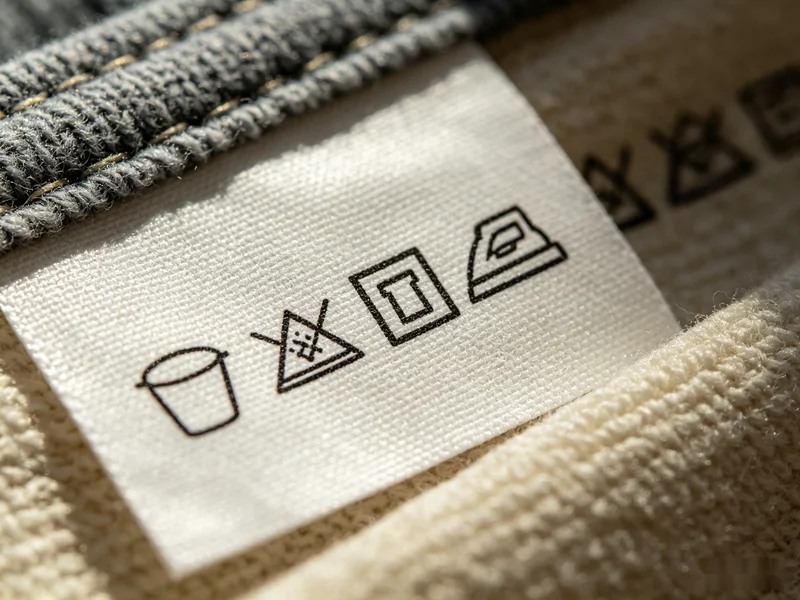
A well-designed garment care label should provide all information necessary for proper garment maintenance.
Washing Instructions
Labels often specify:
- Machine wash
- Hand wash
- Water temperature
- Special washing conditions
Drying Instructions
Information may include:
- Tumble dry
- Line dry
- Flat dry
- Do not tumble dry
Ironing Guidelines
Labels indicate whether ironing is allowed and the recommended temperature.
Bleaching Instructions
Some garments can tolerate bleach, while others require bleach-free care.
Dry Cleaning Information
Labels may specify whether professional dry cleaning is recommended.
Fabric Composition
Common examples include:
- 100% Cotton
- Polyester
- Nylon
- Wool
- Blended fabrics
Providing complete information helps consumers care for garments correctly throughout their lifecycle.
What Do Common Clothing Care Symbols Mean?
Many consumers rely on symbols rather than text instructions.
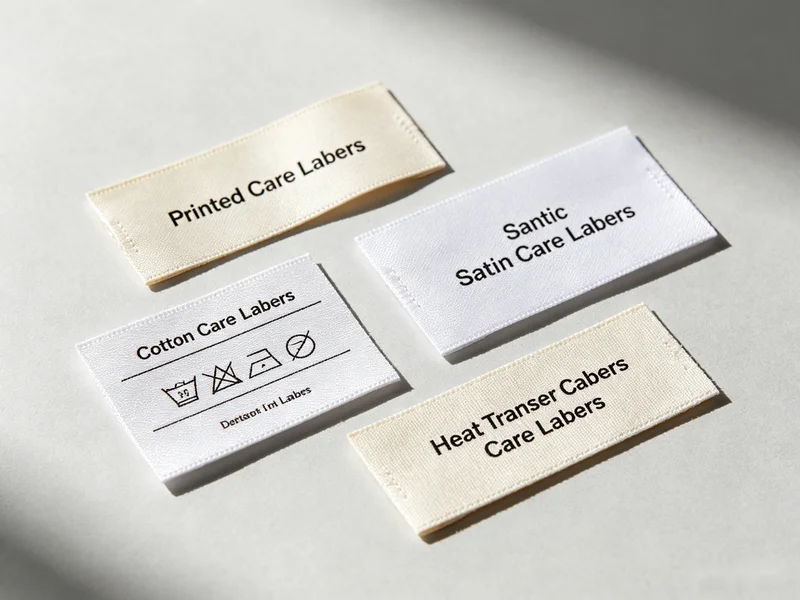
Washing Symbol
A bucket icon indicates washing instructions.
Examples include:
- Machine wash
- Hand wash
- Maximum temperature
Bleaching Symbol
A triangle symbol indicates whether bleach may be used.
Drying Symbol
A square symbol provides drying guidance.
Ironing Symbol
An iron icon indicates ironing recommendations.
Dry Cleaning Symbol
A circle symbol identifies dry-cleaning requirements.
Because care symbols are recognized internationally, they help communicate instructions across different languages and markets.
What Types of Care Labels Are Used in the Apparel Industry?
Manufacturers offer several types of custom care labels depending on garment requirements.
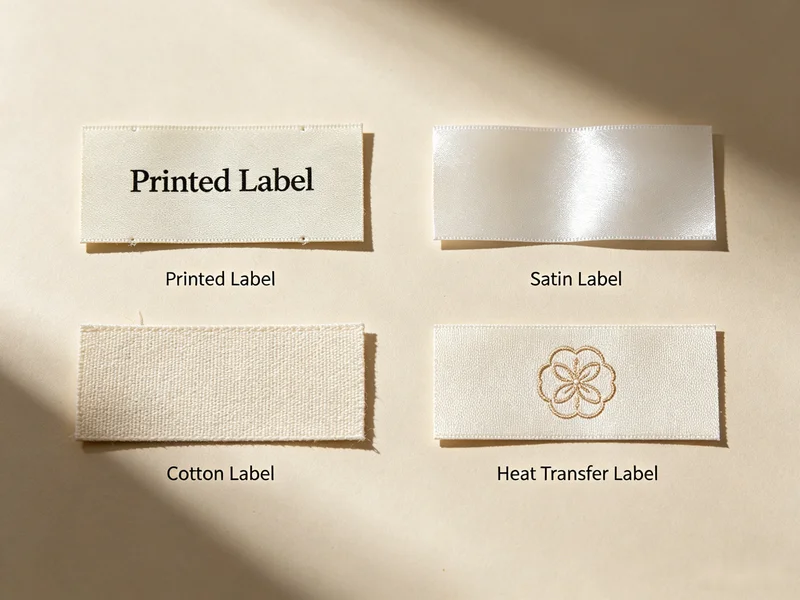
Printed Care Labels
Printed labels are one of the most common options.
Benefits include:
- Cost-effective production
- Excellent detail reproduction
- Clear care information
Satin Care Labels
Satin labels provide a soft and comfortable feel.
They are commonly used for:
- Lingerie
- Sleepwear
- Children’s apparel
- Premium garments
Cotton Care Labels
Cotton labels offer a natural appearance and are often selected by sustainable fashion brands.
Heat Transfer Care Labels
Heat transfer labels eliminate sewn tags and provide a tagless wearing experience.
Advantages include:
- Increased comfort
- Modern appearance
- Reduced skin irritation
These labels are especially popular in sportswear and activewear.
How Are Custom Care Labels Manufactured?
The production process varies depending on label material and application requirements.
Design Preparation
Brands provide care instructions, fabric information, and regulatory content.
Material Selection
Manufacturers select suitable materials such as:
- Satin
- Polyester
- Cotton
- Nylon
Printing Process
Information is printed using methods such as:
- Screen printing
- Thermal transfer printing
- Digital printing
Cutting and Finishing
Labels are cut to size and prepared for garment attachment.
Quality Inspection
Each production batch is inspected to ensure:
- Accurate information
- Print clarity
- Material quality
- Durability
Proper quality control helps prevent labeling errors that could lead to customer complaints.
Why Are Custom Care Labels Important for Clothing Brands?
Many apparel companies focus primarily on branding labels, but care labels are equally important.
Ensure Compliance
Many countries require specific garment labeling information.
Improve Customer Experience
Consumers appreciate clear and easy-to-understand instructions.
Reduce Returns
Proper care instructions help prevent accidental garment damage.
Reinforce Brand Professionalism
Detailed and accurate labels reflect a commitment to quality.
Support Product Longevity
Helping customers care for garments properly improves long-term satisfaction.
As sustainability becomes increasingly important, extending garment lifespan has become a key objective for many brands.
Care Labels vs Brand Labels
Although both labels appear on garments, they serve different purposes.
| Feature | Care Labels | Brand Labels |
|---|---|---|
| Primary Purpose | Product Care Information | Brand Identification |
| Includes Care Instructions | Yes | No |
| Includes Logo | Sometimes | Usually |
| Regulatory Requirement | Often Required | Optional |
| Customer Function | Maintenance Guidance | Brand Recognition |
Most apparel products include both types of labels to provide complete information and branding.
How to Choose the Right Care Labels for Clothing
Selecting the right label depends on garment type and customer expectations.
Consider Fabric Type
Different fabrics require different care instructions and label materials.
Prioritize Comfort
Soft labels improve wearer satisfaction.
Ensure Durability
Labels should remain readable after repeated washing.
Meet Market Regulations
Verify that label content complies with destination market requirements.
Match Brand Positioning
Premium brands often use soft satin labels, while sportswear brands may prefer heat transfer solutions.
Choosing the right label solution helps improve both compliance and customer experience.
FAQ
What are care labels for clothing?
Care labels are labels attached to garments that provide instructions for washing, drying, ironing, and maintaining the product.
Are clothing care labels legally required?
In many countries, apparel products must include specific care and fiber content information to comply with labeling regulations.
What information should appear on garment care labels?
Typical information includes washing instructions, drying methods, ironing recommendations, fabric composition, and country of origin.
What is the difference between a care label and a brand label?
A care label provides maintenance instructions, while a brand label identifies the manufacturer or clothing brand.
Are heat transfer care labels suitable for sportswear?
Yes. Heat transfer labels are widely used in sportswear because they provide a comfortable tag-free experience.
How long should clothing care labels remain readable?
High-quality care labels should remain legible throughout the normal lifespan of the garment, even after repeated washing.
Conclusion
Care labels for clothing play a critical role in apparel manufacturing by helping consumers properly maintain garments while ensuring compliance with industry regulations. Whether produced as clothing care labels, satin labels, printed labels, or heat transfer solutions, they provide valuable guidance that improves customer satisfaction and extends product lifespan. For apparel brands, retailers, and garment manufacturers, investing in accurate and durable custom care labels is essential for product quality, brand reputation, and long-term customer trust.
About Author
——————————————————————————————————————————————

Apollo
Senior E-commerce Manager
Apollo is an experienced e-commerce manager specializing in patches, apparel accessories, and digital marketing, helping global textile brands grow with proven online strategies.
——————————————————————————————————————————————