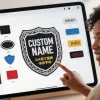
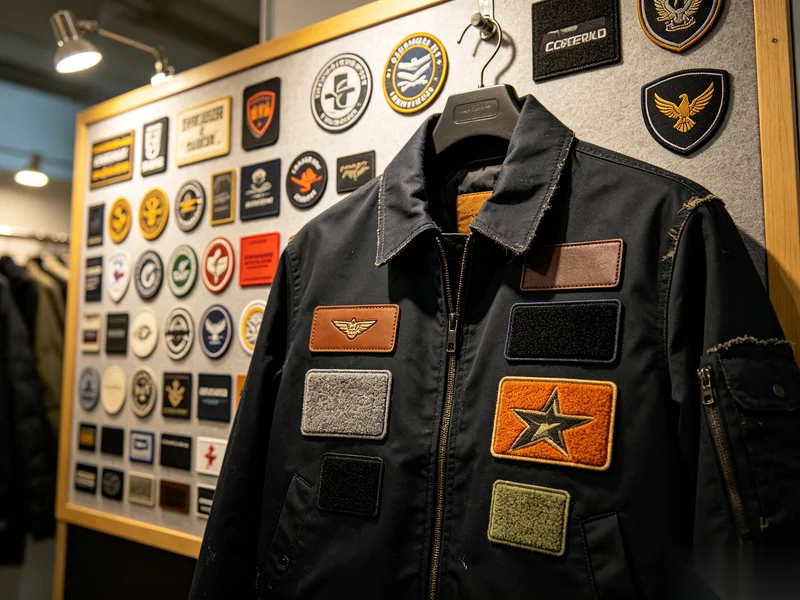
Personalized iron on patches are custom-designed patches with heat-activated adhesive backing that allows them to be applied to garments using heat and pressure. They are widely used by apparel brands, uniform suppliers, and promotional businesses for fast, scalable, and cost-effective customization.
| Key Point | Quick Answer |
|---|---|
| What are personalized iron on patches? | Custom patches with adhesive backing that bond to fabric using heat. |
| Who uses them? | Clothing brands, schools, promotional companies, and uniform suppliers. |
| Why are they popular? | Easy application, reduced labor cost, and strong visual appeal. |
| Common types | Embroidered, woven, printed, and heat transfer patches. |
Why Are Personalized Iron On Patches Important for B2B Apparel Businesses?
In modern apparel manufacturing, efficiency and flexibility are critical. Personalized iron on patches provide a practical solution for brands that need to scale production while maintaining customization.
Compared to traditional sew-on patches, iron-on patches significantly reduce labor time. This is especially valuable for bulk production, where manual stitching can increase costs and slow down delivery.
For B2B buyers, including fashion brands, uniform suppliers, and promotional product companies, toppe personalizzate da stirare offer:
- Faster application processes
- Consistent product quality
- Lower production costs
- Flexible design updates
Additionally, these patches allow brands to quickly adapt to market trends by introducing new designs without changing the entire garment production process.
How Do Personalized Iron On Patches Work?
Iron-on patches rely on a heat-activated adhesive layer applied to the back of the patch.
Application Process
- Place the patch on the desired area of the garment
- Apply heat using an iron or heat press
- Apply firm pressure for a set duration
- Allow the patch to cool
- Check adhesion strength
When heat is applied, the adhesive melts and bonds with the fabric fibers. After cooling, the bond becomes stable and durable.
Key Factors for Successful Application
- Correct temperature
- Even pressure
- Proper application time
- Suitable fabric type
Understanding these factors helps ensure long-lasting results.
What Types of Personalized Iron On Patches Are Available?
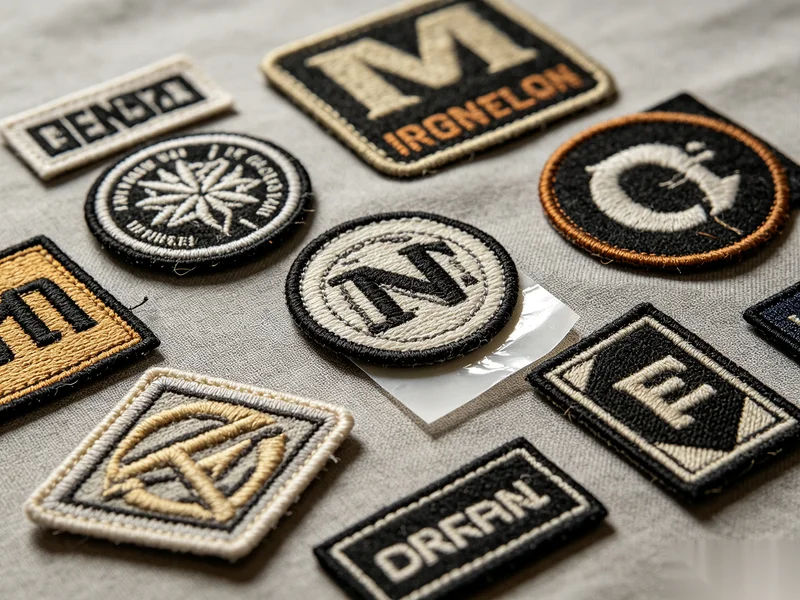
Manufacturers provide different patch types depending on design and usage requirements.
Toppe ricamate da stirare
Toppe ricamate da stirare are the most commonly used option.
I vantaggi includono:
- Textured and premium appearance
- Forte impatto visivo
- Cuciture resistenti
- Suitable for logos and branding
They are widely used in uniforms, fashion, and promotional apparel.
Toppe tessute da applicare con il ferro
Woven patches provide a smoother surface and finer detail.
Sono ideali per:
- Testo piccolo
- Loghi complessi
- Capi leggeri
Patch di trasferimento termico
Patch di trasferimento termico are printed designs applied using heat.
I vantaggi includono:
- Grafica a colori
- Elevata precisione dei dettagli
- Finitura liscia
They are suitable for creative and visually complex designs.
Specialty Iron On Patches
Other options include:
- Chenille patches for varsity styles
- Reflective patches for safety clothing
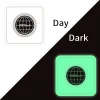
- Glow-in-the-dark patches for novelty products
These options allow businesses to differentiate their products.
What Fabrics Work Best with Iron On Patches?
Recommended Fabrics
Le toppe da applicare con il ferro da stiro sono ottimali su:
- Cotone
- Denim
- Tela
- miscele di poliestere
These materials can withstand heat and allow strong adhesive bonding.
Fabrics to Avoid
Some fabrics are not suitable due to heat sensitivity:
- Nylon
- Silk
- Materiali impermeabili
- Stretch fabrics
Testing is recommended before bulk application.
How Are Custom Iron On Patches Manufactured?
Design and Artwork Preparation
Manufacturers analyze:
- Dettagli del logo
- Dimensione e forma della patch
- Color requirements
- Fabric compatibility
Proper design preparation ensures high-quality results.
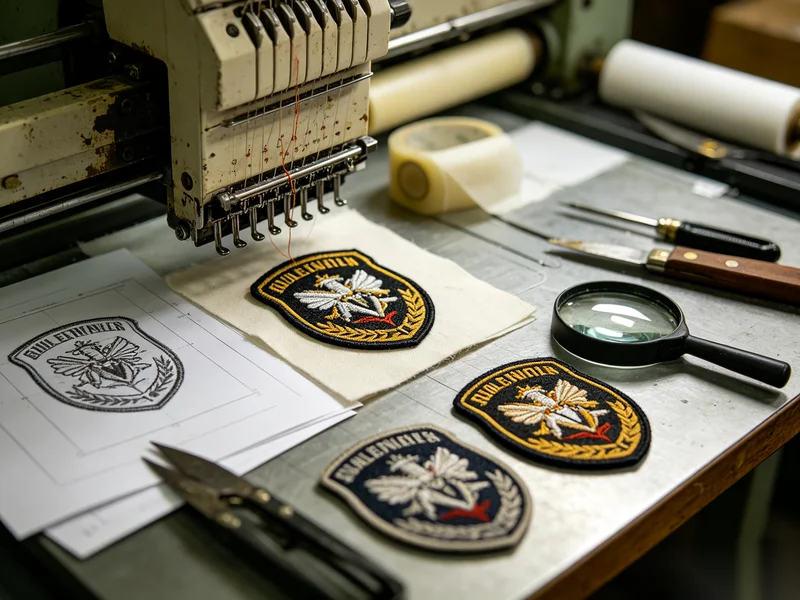
Produzione di patch
Depending on the design:
- Embroidery creates textured patches
- Weaving produces fine details
- Printing enables full-color designs
Adhesive Backing Application
A heat-activated adhesive layer is applied to the patch.
High-quality adhesive ensures:
- Forte legame
- Wash resistance
- Facile applicazione
Quality Control
Manufacturers inspect:
- Stitching or print quality
- Forza adesiva
- Precisione del colore
- Finitura dei bordi
Consistency is essential for wholesale orders.
Why Should Businesses Choose Personalized Iron On Patches?
Fast and Efficient Application
Iron-on patches simplify production by eliminating the need for sewing, making them ideal for large-scale manufacturing.
Cost-Effective Solution
Reducing labor requirements lowers production costs, especially for bulk orders.
Strong Branding Opportunities
Businesses can customize patches with:
- Loghi
- Nomi di marca
- Opera d'arte
- Promotional messages
This enhances product appeal and brand visibility.
Flexible Product Development
Iron-on patches allow brands to:
- Launch seasonal designs
- Create limited editions
- Offer customizable products
When Should Iron On Patches Be Reinforced with Sewing?
While iron-on patches are effective, certain applications benefit from additional stitching.
Recommended Scenarios
- Heavy-duty workwear
- Abbigliamento per esterni
- Frequently washed garments
- High-friction areas
Combining heat application with stitching improves long-term durability.
How to Choose a Reliable Iron On Patch Manufacturer?
Evaluate Experience
Choose a supplier with expertise in:
- Patch production techniques
- Tecnologia del trasferimento di calore
- Adhesive systems
Check Customization Options
Cercare i produttori che offrono:
- Multiple patch types
- Flexible design options
- Varie opzioni di supporto
Assess Production Capacity
Reliable suppliers provide:
- Bulk production capability
- Controllo di qualità stabile
- Consegna puntuale
Review Quality Standards
Consistent quality is essential for maintaining brand reputation.
Can Personalized Iron On Patches Improve Product Competitiveness?
Yes. Iron-on patches enhance both efficiency and product value.
For businesses, they enable:
- Cicli di produzione più rapidi
- Cleaner product design
- Scalable customization
For customers, they provide:
- Facile applicazione
- Durable performance
- Attractive designs
This combination makes them a key solution in modern apparel manufacturing.

FAQ About Personalized Iron On Patches
What are personalized iron on patches used for?
They are used for branding, decoration, and customization on clothing, uniforms, bags, and accessories.
Are iron-on patches durable?
Yes, when applied correctly, they can withstand regular wear and washing.
Can businesses order custom iron on patches in bulk?
Yes. Manufacturers offer wholesale production for large orders.
Qual è la differenza tra le toppe da stirare e quelle da cucire?
Iron-on patches use heat-activated adhesive, while sew-on patches require stitching for attachment.
Can iron-on patches be applied to all fabrics?
No. Heat-sensitive fabrics may not be suitable and should be tested first.
How can iron-on patches last longer?
Use proper heat application, choose suitable fabrics, and consider adding stitching for reinforcement.
Conclusione
Personalized iron on patches provide a fast, efficient, and cost-effective solution for apparel customization. With options such as embroidered, woven, and heat transfer patches, businesses can create high-quality products that meet diverse market needs.
For B2B buyers, partnering with an experienced manufacturer ensures consistent quality, reliable adhesive performance, and scalable production. As customization continues to drive the apparel industry, custom iron on patches remain a critical tool for branding and product development.
Informazioni sull'autore
——————————————————————————————————————————————

Apollo
Responsabile senior dell'e-commerce
Apollo è un esperto responsabile dell'e-commerce specializzato in toppe, accessori per abbigliamento e marketing digitale, che aiuta i marchi tessili globali a crescere con strategie online comprovate.
——————————————————————————————————————————————